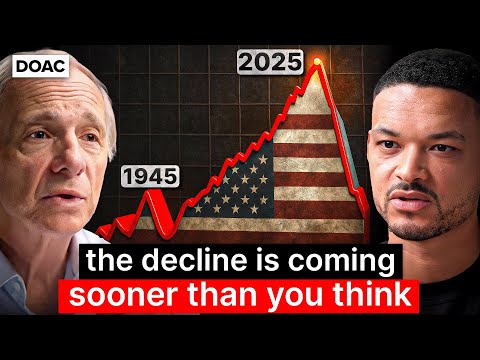
WTF Is Wealth? Ray Dalio Breaks It Down w/ Nikhil Kamath | WTF is Finance Ep 2

Introduction
Table of contents
• Introduction • Early Life and Introduction to Markets • Nature of Money and Gold • Investing in Gold versus Fiat and Crypto • Understanding Wealth Versus Money • The Five Big Forces Shaping Our World • Advice for Young Indian Entrepreneurs and Traders • Trading Psychology and Skills • Role of Leverage and Regulation in Speculation • Prediction Markets and Portfolio Construction • Views on Taxation and Real Estate • Geopolitical and Global Economic Outlook • Importance of Personal Development and Mindset • Cultural Observations and Leadership Qualities • Final Investing Advice for Young IndiansIn this insightful conversation, legendary investor Ray Dalio shares his views on a broad range of topics including the fundamentals of money and wealth, investment strategies for young entrepreneurs, the nature of markets, global economic and political cycles, the role of gold and cryptocurrencies, and the importance of personal development and mindset in financial success. Dalio also discusses geopolitical dynamics, India's growth potential, and the evolving structure of the global financial system, providing deep wisdom drawn from decades of experience.
Early Life and Introduction to Markets
Ray Dalio recounts his initiation into the world of investing as a youth working as a caddy at a golf course, where conversations with successful investors piqued his interest. Starting with a small capital of $50, he bought stocks based on limited knowledge but learned crucial lessons through experience and curiosity. Dalio emphasizes that early positive reinforcement in investing often attracts continued involvement, while losses can deter beginners. His approach evolved by documenting decision criteria to neutralize emotions—an essential skill for enduring market volatility.
Nature of Money and Gold
Dalio explores what money truly is—a medium of exchange and a store of wealth. He highlights gold's unique status as the only asset not dependent on someone else's promise, contrasting it with fiat currencies, which are essentially debt instruments backed by government promises. Although gold does not yield interest, its role as a diversifier and a protection against fiat currency inflation makes it a vital portfolio component. Dalio notes that while gold's value is based on perception and historical precedence rather than intrinsic utility, it remains unparalleled in its ability to preserve wealth globally.
Investing in Gold versus Fiat and Crypto
On the topic of portfolio allocation, Dalio suggests holding between 5% and 15% of one's portfolio in gold or alternative money forms as a strategic hedge. He expresses a cautious stance on Bitcoin and other cryptocurrencies, acknowledging Bitcoin's capped supply and money-like features but raising concerns about transparency, government interference, and the risks of technological vulnerabilities. Stablecoins, he argues, currently function more as mediums of transaction rather than stores of wealth. Dalio also cautions about the risks inherent in fiat currencies due to excessive debt issuance worldwide.
Understanding Wealth Versus Money
Dalio draws an important distinction between wealth and money, explaining that perceived wealth—such as inflated valuations in stocks or private companies—does not equate to money until it can be converted and spent. This difference is crucial for understanding why economic bubbles form and eventually burst. He highlights the current imbalance between wealth and money, particularly in the U.S., where high wealth-to-money ratios indicate bubble-like conditions. This situation also fuels discussions around wealth taxes, which could force asset sales to raise money, thereby triggering market corrections.
The Five Big Forces Shaping Our World
Dalio outlines five major forces that drive economic and market dynamics: the debt-money-economy-markets cycle; internal political cycles reflecting social and ideological conflicts; geopolitical world order shifts; climate and natural events; and human inventiveness and technological innovation. These forces interact with each other in complex ways, often converging to create significant historical shifts and market outcomes. Recognizing these patterns is key for understanding current global challenges and investment landscapes.
Advice for Young Indian Entrepreneurs and Traders
Addressing young Indian aspirants, Dalio advises them to "play the game" by getting involved early in the entrepreneurial or investing process, starting small and learning through experience. He stresses the importance of surrounding oneself with knowledgeable people, developing curiosity about market mechanics, and understanding cause-effect relationships rather than gambling blindly. Dalio also recommends introspection to understand one's personal risk tolerance and nature, sharing a free online behavioral assessment he developed to help align natural inclinations with the most suitable financial path.
Trading Psychology and Skills
Dalio discusses what makes a successful trader or investor: an addictive engagement with the market game, curiosity to understand underlying mechanics and cause-effect dynamics, analytical thinking, disciplined decision-making, and good guidance from mentors or educational resources. He warns against reliance on luck or speculation without knowledge, noting the importance of developing an edge through careful research and diversified bets to manage risk effectively.
Role of Leverage and Regulation in Speculation
Touching on leverage in trading, particularly for young investors, Dalio acknowledges the need for balance between allowing risk-taking for learning and protecting individuals from exploitation. He supports suitable regulation ensuring investors understand risks and discourages irresponsible practices. The ease of accessing financial markets may tempt inexperienced traders, so guidance and appropriate safeguards are necessary components in nurturing responsible financial behaviors.
Prediction Markets and Portfolio Construction
Dalio expresses interest in prediction markets as vehicles for speculation and hedging, recognizing their potential utility to investors as a way to manage exposure to specific events affecting equities. Regarding portfolio construction, he emphasizes diversification and relative yield comparisons across asset classes, highlighting that illiquid assets typically require higher returns to compensate for reduced flexibility. The decision to hold real estate or public equities hinges on liquidity and yield characteristics relevant to the investor's objectives.
Views on Taxation and Real Estate
On taxation, Dalio supports taxing real estate because it is immovable and easier for governments to administer. While he recognizes economic impacts and social considerations, he favors spreading tax burdens across various assets and prioritizing taxes on harmful goods or activities. Dalio also comments on the concern about black money or illicit wealth often tied up in real estate, suggesting taxation can aid in integration into formal economic systems.
Geopolitical and Global Economic Outlook
Dalio analyzes the current geopolitical landscape characterized by a shift away from multilateral global governance toward power-based competition notably between the U.S. and China. He expresses skepticism about the likelihood of full-scale military conflict but acknowledges ongoing trade, technology, and influence wars. The decoupling trend and reduction of interdependencies between major powers increase geopolitical tensions. Dalio praises India's growth potential, comparing its stage of development to where China was decades ago, and points to India's combination of infrastructure growth, low debt, demographic advantages, and leadership reforms as ingredients for strong long-term economic expansion.
Importance of Personal Development and Mindset
Beyond technical knowledge, Dalio stresses the importance of meditation and karma in shaping a successful investor's mindset. Meditation fosters equanimity, creativity, and balanced thinking, helping to align conscious and subconscious processes critical for decision-making. The philosophy of karma reflects the practical benefits of mutual help and ethical conduct, which contributes not only to individual fulfillment but also to a better community and society. Dalio underscores that happiness and well-being are rooted more in community and relationships than in wealth levels once basic needs are met.
Cultural Observations and Leadership Qualities
Reflecting on his extensive global experience, Dalio admires leaders who exhibit reflection, practical wisdom, care for their people, and an understanding of historical cycles and human nature. He emphasizes the importance of education, civility, and avoidance of war in building successful societies. Dalio notes similarities in approaches across diverse cultures—from the Middle East to Asia—and underscores the significance of harmony and inclusive prosperity as foundational elements for a thriving nation.
Final Investing Advice for Young Indians
When asked about what a young Indian with $100 should do, Dalio prioritizes investing in oneself—education, skill-building, and gaining knowledge—over immediate short-term financial returns. He focuses on personal development as the best leverage for future success. He encourages young people to find their passion, start playing their chosen "game," and continuously learn and engage with the process actively. Dalio's overarching message is that understanding oneself and consistently growing one's capabilities lays the foundation for sustainable financial achievement.
Full episode
Episode summary