Pain, Power & The Game Nobody Wins | Chamath Palihapitiya x Nikhil Kamath | People by WTF
Introduction
Table of contents
• Introduction • Pain and Hunger: The Roots of Drive • Redefining Success and External Validation • Balancing Dualities: Ambition vs. Presence • Investment Philosophy: Individuality and Conviction • Views on Cryptocurrency and Blockchain • The Machine That Makes the Machine: AI and Software Factories • Political and Social Reflections: Sovereignty, Socialism, and Education • The Future of Social Media in India and Beyond • Views on AI, Infrastructure, and Venture Capital Cycles • Human Evolution, Legacy, and Relationships • Final Thoughts on Change and GrowthIn this podcast episode, Nikhil Kamath engages in a candid and wide-ranging conversation with Chamath Palihapitiya, exploring themes of pain, hunger, success, investing, technology, politics, social media, and the future of work and society. Chamath shares his personal story of resilience, reflections on capitalism and external validation, insights from his career spanning Facebook to venture investing, and his views on societal and technological transformations shaping the world today.
Pain and Hunger: The Roots of Drive
Chamath begins with a deeply personal account of the pain and hunger that have fueled his journey. He distinguishes hunger from pain: while hunger is a form of ambition or drive, pain is often an amplifier of capability. His own struggles stemmed from a challenging upbringing marked by parental neglect and family crisis, including alcoholism and codependency. Chamath shares how his father's sacrifices and unrealized potential shaped his understanding of life and success. This deep well of personal pain, combined with innate curiosity and grit, has been a driving force behind his achievements. He reflects on how people who are accustomed to pain often embrace it as "normal" and even seek it, contrasted with those shielded from hardship who find pain alien or to be avoided.
Redefining Success and External Validation
Chamath critiques society's conventional metrics of success—wealth, fame, and influence—highlighting how fleeting and contrived these markers truly are. Using examples like naming the richest individuals or most followed personalities in arbitrary years, he points out the impermanence and superficiality of external validation. Instead, he proposes that real success lies in one's personal evolution—from where you start to where you become—as an internal and largely unshareable journey. He emphasizes the importance of self-awareness and grounding oneself outside the influence of fragile societal applause or criticism. For Chamath, what matters most is close relationships—with his wife, children, and friends—and a meaningful engagement with change and growth, rather than the traditional capitalist scoreboard.
Balancing Dualities: Ambition vs. Presence
Chamath opens up about the internal tension between his relentless drive to create and achieve and his effort to accept and enjoy the present moment. He describes this tension as a structural challenge in his personality—part of him is driven by a nagging sense of incompletion, pushing him to work intensely, while another part strives to find peace and contentment in his achievements and relationships. He shares a story about an enormous financial windfall from a decade-long investment that left him feeling oddly empty, underscoring how external success does not guarantee personal fulfillment. His evolution toward self-awareness has helped him moderate this duality, though he acknowledges the ongoing challenge it poses.
Investment Philosophy: Individuality and Conviction
From his extensive investing experience, Chamath outlines a unique approach grounded in individual conviction rather than consensus or teamwork. He asserts that successful investing is intensely personal and single-minded, rejecting the notion that investment decisions are a team sport. Chamath values contrarian ideas especially when they provoke strong emotional reactions or disbelief from others, seeing this as a signal of potential asymmetric gains. He also distinguishes between small, high-risk bets aimed at massive returns and larger, more conservative investments meant to protect capital. Over time, he has refined his risk models and portfolio construction to balance these buckets more methodically, learning hard lessons from past financial downturns and losses.
Views on Cryptocurrency and Blockchain
Chamath discusses Bitcoin's structural limitations, particularly its lack of fungibility and privacy, which he argues prevent it from becoming a central bank's reserve asset or achieving broad structural adoption. He notes that stablecoins, backed by real-world currencies or assets, currently hold more promise for transactional efficiency and reducing friction in payments. While he acknowledges the existence of privacy-focused and fungible crypto projects, he highlights their small scale and extreme volatility. Overall, Chamath suggests that crypto's future may involve differentiated roles but cautions against oversimplified narratives of decentralization.
The Machine That Makes the Machine: AI and Software Factories
The conversation turns to technology and Chamath's latest venture: building a "software factory," inspired by Henry Ford's assembly line and Elon Musk's Gigafactory. This factory is a software platform designed to empower human collaboration in creating software—"machines that make machines." Chamath views this as foundational for scaling AI-driven productivity across industries, including aircraft, healthcare, and accounting. He describes AI as a massive accelerant of productivity that will usher in unimaginable progress, though we lack today's language to fully describe its future uses. He draws parallels to historical revolutions like the agrarian and industrial, cautioning against pessimism and underscoring the need to democratize participation through tooling and education.
Political and Social Reflections: Sovereignty, Socialism, and Education
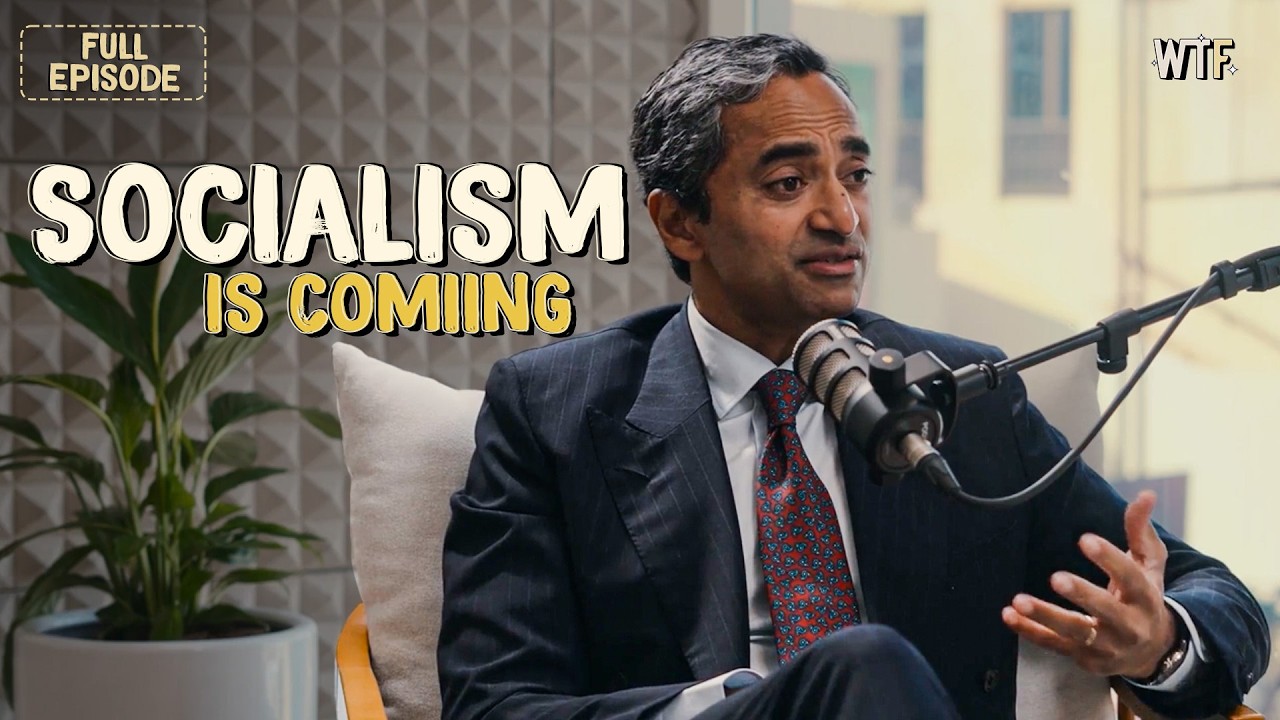
Chamath shares incisive commentary on contemporary political dynamics, particularly in the United States. He credits Donald Trump as a "political athlete" with unmatched retail political skills and negotiation acumen, altering American discourse and governance. Chamath stresses America's focus on sovereignty and resilience amid global shifts, including overlooked European missteps in energy policy and immigration. He warns of socialism's potential resurgence fueled by structural issues, particularly burdensome student debt and housing unaffordability, which trap young people and erode belief in capitalism. Chamath advocates for reforms in these areas to stem the appeal of socialist ideals, citing brutal examples like the cancellation of gifted education programs as symptomatic of damaging cultural trends.
The Future of Social Media in India and Beyond
When asked about opportunities to build a social media platform that appeals to Indian youth, Chamath expresses caution. Without government intervention or regulatory frameworks supporting local cultural sovereignty in media and technology, he believes monocultural consolidation by large global platforms will continue. However, with thoughtful government engagement—establishing evaluation metrics and regulatory expectations tailored to local histories and cultures—it could be possible to foster endemic platforms. Such efforts would trade some economic efficiencies for sovereignty and nuanced cultural representation. Chamath sees AI regulation as a unique chance for governments to reset their influence over digital content and media, potentially unlocking vibrant local ecosystems previously dominated by global giants.
Views on AI, Infrastructure, and Venture Capital Cycles
Discussing AI's capital-intensive nature, Chamath notes that the current investment wave focuses heavily on infrastructure—data centers, GPUs, energy storage—rather than purely on intellectual property or scaling startup innovations. He observes a disconnect as venture capital seeks high returns, but much of the capital is funneled into expensive infrastructure rather than traditional software IP, warning this may dampen investment enthusiasm if revenues lag valuations. Chamath also touches on industry patterns where real estate firms in India are rebranding as data center companies, signaling a trend toward replication over genuine innovation.
Human Evolution, Legacy, and Relationships
Throughout the dialogue, Chamath returns to the importance of self-awareness and relationships. He credits his wife's influence and close social bonds for his increasing emotional reliability and grounding. He contemplates how raising children helps him see beyond superficial status markers, reminding him of what truly matters. He acknowledges that as children grow into adulthood, relationships change in unpredictable ways, influenced by individual choices and circumstances beyond parental control. This awareness shapes his broader perspective on legacy and personal fulfillment beyond material or external success.
Final Thoughts on Change and Growth
Chamath emphasizes that change—and the rate of change—is the central measurable in life. Everything else, including success, status, or wealth, is transient and secondary. When he aligns with this worldview, he accesses a profound "superpower" of resilience and groundedness. This philosophy underpins his approach to business, investing, and life, framing the "game" of success as one to be played with intelligence, curiosity, and a detachment from ego and societal expectation.
Full episode
Episode summary