Tucker and Mike Cernovich on Nicolas Maduro’s Capture, Charlie Kirk’s Murder, and Battling Demons
Introduction
Table of contents
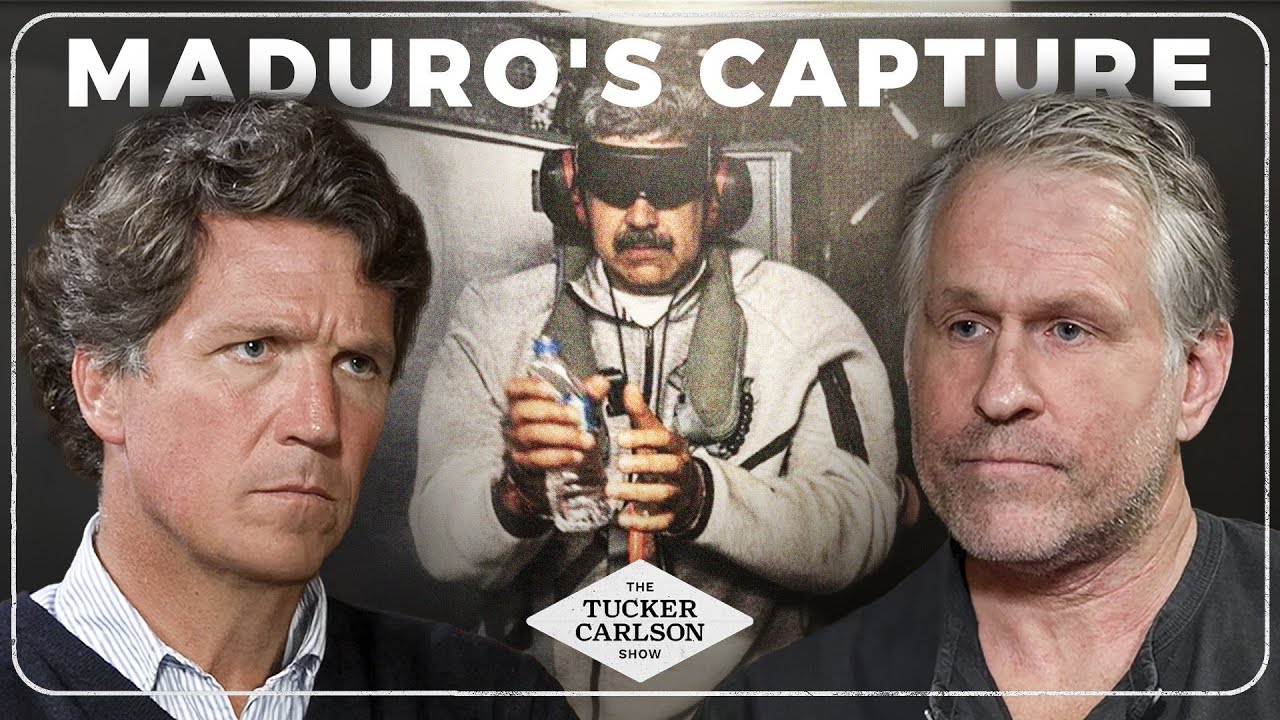
• Introduction • Nicolás Maduro's Capture and U.S. Foreign Policy • Charlie Kirk's Murder and Domestic Political Violence • The Nature of the Spiritual Battle • Struggles with Meaning, Death, and Inner Demons • Perspectives on American Empire and Political Coalitions • Reflection on Societal Decline and Historical Patterns • Insights on Personal Transformation and Human Frailty • The Role of Psychedelic Healing in Overcoming Trauma • Navigating Political and Spiritual DiscernmentIn this podcast episode, Tucker Carlson and Mike Cernovich engage in a wide-ranging conversation that covers the recent apprehension of Venezuelan leader Nicolás Maduro, the political climate surrounding regime change and U.S. foreign policy, the tragic murder of conservative commentator Charlie Kirk, and deeply personal reflections on grappling with spiritual battles and inner demons. The dialogue interweaves geopolitical analysis with heartfelt considerations on meaning, death, and resilience in turbulent times.
Nicolás Maduro's Capture and U.S. Foreign Policy
Mike Cernovich opens by discussing the complexities surrounding the operation to remove Nicolás Maduro from power in Venezuela. He contrasts the current approach to foreign interventions with past conflicts such as Iraq and Afghanistan, emphasizing the value of targeted, special forces missions as employed during the Trump administration. He critiques the false binary of either complete non-intervention or full-scale invasions, advocating instead for precise strikes that maintain American power projection without triggering extended wars. Cernovich highlights Venezuela's cultural and political distinctions from Middle Eastern countries, underscoring shared Western influences, Catholicism, and a comparable societal fabric that make U.S. engagement there more feasible.
He praises the decision to avoid wholesale regime change that dismantles governments entirely, citing the catastrophic aftermath of Iraq and Libya's destabilizations. The support for opposition figures like Delcy Rodríguez, seen as pro-American stabilizers despite not being beloved, represents a pragmatic approach favoring stability over chaos. Cernovich connects these insights to broader regional considerations, noting the drug cartel control in Mexico and the strategic challenges involved in further interventions. He worries that the Venezuela operation may set a precedent for Iran, where the stakes and complexities are far greater, reinforcing the need to define victory carefully.
The conversation digs into the intellectual frameworks that shape views on foreign adversaries. Contrary to neoconservative tendencies to view leaders like Putin and the Iranian mullahs as irrational madmen, Cernovich argues these actors are rational, though often morally corrupt, in their motivations. He characterizes Iran's leadership as primarily interested in preserving their stolen power rather than genuine ideological extremism, which opens policy space for calibrated engagement rather than all-out conflict. The discussion includes critiques of neoliberal and neoconservative establishments, the failings of policy in the Middle East, and the Trump administration's distinctive handling of special operations forces with greater autonomy and efficiency.
Charlie Kirk's Murder and Domestic Political Violence
Turning to domestic topics, Cernovich reflects on the shocking killing of Charlie Kirk and the broader context of political violence facing conservative figures. He details the climate of fear experienced by many activists and commentators who have been targets of threats, harassment, and outright attacks. The episode describes a grim reality where individuals live with the knowledge they could be harmed or killed due to their political beliefs—a reality rarely voiced publicly due to cultural notions of stoicism and strength.
This oppression and intimidation contrast sharply with widespread narratives dismissing the capabilities or resolve of American fighters abroad, which Cernovich disputes by citing special operations successes. The podcast critiques the media's failure to adequately report or investigate politically motivated violence, including unanswered questions about perpetrators linked to Antifa factions and potential deep-state obfuscations. Cernovich conveys deep frustration that those responsible for such violence continue largely unchecked, contributing to a climate of anarchic tyranny within U.S. cities and political spaces.
The conversation highlights the toll that ongoing repression and constant surveillance have on individuals, touching on cases involving wrongful arrests, disbarments, and family traumas. A common theme is the resilience and nobility displayed by many who endure these threats while refusing to succumb to victimhood or despair.
The Nature of the Spiritual Battle
Venturing into philosophical and spiritual dimensions, Cernovich describes his evolving worldview in which the political upheavals and societal chaos are manifestations of a profound spiritual war between order (logos) and chaos (demonic forces). He discusses the demonic opposition to humanity, framed as spiritual entities envying humans for their physical embodiment, seeking to sow division and suffering as a form of revenge against God.
This metaphysical perspective influences his interpretation of historical events, revolutions, and current societal fragmentation as parts of an ongoing cosmic struggle. He emphasizes the need for discernment to recognize manipulation or spiritual attack—both in the political realm and personal life. The conversation touches on illustrations of occult symbolism in institutions like the U.S. Department of Justice and allusions to covert spiritual dimensions underlying worldly events.
Struggles with Meaning, Death, and Inner Demons
Cernovich shares a deeply personal account of his journey through spiritual reckoning, catalyzed in part by experiences with ayahuasca (Iawaska), a powerful plant medicine traditionally used for healing and insight. He explains how these psychedelic experiences dismantled his ego, revealing layers of trauma, humility, and divine communion that he had previously rejected or ignored. He recounts confronting visions of death, his own mortality, and the profound realization that material security—even financial provision for his family—is insufficient without deeper spiritual connection.
These moments brought confronting demons, both literal and metaphorical, shaking his understanding of self and the world. The narratives include symbolic encounters with ancestral and spiritual archetypes, time loops of cathartic experiences, and painful but necessary purgations. Cernovich stresses that such journeys are not casual or recreational but require significant preparation, guidance, and respect, warning that without proper context they can cause harm or spiritual confusion.
His reflections extend to the paradox of meaning: the search for purpose can feel elusive yet is found by living in alignment with love, resilience, and communion with God. He emphasizes humility, empathy, and the simplicity of human connection as antidotes to the pervasive alienation and disquiet. These themes weave through discussions of mortality—the certainty of death as a source of peace rather than fear—and the importance of expressing love and vulnerability toward family and friends.
Perspectives on American Empire and Political Coalitions
Throughout the episode, the conversation grapples with America's place in the world as an empire reluctant to fully embrace its role but compelled by circumstance to wield power. Cernovich argues that the United States should effectively govern its global influence rather than haphazardly dismantle or abdicate it, envisioning an empire aligned with justice, Christianity, and moral leadership.
Domestically, discussions focus on the fragile and multifaceted nature of conservative coalitions, including the integration of immigrant communities such as Venezuelans and Cubans who bring anti-communist resolve and add critical demographic strength. There are critiques of infighting and ideological purity tests that have fractured political unity, with calls to prioritize pragmatic alliances and avoid behaviors that jeopardize electoral success.
The episode reflects on the current political environment, expressing skepticism about donor-driven "West Palm Beach" influence and emphasizing the need for leaders to remain connected to grassroots realities. Cernovich offers insight into the upcoming Republican primary landscape and midterm elections, advocating for realism over idealism in political strategizing.
Reflection on Societal Decline and Historical Patterns
Cernovich draws parallels between contemporary America and historical epochs, debating whether current times represent a fall similar to Rome's or a different phase akin to the period of the Spanish Civil War or Bolshevik Revolution. He rejects simplistic collapse narratives in favor of recognizing spiritual and societal crises that demand vigilance and moral clarity.
The podcast underlines the dangers of societal division, cultural degradation, and spiritual malaise, warning that failure to address these could lead to chaos, tyranny, and widespread human suffering. Cernovich highlights patterns of cultural and racial undermining, particularly anti-white hostility, situating these trends within the broader spiritual conflict exerting influence over global affairs.
Insights on Personal Transformation and Human Frailty
A recurring theme is personal transformation through hardship, embracing the tension between human limitations and spiritual aspirations. Cernovich acknowledges his own imperfections, struggles with pride, and evolving relationship with faith and humility. He discourages martyrdom theology and instead advocates for living with purposeful seriousness and a clear-eyed acceptance of life's fragility.
He encourages breaking cycles of toxic masculinity and emotional repression by allowing oneself to feel vulnerability—whether through tears, empathy, or honest conversation—as a form of strength rather than weakness. The narrative stresses the healing potential of communal love, openness, and grace in a fractured world.
The Role of Psychedelic Healing in Overcoming Trauma
The discussion documents the role of plant medicines in aiding veterans and others suffering from trauma, depression, and addiction. Cernovich details how ayahuasca and similar therapies catalyze emotional purging, confrontation with personal and collective wounds, and a profound reevaluation of life's priorities.
He stresses that such treatments are not panaceas or recreational indulgences but intense, sometimes dangerous processes that require skilled facilitation and appropriate contexts. The transformative power of these experiences on resilience, empathy, and spiritual connection is highlighted, alongside the cautionary tales of misuse or disorientation.
Navigating Political and Spiritual Discernment
Finally, Cernovich explores the importance of discernment in both political information and spiritual experiences. He cautions against cynicism and manipulation, encouraging mindfulness about the sources and motivations behind narratives. This includes being wary of political misinformation as well as spiritual deception, which can arise through internal or external forces.
He portrays discernment as an ongoing practice necessary to maintain integrity in a complex and adversarial world, balancing skepticism with openness and humility. This discernment is vital for sustaining hope and commitment amid widespread chaos and opposition.
Full episode
Episode summary