Peter Brimelow on the Invasion of America, Who’s Behind It, and How Long Until Total Collapse

Introduction
Table of contents
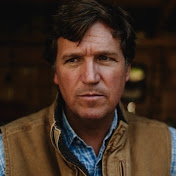
• Introduction • Early Immigration Debates at National Review • The Shift in Conservative Media and Immigration Discourse • Jewish Influence and the Role of Neoconservatives • The New York Attorney General's Legal Attack on VDARE • Suppression of Free Speech and First Amendment Challenges • Demographic Change and the Immigration Project • The Political Establishment and Immigration Policy • Media Influence: The Murdochs and Conservative Icons • Legal and Political System: Collapse and Entrenchment • Personal Impact and Support Networks • Hope for Political MiraclesIn this podcast episode, Tucker Carlson interviews Peter Brimelow, a longtime financial journalist and immigration critic, about the rapid demographic and political changes in America. They discuss Brimelow's early work on immigration, his professional struggles including legal battles with the New York Attorney General, and the broader cultural and political forces behind mass immigration and demographic shifts. The conversation touches on the roles of conservative media, Jewish influence, immigration policy, and the precarious state of free speech and legal protections in the United States, concluding with reflections on political hope and potential collapse.
Early Immigration Debates at National Review
Peter Brimelow recounts his 1992 cover story in National Review advocating for a rethinking of immigration policy, at a time when conservative media broadly favored mass immigration. Despite initially positive feedback, Brimelow and like-minded editors were purged in 1997 after Bill Buckley returned from retirement to forcefully shut down the immigration debate. Brimelow believes Buckley acted partly due to political pressure from neoconservatives, who feared the rise of white ethnic consciousness, and from Republicans wary of upsetting major donors. He views this suppression as a combination of jealousy, political calculation, and intellectual dishonesty within conservative circles.
The Shift in Conservative Media and Immigration Discourse
The conversation highlights how National Review and outlets like the Wall Street Journal have long ignored or opposed immigration restriction, often labeling critics as racists. Brimelow notes that even figures like Ben Shapiro, who presently supports controlled immigration, once denounced him as a white supremacist. He attributes this shift to a late but grudging acknowledgment of immigration realities, albeit without full accountability or apology. Meanwhile, Neoconservative voices have largely maintained an Ellis Island–style open-borders stance, fearing the political consequences if white identity politics were embraced.
Jewish Influence and the Role of Neoconservatives
Brimelow addresses the complex role of Jewish intellectuals and organizations within the immigration debate. He suggests that Jewish neoconservatives support mass immigration to prevent a consolidated white nationalist movement, fearing that a strong white ethnic identity in America might marginalize them. This dynamic, he argues, inadvertently exacerbates antisemitism and anti-Israel sentiment, as immigrant communities often hold hostile views toward Israel. He also recounts how the Anti-Defamation League influenced New York Attorney General Letitia James's legal actions against his organization.
The New York Attorney General's Legal Attack on VDARE
Brimelow explains how VDARE, a non-profit organization he co-founded opposing immigration, was subjected to aggressive legal harassment by New York Attorney General Letitia James. Registered in New York for technical reasons, VDARE was subpoenaed for massive amounts of documentation ostensibly investigating a property purchase. The legal strategy, openly admitted by James's operatives, was to "subpoena them to death," burdening the organization with crippling legal costs and forcing it into suspension. Brimelow compares this tactic to lawfare and highlights the systemic bias against white identity advocacy in American legal institutions.
Suppression of Free Speech and First Amendment Challenges
The interview explores the broader issue of white self-awareness being effectively criminalized while ethnic identity politics among minorities are encouraged. Brimelow characterizes the entire legal and cultural establishment as anti-white and anti-American in this respect. He shares examples of canceled conferences, denial of police protection, and hostile local governments demonstrating a systemic effort to shut down dissident voices. Attempts at legal recourse, including civil rights litigation and federal suits, have been repeatedly frustrated, reflecting deep-rooted judicial resistance to protecting these expressions of identity.
Demographic Change and the Immigration Project
Brimelow details the comprehensive demographic transformation underway in the United States, describing it as a deliberate project driven by emotional and political motives rather than rational benefits. He asserts mass immigration has destroyed key social and economic structures, undermining capitalism's cultural prerequisites and damaging native communities. The immigration system continues to allow a million legal immigrants per year, overwhelmingly non-white, accelerating America's ethnic transformation. The political establishment remains unwilling or incapable of addressing or even acknowledging this reality except on the grassroots level.
The Political Establishment and Immigration Policy
The discussion turns to the political dynamics around immigration. Brimelow claims Republican leaders have consistently avoided fully courting the white vote or advocating for immigration moratoriums due to fears of donor backlash and accusations of racism. The example of Virginia's gubernatorial race is used to illustrate the party's preference for minority candidates over effective political strategy. He credits Trump with breaking some taboos by raising immigration as a central issue, thus mobilizing white voters despite lacking explicit white nationalist rhetoric. However, Trump's success is seen as a rare political miracle rather than a sustained movement shift.
Media Influence: The Murdochs and Conservative Icons
Brimelow reflects on his decades-long work with Rupert Murdoch, praising Murdoch's personal decency while criticizing the media empire's editorial direction, particularly the Wall Street Journal's promotion of pro-immigration stances he views as destructive. He remarks that Murdoch outsourced political thinking to neoconservative operatives, resulting in editorial positions that contradict America's fundamental interests. Similarly, William F. Buckley is described as prioritizing donor appeasement over honest political confrontation, exemplifying a pattern of intellectual capitulation in conservative journalism.
Legal and Political System: Collapse and Entrenchment
Emphasizing the severity of the situation, Brimelow describes New York as a jurisdiction where normal legal norms are suspended, with state officials openly targeting political opponents under the guise of legal enforcement. The partisan manipulation of courts and prosecutors, judicial appointments, and grand juries has led to a breakdown in rule of law. This environment, combined with Democratic calls for lawlessness and obstruction of federal immigration enforcement, signals, in Brimelow's view, a looming constitutional crisis and potential civil conflict.
Personal Impact and Support Networks
Throughout the interview, Brimelow shares the personal toll this struggle has taken, including loss of his mainstream journalism career and financial ruin following legal battles with New York authorities. He praises figures like Tucker Carlson and Laura Loomer for their support, while lamenting the lack of defense from many conservatives who have known him for decades. He notes that his family's future remains a key motivation for his activism, and despite bitterness about the broader movement's failures, he remains hopeful, citing historical political miracles like the collapse of the Soviet Union and the unexpected rise of Trump.
Hope for Political Miracles
Brimelow closes with reflections on hope amid crisis. He points to unexpected historic political shifts as reasons to believe change remains possible. However, he warns that current trends are extremely dangerous, with the dismantling of American institutions and open calls for defiance of federal law threatening the nation's cohesion. He argues that without decisive political action to end the immigration crisis and restore legal norms, America faces a grim future, but he remains optimistic that a political miracle could still turn the tide.
Full episode
Episode summary