Introduction
Table of contents
• Introduction • Nancy Guthrie Kidnapping Update • Canada School Shooting and Shooter's Identity • Gender-Affirming Care Policy and Medical Reassessment • Mexican Cartel Drone Activity and Airspace Closure • Epstein Files and Political Fallout • U.S. Immigration Enforcement and Political Battles • Bipartisan Efforts and Economic Developments • Media and Cultural CommentaryIn this podcast episode, Ben Shapiro covers a wide range of pressing and diverse topics, beginning with new developments in the Nancy Guthrie kidnapping case. The discussion then moves to a tragic mass shooting in Canada with attention on the shooter's reported gender identity. Medical and cultural debates around gender-affirming care for minors are also examined. Additionally, issues tied to Mexican cartel drone incursions at the U.S. border and their impact on airspace are explored. The segment further delves into the recent revelations regarding the Jeffrey Epstein files and ongoing scrutiny of political figures connected to Epstein. Finally, the episode addresses U.S. immigration enforcement battles, potential government shutdown scenarios, and positive economic indicators under the Trump administration.
Nancy Guthrie Kidnapping Update
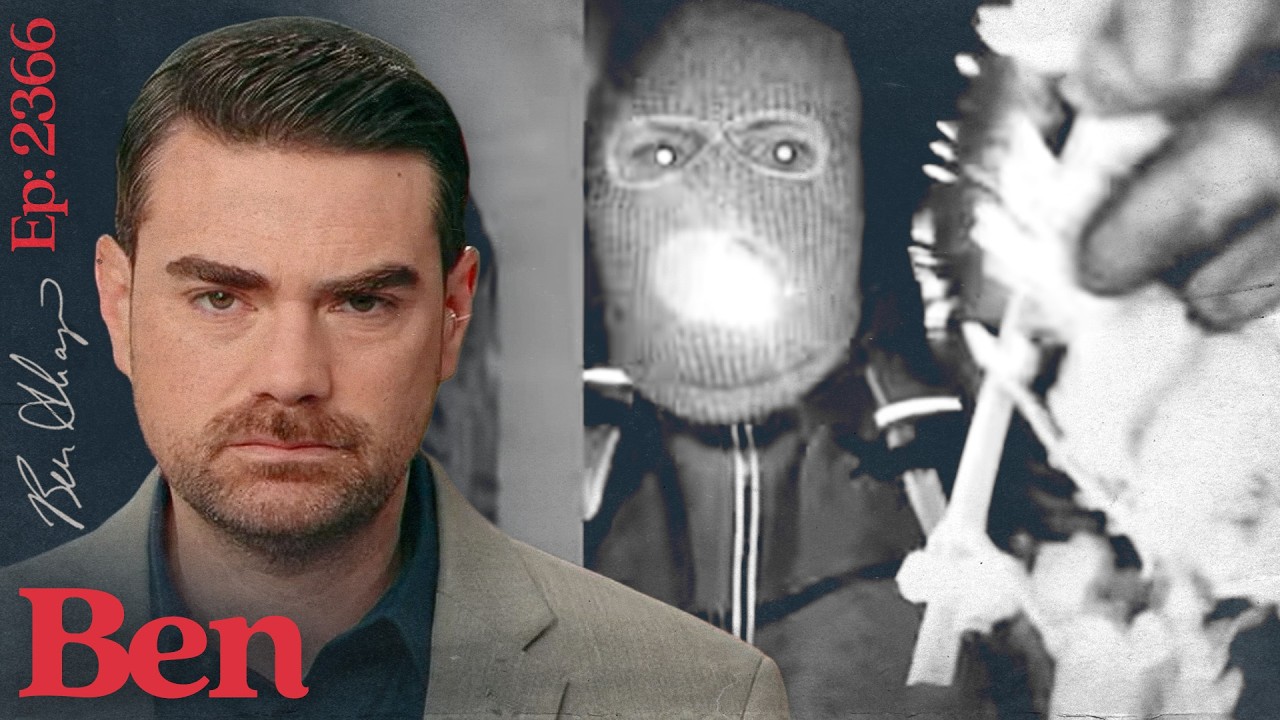
Ben Shapiro begins by detailing breaking news in the ongoing investigation of Nancy Guthrie's kidnapping in Arizona. The FBI released previously unseen video footage from a Nest security camera, overcoming technical challenges due to the family's lack of a backup subscription and the physical camera being missing. The footage shows a masked individual carrying a pistol in an unusual manner at Guthrie's home, attempting to disable and obscure the camera with leaves. The suspect's amateurish approach and physical characteristics such as mustache, eye shape, gait, and distinctive clothing have given investigators several leads, although no arrests have been made. A person named Carlos was detained briefly for questioning but released without charges.
Ben also reports on ransomware activity linked to the case, highlighting that the Bitcoin account mentioned in the ransom note experienced incoming transactions, though details remain scarce. Discussions with true crime podcaster Lynden Blake, who covers the case extensively on "Finding Nancy Guthrie," emphasize the investigation's momentum following the video's release but the continuing absence of any proof of life for Nancy Guthrie, who reportedly requires critical medication. The family's emotional struggle and cautious optimism were also discussed.
Canada School Shooting and Shooter's Identity
The episode shifts focus to a devastating mass shooting in northeastern British Columbia, Canada, which resulted in nine deaths and numerous injuries. Despite Canada's stringent gun control laws, the incident became the country's third deadliest shooting. Canadian police refrained from publicly identifying the shooter, citing privacy and investigative considerations, but widespread reports suggested that the individual identified as transgender. Ben sharply criticizes the media for misgendering the shooter and argues that calling biologically male perpetrators female distorts statistics, particularly around crime and violence involving women, and promotes a dangerous ideological narrative.
Leor Superior, a Manhattan Institute fellow specializing in pediatric gender medicine and policy, joins the discussion to analyze the broader implications. He emphasizes that many transgender-identified individuals, particularly young males, often suffer from serious mental health issues including depression and suicidality, and are frequently misguided into medical interventions that lack solid evidence for efficacy. Superior highlights recent moves by major medical organizations, like the American Society of Plastic Surgeons and the American Medical Association, signaling a retreat from previous endorsements of gender-affirming surgical interventions for minors, due in part to mounting scientific scrutiny and ethical concerns.
Gender-Affirming Care Policy and Medical Reassessment
A key theme is the dramatic shift in the medical community's stance on gender-affirming treatments for youth. Superior explains that the prior consensus favoring interventions was driven by activist influence within certain medical entities rather than broad professional agreement. Now, the field is moving toward deferring irreversible surgeries until adulthood, recognizing the lack of definitive evidence that these treatments alleviate mental health struggles. The conversation touches on the tension between perceived patient autonomy and medical ethics, underscoring that autonomy entails the right to refuse treatment rather than an unrestricted right to demand any intervention. This nuanced debate illuminates the challenges doctors face when balancing evolving science, patient pressures, and political activism.
Mexican Cartel Drone Activity and Airspace Closure
Ben transitions to a national security topic involving the closure of El Paso International Airport airspace, initially announced as a ten-day shutdown but later revised, due to incursions by drones operated by Mexican drug cartels crossing into U.S. territory. The Department of Defense reportedly took action to disable or shoot down these aerial threats. Shapiro references investigations conducted during prior border coverage which documented routine cartel drone flights used to surveil law enforcement and facilitate drug smuggling. The discussion praises the Trump administration's more assertive posture on actively countering these incursions, contrasting past bureaucratic hesitancy.
Epstein Files and Political Fallout
Turning to a politically charged subject, the episode reviews unfolding revelations from the Jeffrey Epstein documents now being released following congressional pressure. Senator John Thune is quoted insisting on full transparency regarding individuals named in the files. Ben notes recent disclosures identifying several powerful figures, including Les Wexner and Dubai Ports World's CEO, whose connections to Epstein are raising questions, though evidence of criminal wrongdoing remains unclear. He also highlights the case of Commerce Secretary Howard Lutnik, who admitted to socializing with Epstein several years prior but denies any improper conduct, with White House support intact.
Ben critiques the unstructured manner in which the Epstein archives have been released, cautioning listeners about the risks of unverified allegations and emphasizing the need for responsible reporting. He contrasts this with misleading claims linking former President Donald Trump to Epstein, citing evidence that Trump had actually cooperated with law enforcement during early Epstein investigations.
U.S. Immigration Enforcement and Political Battles
The discussion then centers on ongoing immigration enforcement controversies under the Trump administration. Ben covers recent congressional conflicts, including Democratic opposition to stricter ICE reforms and the looming threat of a partial government shutdown stemming from Department of Homeland Security funding debates. Senator Rick Scott joins to explain Republican efforts to maintain robust immigration enforcement and the political motivations behind Democratic pushes to defund or limit ICE operations. The dialogue addresses specific proposals such as requiring judicial warrants for ICE arrests, which Republicans argue would effectively disable immigration law enforcement. Scott also advocates for the Save America Act, legislation aimed at strengthening voter ID laws and citizenship verification in voting, framing it as a common-sense ballot integrity measure opposed by Senate Democrats.
Bipartisan Efforts and Economic Developments
Despite heated partisanship, Ben notes some bipartisan cooperation on initiatives like the Clear Labels Act—legislation championed by Senator Scott and Democratic Senator Kirsten Gillibrand to promote transparency about the origins of pharmaceutical ingredients, intending to reduce reliance on Chinese and Indian manufacturers for critical medications.
Economically, the episode highlights a surprisingly strong January jobs report, with private-sector employment gains exceeding expectations and the unemployment rate falling to 4.3%. Ben points to commentary from economist Romesh Ponuru explaining the ongoing gap between improving labor market data and public economic sentiment, attributing it in part to lingering memories of prior wage stagnation and misunderstanding of inflation trends. Although challenges remain, the episode portrays the current U.S. economy as stable and on a positive trajectory under the Trump administration.
Media and Cultural Commentary
Throughout the episode, Shapiro intersperses sharp critiques of media narratives—particularly their handling of gender identity matters, crime statistics, and political scandals. He underscores concerns about ideological bias affecting journalistic standards and expresses skepticism toward the mainstream framing of contentious social issues, emphasizing the importance of factual accuracy and accountability.