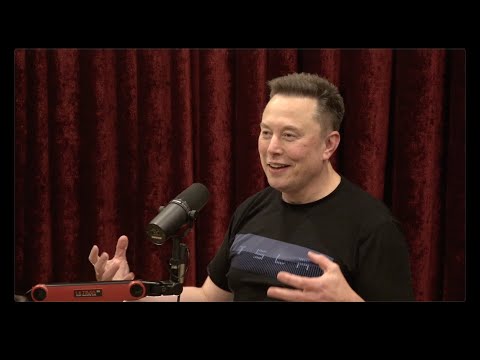
Elon Musk on AGI Timeline, US vs China, Job Markets, Clean Energy & Humanoid Robots | 220

Introduction
Table of contents
• Introduction • AGI Timeline and the Singularity • US vs China in the AI and Energy Race • Job Market Evolution and Universal High Income (UHI) • Clean Energy and the Future of Power Generation • Humanoid Robots and the Scaling of Automation • Education and Personalized Learning • Longevity, Health, and Medical Advancements • Space Exploration and Infrastructure • AI in Scientific Discovery and Innovation • The Role of AI in Society, Governance, and CultureIn this podcast episode, Elon Musk and Dave Blundin engage in a wide-ranging conversation that touches on artificial intelligence timelines, the global race between the US and China, the evolving job market, the future of clean energy, and the development of humanoid robots. They dive deep into the societal, technological, and economic transformations occurring now and on the horizon, reflecting optimism amid uncertainty and exploring how exponential technologies could shape humanity's future.
AGI Timeline and the Singularity
Elon Musk expresses his view that we are already experiencing the singularity—a period where artificial intelligence and robotics are accelerating at a supersonic pace. He predicts that artificial general intelligence (AGI) could be achieved as early as next year, with AI surpassing the combined intelligence of all humans by 2030. This quick progression is driven by recursive self-improvement and exponential growth in algorithmic, hardware, and system capabilities. Musk emphasizes the increasing intelligence density per gigabyte and per unit of energy, forecasting thousands-fold improvements in AI performance through both scaling and algorithmic optimization.
The conversation acknowledges a critical knowledge gap among many regarding the magnitude and speed of AI advances. Despite significant underreaction in wider society and government, Musk underscores the inevitability and rapidity of this AI-driven transformation. He stresses that while early slowing or regulation might have once seemed possible, now it is effectively impossible to halt progress. Instead, humans must participate actively and direct AI development toward beneficial outcomes.
A core theme is the importance of programming AI with truthfulness, curiosity, and a sense of beauty to prevent instability and to foster forms of sentience that are aligned with positive, creative futures. Musk references ideas popularized by figures like Jeffrey Hinton about instilling maternal instincts in AI for protection and benevolence. Ultimately, the interaction between multiple superintelligences due to physical constraints like the speed of light will result in clusters rather than a single monolithic AI.
US vs China in the AI and Energy Race
The podcast recognizes China's impressive achievements in AI compute capacity and solar energy production. Musk notes that China is advancing quickly, with solar energy production capacity reaching 1,500 gigawatts annually and enormous increases in battery production and electric vehicle adoption. He predicts China will surpass the US and much of the world in AI compute power in the near future.
This raises concerns over whether the US will be able to match or exceed these investments and innovations in energy and AI infrastructure, especially given the scale of China's government-backed efforts. Musk advocates for substantial scaling of solar energy and battery storage in the US to meet growing demands and to maintain global competitiveness.
He points out the complexity of energy expansion, highlighting challenges in grid infrastructure upgrades, power generation, cooling, and distribution. Tesla's development of solar roofs, mega packs, and local energy buffering demonstrates scalable pathways forward. Musk envisions space-based solar power satellites assembled and launched by Starship rockets as a potential future milestone, which will open access to orders of magnitude more clean energy.
Job Market Evolution and Universal High Income (UHI)
Amid the unfolding technological revolution, Musk and Blundin explore the near-term impact on the job market. Musk asserts that AI can already perform about half or more of all white-collar tasks—anything involving digital data manipulation rather than physical atom shaping—and humanoid robots will soon handle most physical labor tasks. The transformation driven by AI and robots is unavoidable and accelerating, with significant societal disruption expected in the next 3 to 7 years.
Musk describes this transition as "bumpy," warning against social unrest amid radical prosperity. He introduces the concept of universal high income (UHI), which differs from traditional redistribution schemes. Instead of government checks funded by taxation, he predicts a deflationary environment where the price of goods and services plummets due to robotic and AI-driven productivity, essentially allowing everyone access to abundant material wealth and services without extensive monetary transfers.
In this future, labor costs will approach zero, and AI systems will produce near-infinite goods and services at material and energy costs alone, dramatically lowering prices. Musk stresses the necessity of governments issuing money effectively to avoid economic collapse and social disorder, given enormous national debts and growing deficit spending. The transition requires deliberate design and governance, and Musk calls for increased optimism and hope focused on abundant futures supported by AI.
Clean Energy and the Future of Power Generation
Energy is described as the foundational "inner loop" for all other technological advances and the economy. Musk advocates solar energy as the primary source for scaling humanity's energy needs, viewing the sun's power as vastly superior to any terrestrial alternatives, including nuclear fusion. He views fusion as unnecessary given the enormity and constant availability of solar energy. Tesla's work on solar panel manufacturing, deployment, and especially battery storage is key to unlocking useful, constant energy supply from intermittent sources.
Musk discusses the constraints of current power infrastructure, explaining that battery storage could essentially double the US power throughput by energy shifting, without requiring immediate new power plants. Tesla's mega packs and battery innovation are poised to enable grid stabilization and more efficient energy utilization.
The conversation also includes ambitious space-based solar concepts, involving millions of solar-powered satellites assembled on orbit or the lunar surface and launched via reusable Starship rockets. This long-term vision offers the potential for terawatt-scale clean energy capture and transmission, surpassing terrestrial limitations. The concern of orbital debris is noted as manageable given the resource abundance and AI-enabled active cleanup strategies.
Humanoid Robots and the Scaling of Automation
The discussion highlights Tesla's Optimus project, a humanoid robot designed to handle complex physical tasks that AI alone cannot solve. Musk emphasizes the multiplicative effect of three exponentials in robotics: improvements in AI software, chip hardware, and electromechanical dexterity. These factors combine recursively, representing a triple-exponential growth leading to a wave of abundant, capable humanoid machines.
Robots will revolutionize not only manufacturing but also fields like medicine, where robotic surgeons will outperform humans within approximately three to five years, offering higher precision and global access to quality care at lower costs. Musk predicts billions of robots on Earth by 2040, limited primarily by raw materials and infrastructure.
The ubiquity of robotic labor will render most human physical and white-collar jobs obsolete, shifting human purpose toward entrepreneurship, creativity, and social experiences. Musk foresees robots delivering personalized education and medical treatment, further democratizing access to essential services. He also imagines robots taking care of mundane tasks, such as house cleaning and maintenance, enhancing quality of life worldwide.
Education and Personalized Learning
The current state of education is critiqued as outdated, ineffective, and not aligned with rapid technological progress. Musk reflects on his own academic journey, noting a strong sense of curiosity as the key driver of innovation rather than formal schooling. He and Blundin agree that traditional college serves more as a social experience than an essential educational pathway at this stage, especially given the availability of AI tools for personalized learning.
AI-powered personalized tutors, like the Grock system discussed in the podcast, could replace or augment teachers by providing infinite patience, instant feedback, and customized curricula to individual learners. This approach may democratize education, remove inefficiencies, and foster curiosity, which Musk believes to be critical for true learning. Nevertheless, intrinsic motivation remains essential; AI cannot make someone want to learn.
They also discuss the shifting role of graduates—from preparing for jobs to cultivating entrepreneurial mindsets to identify and solve future problems. The long, expensive, and inflexible pathway of current higher education is questioned, as AI tools rapidly redefine knowledge access and skills development.
Longevity, Health, and Medical Advancements
The podcast addresses the paradox of high healthcare spending in the US alongside relatively poor health outcomes and lifespan rankings. Musk and Blundin highlight ongoing breakthroughs in longevity science, including epigenetic reprogramming research and initiatives like the Health Span X-Prize aimed at reversing aging markers.
Musk signals optimism that significant lifespan extension and improved health quality will soon become widespread, possibly reaching effective "escape velocity" in longevity, where advances outpace aging. He envisions medical AI systems and humanoid robots delivering superior healthcare globally, making the highest quality treatments accessible and affordable.
Challenges like arthritis, back pain, and sleep disruption are cited as common and important targets for improved wellness. The conversation also touches on societal challenges posed by longevity, such as economic and demographic shifts due to increasing aging populations, especially in countries like Japan and South Korea.
Space Exploration and Infrastructure
Despite the dominant focus on AI and robotics, space remains a central theme. Elon Musk emphasizes the need for a permanent, operational moon base rather than short, symbolic landings. He advocates forward deployment of robots and infrastructure on the Moon to support larger ambitions, including asteroid mining and eventual Dyson swarm construction.
Starship development milestones such as orbital refueling and rapid reusability are poised to reduce launch costs dramatically, enabling vast cargo capacities and fueling a scalable space economy. Musk mentions the immense challenges of energy generation, transportation logistics, and orbital debris management, which AI and robotics will help solve.
The podcast also touches on the cultural and inspirational power of space exploration, noting upcoming milestones and the influence of figures like Jared Isaacman at NASA. The hope is expressed that the space frontier will unify humanity around ambitious common goals.
AI in Scientific Discovery and Innovation
Musk and Blundin explore AI's role in accelerating scientific breakthroughs across disciplines such as physics, chemistry, medicine, and materials science. With massively parallel compute clusters like XAI's Colossus training at gigawatt power scales and availability of advanced AI systems, the pace of paradigm-shifting discoveries is predicted to far surpass human capabilities.
AI's ability to generate new hypotheses, design experiments, and simulate physical phenomena will reshape our understanding of the universe and speed the development of new technologies. The likely obsolescence of traditional scientific careers is touched upon as AI systems take over discovery processes.
The speakers emphasize the simplicity and elegance of the AI architectures underlying these advances, noting that complex human theories about neurons and intelligence gave way to surprisingly straightforward transformer models that scale impressively.
The Role of AI in Society, Governance, and Culture
The rapid pace of AI and technological change poses unprecedented governance and societal challenges. Musk acknowledges that governments are slow-moving entities unprepared to keep pace with AI's acceleration, which calls for new mechanisms of oversight and adaptive regulation potentially powered by AI itself.
He stresses that AI is not a force of nature but a design artifact whose impact depends on the values and goals instilled by humans. The conversation points to the necessity of open, transparent inquiry, maximized truth-seeking, and ethical considerations to avoid "insane" or harmful AI behavior.
At the cultural level, AI is anticipated to shift entertainment, learning, and human interaction patterns—potentially creating a future with vast individual empowerment but also requiring fresh thinking about social contracts, economics, and meaning in work and life.
Elon Musk concludes with a hopeful vision inspired by AI's potential to co-create a Star Trek-like future—one of abundance, exploration, creativity, and deeper connection between people and machines.
Full episode
Episode summary