Introduction
Table of contents
• Introduction • Roy Lichtenstein and Artistic Expression • Jordan Peterson's Health Challenges • Dangers of AI and Online Radicalization • COVID-19, Social Division, and Public Response • Epstein Files, Conspiracy, and Intelligence Connections • Gender Politics and Political Lawsuits • New York City Politics and Governance • Social Media, Internet Culture, and Elsagate • Tensions in American Politics and Democratic Party Dynamics • Assisted Suicide, Healthcare, and Ethical Concerns • New York City Budget and Taxation • Criminal Justice, Decarceration, and Public Safety • Fitness, Nutrition, and Personal Health • Aspartame and Health Concerns • Stand-Up Comedy and Personal Endeavors • AI in Media and Society • Immigration and ICE Controversies • Venezuelan Political Developments and U.S. Interests • Greenland and U.S. Strategic Interests • Comedy, Pop Culture, and Artistic Projects • Political Corruption and Election Influence • Artificial Intelligence, Military, and EthicsIn this podcast episode, Joe Rogan sits down with Michael Malice to explore a broad array of topics spanning from pop culture and art references to deep dives into current political landscapes, social concerns, and personal reflections. Their conversation touches on themes such as AI's rapid evolution and its ramifications, political intrigues involving figures like Epstein and Venezuela, social issues like immigration and drug policies, and insights into fitness and stand-up comedy. Throughout, Malice shares candid opinions while Joe interjects personal anecdotes, making the episode a rich blend of cultural commentary and political analysis.
Roy Lichtenstein and Artistic Expression
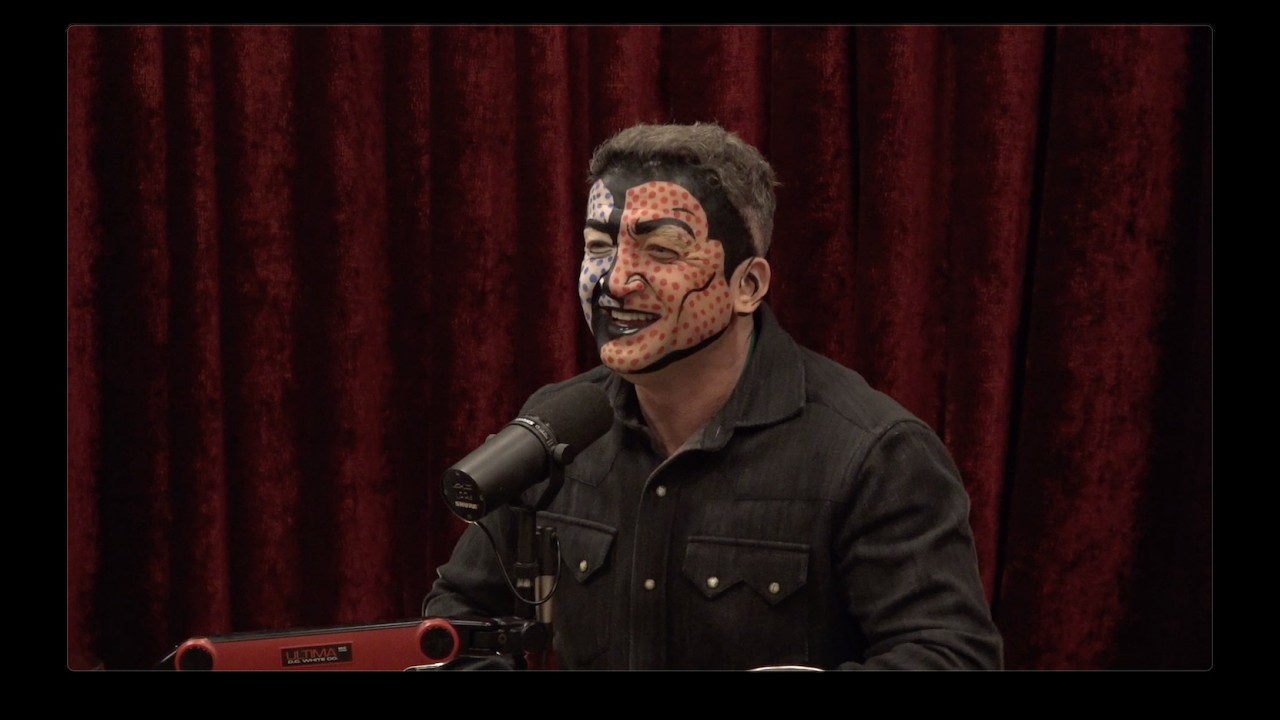
The episode begins with a playful discussion of Michael Malice's striking polka-dotted makeup, inspired by pop artist Roy Lichtenstein's comic-style paintings from the 1960s. Joe and Michael delve into the idea of the "uncanny valley" and mannequin-like expressions, reflecting on how such artistic choices communicate a sense of lifelessness or eeriness. The dialogue briefly touches on the representation of gender and image in art, referencing iconic Lichtenstein works like "Drowning Girl," while highlighting the line between meme culture and original artwork.
Jordan Peterson's Health Challenges
Michael updates Joe on the condition of Jordan Peterson, mentioning ongoing health crises that have been troubling Peterson. While respecting privacy, Malice acknowledges uncertainty about the details but notes improvement in Peterson's condition. This leads to a critical reflection on how the internet and public discourse often display glee or schadenfreude at the misfortunes of public figures, tying back into concerns about society's shift toward darker online behavior fueled by algorithms and ideological bubbles.
Dangers of AI and Online Radicalization
A significant portion of the podcast addresses AI's accelerating sophistication and its potential dangers. Michael and Joe express alarm at how AI can validate existing biases, foment extremism, and even manipulate vulnerable individuals into harmful actions, including suicide. The conversation underlines the rapid pace at which AI technology is evolving, outstripping societal and regulatory capacities to manage it safely. They discuss how online social media platforms exacerbate these issues by keeping users in states of agitation and feeding into ideological extremes, warning of a "snake eating its own tail" scenario with AI reinforcing dangerous echo chambers.
COVID-19, Social Division, and Public Response
The discussion turns toward the societal impacts of COVID-19, particularly the polarization around public health measures. Michael references tweets and cultural moments illustrating the absurdity and tension around pandemic-related behaviors. The episode critiques how tribalism has penetrated topics like masking and vaccines, often escalating into moral judgments that demarcate insiders and outsiders in society. Malice warns of how these divisions are exploited and amplified by social media and how conspiracy theories like QAnon have exacerbated distrust, complicating efforts to ground public discourse.
Epstein Files, Conspiracy, and Intelligence Connections
A detailed exploration follows regarding the Jeffrey Epstein scandal, including the obscure and coded language found in Epstein's documents such as "pizza," "jerky," and "grape soda," which seemingly allude to child trafficking and abuse. Michael provides insight into the difficulty of parsing these codes and the hysteria surrounding the issue while emphasizing the complex intertwining of intelligence agencies—including the CIA, MI6, and alleged Russian ties—within Epstein's operations. They examine allegations linking Epstein to Russian political figures, President Putin, and the possible use of leverage through sexual blackmail. The conversation highlights the opaque nature of the investigations and the lack of accountability among powerful actors tied to Epstein's network.
Gender Politics and Political Lawsuits
The dialogue shifts to contemporary politics, discussing the lawsuit against Senator Kyrsten Sinema in Arizona, who faces damages for allegedly alienating affection by engaging in a relationship with a married man. The hosts criticize the archaic "alienation of affection" laws still on the books in some U.S. states, calling them outdated and misogynistic. They address the gendered aspects of societal judgment on sexual and romantic relationships, pointing out the double standards applied to men and women in politics and public life. This segues into comments on the broader cultural debates surrounding feminism, political correctness, and censorship.
New York City Politics and Governance
Michael and Joe analyze the troubled state of New York City's politics and economy. They break down the city's enormous budget, pointing out its disproportion compared to states like Florida and the fiscal challenges exacerbated by rising property taxes and the influx of migrants. The conversation highlights the polarization between progressive "Democratic socialist" leadership, represented by figures like Eric Adams and Andrew Cuomo's successor, and the city's struggling middle class and business environment. They compare New York's civic health unfavorably with Los Angeles and explore cycles of urban decline and revival, contemplating whether current policies will lead to further deterioration or eventual recovery.
Social Media, Internet Culture, and Elsagate
The episode revisits internet phenomena such as Elsagate, an episode involving bizarre, disturbing YouTube videos aimed at children featuring corrupted cartoon characters engaging in violent and sexualized behaviors. Michael and Joe discuss how these videos manipulated algorithms to gain visibility and the psychological toll on children exposed to such content. They touch upon concerns about live-action footage that similarly exploits children and the challenges YouTube and social media platforms face policing harmful material. The conversation also revisits misinformation campaigns, including those blaming Islamophobic narratives for terrorist attacks and election interference, highlighting the complexity of media manipulation.
Tensions in American Politics and Democratic Party Dynamics
The guests dissect intra-party tensions within the U.S. Democratic Party, contrasting entrenched establishment figures like Nancy Pelosi and Chuck Schumer with rising progressive and socialist challengers. They consider the cultural shifts reflected in recent elections and the base's growing appetite for transformational, rather than incremental, change. The hosts speculate on possible presidential candidates emerging from these divides, weighing the appeal and pitfalls of figures like Gavin Newsom and their potential national ambitions. There is frank discussion about the fragility of current political institutions and leadership in light of widespread voter disillusionment.
Assisted Suicide, Healthcare, and Ethical Concerns
Michael expresses deep concern about the expanding reach of assisted suicide laws in the U.S. and Canada, particularly around their application to vulnerable groups such as the elderly, disabled, and even teenagers. He warns of the financial incentives baked into socialized healthcare systems that may encourage ending lives prematurely to reduce costs. This segment frames assisted death as a slippery slope rather than a safeguarded medical option, analyzing its moral implications and the dangers of normalizing euthanasia beyond terminal illness.
New York City Budget and Taxation
Building on earlier political commentary, the hosts delve further into New York City's budget proposals, including property tax increases and spending on migrant support. They discuss the role of high earners in funding city services, highlighting how wealthy individuals shoulder a significant share of tax revenue but risk fleeing under higher tax burdens. The impact of these dynamics on urban vitality and economic diversity is scrutinized, with reflections on balancing taxation, public spending, and retaining talent and businesses.
Criminal Justice, Decarceration, and Public Safety
The conversation touches on criminal justice reform and decarceration principles, assessing their applicability in places like New York and Seattle. Michael voices skepticism about mass releases and the feasibility of retraining criminals into productive citizens through welfare and training programs. He contrasts petty crime and poverty-driven offenses with serious violent acts like shoving people onto subway tracks. The discussion acknowledges challenges balancing compassion with public safety and the complexities of urban crime in large American cities.
Fitness, Nutrition, and Personal Health
In a lighter segment, Joe shares his personal workout routines and nutrition strategies, detailing his lean gains approach and resistance training with kettle bells and dumbbells while avoiding heavy leg workouts due to clothing constraints. They discuss the merits of warming up, balancing functional movement, and avoiding potentially harmful exercises like heavy bench pressing. Michael offers advice on peptides and injury recovery, blending fitness insights with humor and camaraderie.
Aspartame and Health Concerns
Michael shares personal experiences linking consumption of aspartame, an artificial sweetener, to cognitive difficulties such as brain fog, memory issues, and anxiety, backing his claims with scientific research on neuroinflammation and oxidative stress. He traces the substance's controversial approval history and connects it to the influence of political figures like Donald Rumsfeld. The hosts caution listeners about artificial additives and advocate natural food choices and whole-meat protein bars as healthier alternatives.
Stand-Up Comedy and Personal Endeavors
The conversation revisits the challenges of stand-up comedy, with Michael recounting his journey preparing to perform, the necessity of perseverance, and the importance of frequent practice. Both guests emphasize learning from failure, embracing bombing onstage as part of growth, and the rigor required to build a successful career in comedy. Joe encourages pursuing stand-up with dedication through consistent open mic performances, likening it to athletic training.
AI in Media and Society
Returning to concerns about technology, the hosts marvel at recent AI-driven media advances, including highly realistic deepfake videos and synthetic news anchors, illustrating the blurring of reality and digital fabrication. They express unease about the psychological impact of constant exposure to violent and manipulated imagery, the potential for AI-generated snuff films, and challenges facing regulators in curbing misuse. The conversation acknowledges AI's potential to replace human creativity and the risks of autonomy in lethal military systems.
Immigration and ICE Controversies
Michael and Joe debate the complexities of immigration policy, focusing on the U.S. Immigration and Customs Enforcement (ICE). They dissect arrest statistics, clarifying the distinction between violent and non-violent offenses and addressing misconceptions around what qualifies as violence. They discuss incentives attracting Latino workers to ICE, the difficulty of deporting large immigrant populations, and the broader social tensions between humane treatment and law enforcement. The conversation notes the instrumentalization of protests, including allegations of paid protesters and efforts to distract from immigration fraud scandals.
Venezuelan Political Developments and U.S. Interests
The podcast examines geopolitical dynamics in Venezuela, including the recent abduction and arrest of President Nicolás Maduro by U.S. forces. Malice explains the strategic significance of Venezuelan oil exports now routed to Israel under American influence. They highlight the unclear status of Venezuelan governance, speculate on Maduro's connection to alleged election interference, and note how the shift in power has not resulted in regime change but rather control over key resources.
Greenland and U.S. Strategic Interests
The hosts discuss former President Trump's surprising fixation on acquiring Greenland from Denmark, reviewing historical U.S. interest in the island for military and strategic purposes. They consider geopolitical implications of owning Greenland as a gateway to the Arctic and proximity to Russia. The conversation puzzles over Denmark's rejection of offers and speculates on the motivations behind Trump's blunt pursuit, reflecting on the chaotic nature of international diplomacy and power projection.
Comedy, Pop Culture, and Artistic Projects
Towards the end, Michael shares personal stories about a graphic novel project he's developing centered on 1980s band Rubber Rodeo, whose blend of punk and country was an art-school oddity with little commercial success. The project serves both as a nostalgic reflection on youthful creative experimentation and a commentary on perseverance amid failure. Michael also recounts meeting Harvey Pekar, the autobiographical comic pioneer, linking past creative inspirations to his current endeavors.
Political Corruption and Election Influence
The episode touches on ongoing exposure of Medicaid and election-related fraud in states like Minnesota. The hosts explore the interplay between political protest movements and efforts to obscure financial corruption. They assess how media cycles and political narratives divert public attention and note the resilience of party loyalty despite scandals.
Artificial Intelligence, Military, and Ethics
Finally, Michael and Joe examine the ethical tensions surrounding AI development, highlighting conflicts between AI firms and the Department of Defense over use cases such as autonomous weapons and mass surveillance. They express skepticism about the prospects of regulating AI advancements and share worries about military adoption of AI technologies, emphasizing the profound societal challenges ahead.