Unlearn Negative Thoughts & Behaviors Patterns | Dr. Alok Kanojia (Healthy Gamer)
Introduction
Table of contents
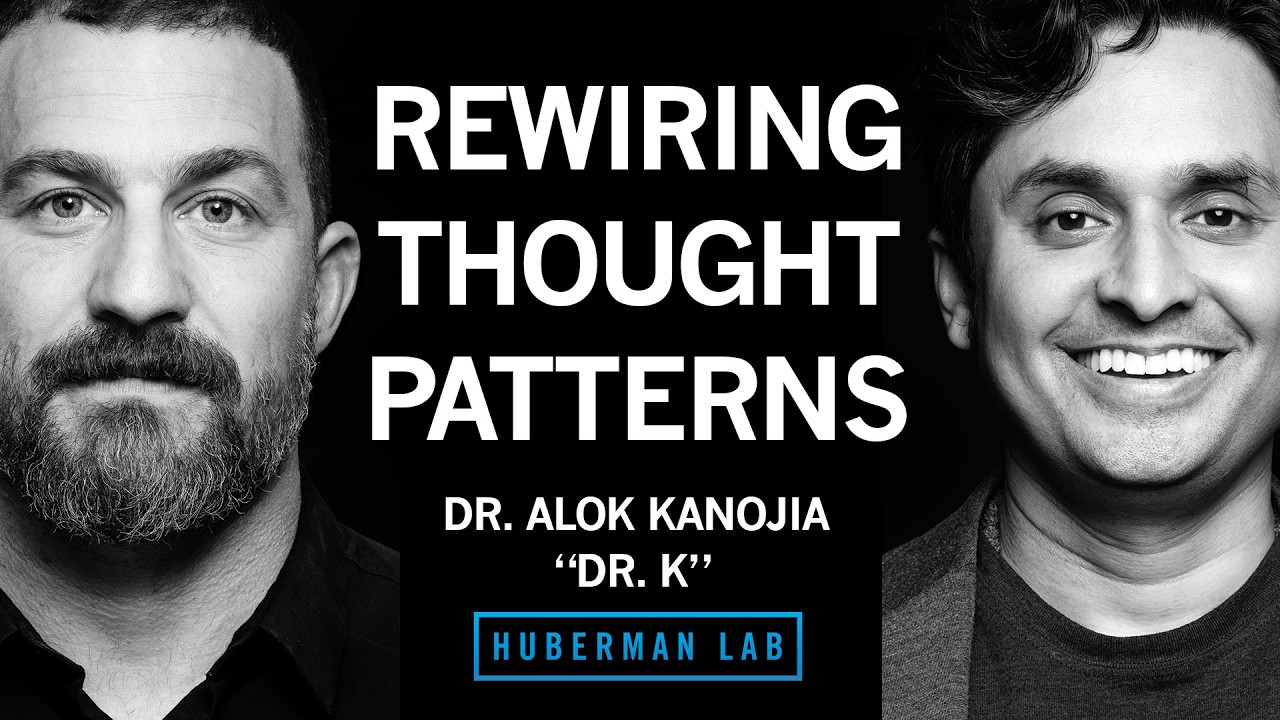
• Introduction • Changing the Mind vs Changing Behavior • Developmental Pressures and Early Attraction to Screens • Generational Differences in Emotional Awareness • Distress Tolerance: Beyond Suppression • Ambiguity and Social Interaction in the Digital Age • Internet, Social Media, and Emotional Overload • The Ego and the Search for True Self • Inner Motivation vs External Validation • Social Media's Impact on Ego and Narcissism • Meditation and Ego Dissolution • Cultivating the Void and Observing Emotions • Environmental Regulation of Emotions • Samskaras and the Subconscious Mind • Yoga Nidra and Neuroplasticity • The Importance of Physiological Foundations • The Intersection of Western Science and Eastern Practice • Modern Mental Health Challenges: Social Media, AI, and Addiction • Relationships, Loneliness, and Intimacy • Pornography Use and Its Neurological Impact • Challenges Facing Young Men Today • Practical Advice for Navigating Modern Life • The Necessity of Self-ExplorationIn this podcast episode, host Andrew Huberman engages with Dr. Alok Kanojia, a psychiatrist and mental health educator known as Dr. K, to explore methods for transforming negative thought and behavior patterns by fundamentally changing the mind's tendencies. Their discussion covers topics such as the nature of ego, distress tolerance, motivation, the psychological impact of social media and AI, addiction including pornography, eastern and western perspectives on mind and self, and practical tools for self-understanding and rewiring the nervous system.
Changing the Mind vs Changing Behavior
Dr. K opens by emphasizing that true change in mental health does not come from mere willpower or behavioral suppression but from altering fundamental tendencies and the sense of self itself. He shares clinical experiences where even deep-seated personality disorders like narcissism can be reshaped through intensive psychotherapy, leading to natural changes in thoughts, emotions, and behaviors without reliance on willpower. This process involves transforming core self-esteem and sense of being, which also applies to treatment-refractory depression and trauma. The focus is on unlearning maladaptive internal patterns rather than fighting them externally.
Developmental Pressures and Early Attraction to Screens
Dr. K recounts his own upbringing as a gifted child pushed academically from an early age, highlighting how mismatch between personal developmental pace and external pressures can drive children toward escapism, such as intense engagement with video games. His early immersion in the internet and games, which offered well-calibrated cognitive challenges, replaced unsatisfying schooling and social competition. This early frame contextualizes the allure and potential downsides of digital interaction, especially under high social and familial expectations, such as those common in immigrant families.
Generational Differences in Emotional Awareness
Discussing generational shifts, Dr. K sees both benefits and pitfalls in the contemporary emphasis on feelings, trauma, and self-awareness. While greater emotional literacy can enhance happiness and success by improving self-knowledge and interpersonal understanding, he warns that "feeling language" has sometimes been co-opted by ego defenses and manipulations. For example, concepts like "boundaries" and "victimhood" may be weaponized to control or deflect responsibility. The modern age's hyper-focus on feelings sometimes leads to fragile distress tolerance, increased mental illness rates, and pervasive rumination and perfectionism as transdiagnostic risks.
Distress Tolerance: Beyond Suppression
Distress tolerance is clarified not as pushing down emotions but as developing the capacity to accept, articulate, and understand them. Dr. K details practical components: labeling emotions with words to engage higher brain areas reduces amygdala hyperactivity; cultivating a broader range of emotions alongside the primary feeling creates cognitive flexibility; and recognizing that emotions signal information and motivation rather than dictate behavior. Instead of letting emotions "run the show," mastering them means observing what they tell you about your environment and internal state, and choosing responses aligned with your true interests.
Ambiguity and Social Interaction in the Digital Age
The conversation pivots to the challenges of ambiguity inherent in human interactions like flirting, where subtlety preserves safety and adaptability, contrasted with the social skills erosion caused by heavy screen-based communication. Dr. K explains that mixed signals are natural and necessary since they allow negotiation and reading of social contexts. However, with increasing reliance on text and social media, many lose this ability, fostering intolerance of uncertainty—a key factor in mental health. The problem exacerbates when interaction outcomes are documented online, triggering hypervigilance and fear of rejection based on exaggerated worst-case thinking.
Internet, Social Media, and Emotional Overload
Dr. K discusses the emotional hyperactivation that internet platforms exploit, sustaining user engagement through cycles of arousal—switching between fear, anger, amusement, and other intense feelings. This nonstop emotional pulsing drains cognitive resources and willpower, impairs sleep, and fuels anxiety. Because social media amplifies judgment and narcissism, it heightens vulnerability to negative mental health outcomes. Users are especially prone to spiraling when using social media in vulnerable emotional states or before sleep.
The Ego and the Search for True Self
Drawing from his seven years as a monk, Dr. K introduces Eastern concepts contrasted with Western psychology, particularly around ego and self. The ego is described as any self-defining label or identity ("I am a brother, a professor, a gamer"), necessary for functioning but often the source of identity confusion and suffering. The true self lies beneath these stories, a core experiential presence that persists independent of shifting roles and external validation. Finding this true self requires peeling back layers of conditioning and internalized expectations, distinguishing authentic desires from socially imposed ambitions.
Inner Motivation vs External Validation
The dialogue explores the tension between pursuing goals driven by ego-based validation (e.g., status, comparison, proving oneself) and following intrinsic motivation rooted in authentic inner voice or "heart's desire." While ambition itself is not condemned, when motivated chiefly by external comparison or insecurity, it leads to perpetual dissatisfaction. Success driven from deep internal passion aligns better with happiness and sustainable drive. Dr. K explains how the ego's comparative nature inevitably leads to anxiety and a sense of being never "enough."
Social Media's Impact on Ego and Narcissism
Dr. K highlights how having a large following or being under constant judgment intensifies narcissistic defenses, as one must repeatedly affirm self-worth in the face of criticism. The mind's threat detection system magnifies the impact of even a single negative comment, making public figures especially vulnerable to anxiety and paranoia. True confidence, he says, does not require repeated self-affirmation; rather, it rests on internal security. Managing criticism by distancing oneself and cultivating empathy over defensiveness helps reduce ego-driven suffering.
Meditation and Ego Dissolution
Meditation is presented as a critical tool for observing and eventually transcending ego, differentiating self from transient thoughts, feelings, and identities. Studies show meditation reduces activity in the default mode network, correlating with decreased self-referential processing and ego dissolution experiences, akin to those seen in therapeutic psychedelic use. Dr. K recommends shunya (void) meditations, which focus on stillness and the absence of thought, to connect with one's fundamental inner self beyond labels and narratives.
Cultivating the Void and Observing Emotions
Shunya meditation involves focusing attention inward, often on bodily sensations of stillness or the space between breaths, to encounter a void beyond mental chatter. This experience can provide peace amid emotional upheaval and help identify that feelings are temporary phenomena—not the essence of identity. Such practices build resilience, as one learns to watch emotions without being overwhelmed by them. Through this detachment, sufferers may observe and process grief or sadness with greater equanimity.
Environmental Regulation of Emotions
Dr. K notes that many, especially men, regulate internal emotional states through external environmental cues and relationships. While shaping surroundings positively is important for mental health (for example, changing social circles in addiction recovery), overreliance on external validation or change risks instability. Healing requires developing internal stability such that emotional well-being does not depend primarily on external conditions or others' moods.
Samskaras and the Subconscious Mind
Samskaras are described as the emotional and psychological imprints from past experiences that unconsciously influence present perception and behavior. These "mental scars" shape worldview and reactions, often maladaptively. Dr. K relates this to trauma as a form of intense memory encoded via one-pointed emotional focus during high arousal states. Yoga Nidra and related hypno-yogic practices access trance states to facilitate the conscious rewriting of these deep unconscious patterns through suggestion (sulpa) implanted at times when the mind is most plastic and receptive.
Yoga Nidra and Neuroplasticity
Yoga Nidra induces a state of deep relaxation coupled with inner alertness, ideal for accessing the unconscious mind. This state resembles hypnagogia, facilitating neuroplasticity through physiological shifts such as cardiac coherence breathing and brainwave changes. Sulpa, or resolve statements, inserted during this state can operate below surface-level cognition to restructure limiting beliefs and tendencies. However, merely repeating affirmations without entering these receptive states is ineffective and may amount to self-gaslighting.
The Importance of Physiological Foundations
Emphasizing scientific rigor, Dr. K stresses that understanding and modifying autonomic physiology—breathing patterns, heart rate variability, nervous system states—forms the groundwork for deeper psychological change. He champions specific breathing techniques, such as prolonged exhalations and alternate nostril breathing, that have documented parasympathetic activations and subjective feelings of "prana" or chi. These physiological tools prime the brain for effective meditation and deeper rewiring.
The Intersection of Western Science and Eastern Practice
The dialogue highlights the current limits of scientific methods in measuring subjective phenomena like thoughts or spiritual experiences. Dr. K acknowledges openness to the value of spirituality and mystical states, even when not fully explainable by neuroscience. He encourages exploration and critical inquiry while maintaining skepticism, recognizing that many profound mental states and insights are only accessible through personal experiential practice rather than external verification alone.
Modern Mental Health Challenges: Social Media, AI, and Addiction
Both guests explore how social media and emerging AI technologies affect perception, cognition, mental health, and social interactions. The internet favors emotional activation and polarization to maintain engagement, which can drive mental exhaustion, mood disorders, and addictive cycles. AI's personalization and feedback loops may exacerbate confirmation bias and induce psychotic-like symptoms in vulnerable individuals, raising concerns about unregulated mental health consequences. These digital environments foster social isolation even as they connect people.
Relationships, Loneliness, and Intimacy
Dr. K underscores the centrality of healthy relationships for mental health resilience. Despite common perceptions, looks and financial success are less predictive of relationship satisfaction and longevity than shared emotional experiences, emotional regulation skills, and personal vision. Understanding and practicing social signals like flirting, embarrassment, and charisma drive successful connections more than superficial traits. He notes that modern dating's algorithmic and profile-driven nature undermines natural emotional bonding.
Pornography Use and Its Neurological Impact
Acknowledging that most pornography users do not experience problems, Dr. K points to troubling trends: earlier prepubescent exposure correlates with increased addiction risk, and the technological explosion in realistic, interactive, and parasocial forms of pornography deepens engagement of social brain circuits. This contributes to rising rates of erectile dysfunction and altered sexual functioning among young men. Pornography often serves as a numbing mechanism to emotional pain rather than mere sexual stimulation, amplifying disorders of emotional regulation.
Challenges Facing Young Men Today
The episode addresses a societal trend of young men "falling behind" women in educational attainment, career progression, and stable relationships, compounded by limited support systems and social expectations to "self-manage." Increasing isolation, addiction, and mental health issues reflect this dynamic. Dr. K shares personal insight from his own early struggles and emphasizes that lack of self-understanding and misdiagnosis are major barriers to growth. Motivation problems often stem from misunderstanding internal signals like tiredness or fear.
Practical Advice for Navigating Modern Life
The discussion closes with concrete recommendations: use social media consciously, avoiding it when emotionally vulnerable or near bedtime; cultivate internal self-knowledge of ego, emotion, and motivation; develop distress tolerance through active emotional processing rather than suppression; engage in meditation and breathwork to access deeper stable states; and prioritize authentic relationships based on shared values and vision over superficial ambition or appearance-driven competition.
The Necessity of Self-Exploration
Ultimately, Dr. K and Huberman emphasize that despite abundant external distractions and pressures, meaningful healing and flourishing arise from regular inward work. This includes discerning authentic desires from conditioning, cultivating awareness of the mind's mechanics, and practicing methods, both ancient and modern, that foster neuroplasticity and spiritual resilience. Such pathways empower individuals to unlearn maladaptive patterns and step into fuller, more integrated versions of themselves.
Full episode
Episode summary