Why Are We Defending Mass Murder in Gaza? Because Our Greatest Ally Demands It

Introduction
Table of contents
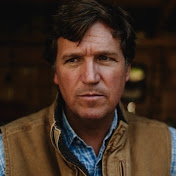
• Introduction • America's Alliances and the Question of Qatar • Strategic Interests vs. Moral and Political Narratives • Social and Cultural Contrasts Between Israel and Qatar • Economic Contributions and Costs • The Trump Administration's Qatar Security Guarantee • The Use of Theology in U.S.-Israel Relations • The Reality of Israel's Actions in Gaza • The Moral Crisis in Supporting Israel • Interview with Franchesca Albanese, U.N. Special Rapporteur • Legal and Humanitarian Dimensions of the Conflict • Suppression of Dissent and Free Speech • Calls for Justice and Accountability • The Broader Implications for Western CivilizationThis podcast hosted by Tucker Carlson explores the complex nature of America's closest ally, Israel, and questions the unquestioned loyalty the United States has historically shown. It contrasts this with the prospects of shifting alliances, notably considering Qatar as a potential key partner. The discussion delves into the political, economic, theological, and moral justifications underpinning U.S. foreign policy, focusing heavily on the ongoing Israeli-Palestinian conflict, particularly the humanitarian crisis in Gaza. It also features a significant interview with Franchesca Albanese, the U.N. Special Rapporteur on Palestinian territories, who criticizes U.S. policies and highlights the human suffering caused by Israeli actions.
America's Alliances and the Question of Qatar
Carlson begins by laying out the conventional wisdom that Israel is America's chief ally, a relationship rooted in decades of military and economic ties. He challenges listeners to reconsider this alliance, presenting Qatar as an alternative ally that possesses abundant natural resources, especially in liquefied natural gas, and maintains significant investments in the United States. Qatar is portrayed as socially conservative by Western standards and as a country engaged in active mediation of global conflicts, including hosting peace talks for Ukraine. Contrastingly, he points out, Israel is involved in multiple active conflicts and largely depends on U.S. funding and military support without reciprocating equivalent assistance. This reframing invites a debate over the strategic and moral bases of U.S. alliances.
Strategic Interests vs. Moral and Political Narratives
The argument is made that American alliances should be evaluated through a pragmatic lens focused on national interests such as energy security, military strength, and economic investment. Countries like Russia, Venezuela, and Gulf monarchies such as Saudi Arabia and the UAE are discussed in terms of resources and geopolitical power, yet disqualified due to ideological biases and political narratives that paint them as enemies. Qatar's image is similarly tarnished by media portrayals, particularly on outlets like Fox News, which depict it as a hostile Islamist state. Carlson asserts that such demonization serves to protect Israel's privileged status and suppress alternative foreign policy debates.
Social and Cultural Contrasts Between Israel and Qatar
Qatar is described as socially conservative, with strict Islamic governance yet relatively tolerant compared to regional neighbors. According to Carlson, it supports traditional family values that align more closely with many American conservatives than Israeli society, which he depicts as culturally liberal, citing examples like the prominence of drag queen events in Tel Aviv and Israel's abortion policies. The presence of a considerable Christian population and multiple churches in Qatar is cited as evidence against the notion that it is hostile to Western or Christian values.
Economic Contributions and Costs
The podcast contrasts Qatar's significant financial investments in the U.S. economy with Israel's reliance on substantial American military aid and the costs of multiple wars fought in Israel's interest, including Iraq and Syria. Carlson highlights that Qatar's investments may represent tens or hundreds of billions of dollars, while Israel, despite receiving approximately $3 billion in direct aid annually, costs the U.S. far more indirectly through engagement in regional conflicts. The contribution of Qatar as a mediator in conflicts worldwide further positions it as a potentially more beneficial partner.
The Trump Administration's Qatar Security Guarantee
Carlson discusses a pivotal but underreported development: former President Donald Trump's executive order guaranteeing Qatar's security, which declared any attack on Qatar to be considered an attack on the United States. This order was issued shortly after Israel bombed a target in Doha, underscoring a moment when U.S. policy appeared to side directly with Qatar over Israel. Carlson questions why this significant shift is rarely addressed publicly, suggesting it reveals the complexity and volatility of Middle Eastern alliances.
The Use of Theology in U.S.-Israel Relations
The podcast criticizes religiously motivated political positions, particularly evangelical support for Israel grounded in a selective and often misunderstood interpretation of the Bible. Carlson specifically calls out Senator Ted Cruz for invoking divine mandate to justify unwavering support for the Israeli government without understanding or accurately citing the scriptural basis. He warns against conflating theological doctrines with foreign policy and stresses that Christian teachings emphasize belief in Jesus above political alliances.
The Reality of Israel's Actions in Gaza
The focus shifts dramatically to the ongoing violence in Gaza, condemning Israel's military operations as intentionally lethal toward civilians, especially children. Carlson alleges that tens of thousands of Palestinian children have been killed with no apology or accountability, contrasting this with the usual standards of how Western democracies respond to civilian casualties in war. The systematic destruction of Gaza's infrastructure, including hospitals and schools, is described as an attempt to erase Palestinian life. The podcast highlights the U.S. government's role in funding and supporting these actions.
The Moral Crisis in Supporting Israel
Carlson interrogates the widespread American support for Israel amidst these atrocities, accusing prominent supporters of endorsing or ignoring the killing of innocent civilians. He cites examples of dehumanizing rhetoric from some U.S. politicians, including Congressman Randy Fine, who coldly justified child casualties by associating the entire Gazan population with Hamas. This stance is framed as a betrayal of Western values that hold individual dignity and justice paramount, warning that collective punishment is both morally indefensible and historically dangerous.
Interview with Franchesca Albanese, U.N. Special Rapporteur
A central component of the podcast is the in-depth interview with Franchesca Albanese, who provides first-hand testimony on the situation in Gaza and the wider occupied Palestinian territories. She details her reports documenting Israeli violations, which she terms genocide, and the complicity of international companies, including American tech giants, in facilitating targeted killings through sophisticated surveillance and military applications. Albanese recounts facing sanctions from the United States, including travel bans and financial restrictions, for her reporting—sanctions that have severely impacted her personal and professional life.
Legal and Humanitarian Dimensions of the Conflict
Albanese elaborates on the legal definition of genocide, emphasizing the intention to destroy a group as a group through killing, causing serious harm, and preventing births, all of which she asserts are occurring in Gaza. She points to evidence of torture, systemic violence, and the destruction of Palestinian society as clear indicators. She underscores the failure of international institutions and powerful states, including the U.S., to enforce international law or impose meaningful consequences on Israel, instead focusing on punishing critics and activists alleging human rights abuses.
Suppression of Dissent and Free Speech
The podcast highlights the repression faced by anti-genocide activists and critics of Israel in the U.S. and Europe, including arrests, censorship, and legal penalties under anti-BDS (boycott, divestment, sanctions) laws. It frames the labeling of all criticism as anti-Semitism or support for terrorism as a tactic to silence necessary discourse and prevent accountability. Albanese and Carlson express deep concern that this climate stifles democratic debate and undermines human rights advocacy.
Calls for Justice and Accountability
Both Carlson and Albanese emphasize the urgency of ending the violence and holding perpetrators accountable. Albanese refers to international arrest warrants issued by the International Criminal Court against Israeli officials and calls for the dismantling of settlements, respect for Palestinian rights, and the eventual end of apartheid conditions. The conversation stresses that genuine peace and stability depend on adherence to international law and recognition of Palestinian humanity—not merely on political expediency or rhetoric.
The Broader Implications for Western Civilization
Throughout the podcast, there is a recurring concern about the erosion of foundational Western values such as individual rights, justice, and the rule of law. Carlson asserts that justifying mass violence and collective punishment on ethnic or religious grounds imperils these values. The defense or denial of atrocities committed by Israel, he suggests, not only harms Palestinians but also damages America's moral and political integrity. The podcast positions this crisis as a pivotal moment requiring honest reassessment of alliances and principles.
Full episode
Episode summary