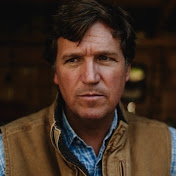
Breaking News: Russia Will Nuke Germany & the UK if Ukraine War Continues, Warns Top Putin Advisor

Introduction
Table of contents
• Introduction • Imminent U.S. Strikes on Iran • The U.S. Taking Greenland from Denmark • Venezuela's Regime Change and Its Aftermath • Russia's Nuclear Threat Against Europe • Hypersonic Missile Strikes as Warning Signals • The Proxy War Nature of the Ukraine Conflict • Russia's Historical and Cultural Resilience • The Failure of Western Sanctions and Policies • Interview with Sergey Karnag: A Russian Perspective • Western Leadership and Miscalculations • The Role of the U.S. and the Hope for PeaceIn this podcast episode, Tucker Carlson explores various pressing global issues, focusing especially on the escalating conflict involving Russia, Ukraine, and Europe. He discusses the potential imminent U.S. military strikes on Iran, the controversial American interest in Greenland, the recent regime change in Venezuela, and, most notably, the increasingly dire threats issued by Russia concerning the use of nuclear weapons against Western Europe. The conversation culminates with an in-depth interview with Sergey Karnag, a seasoned political advisor close to Vladimir Putin, who warns explicitly about Russia's nuclear intentions should the Ukraine war continue.
Imminent U.S. Strikes on Iran
Carlson opens by addressing the possibility of U.S. military action against Iran. While no official confirmation exists, all indicators point toward a strike or some form of aggressive intervention. He stresses that momentum in such crises often drives events beyond the rational control of those in power, implying an escalation may soon be unavoidable. The risks of striking Iran are substantial, as it could trigger the country's fragmentation into a failed state similar to Libya, escalate attacks against Israel overwhelming its defenses, and spark assaults on Gulf energy infrastructure, potentially causing a global economic shock from soaring oil prices.
The U.S. Taking Greenland from Denmark
Another topic concerns reports that the United States is moving to claim Greenland, currently a Danish territory. Carlson describes the event symbolically through the reaction of Danish leadership, suggesting a diminished Scandinavian presence on the global stage. The acquisition of Greenland, he argues, sets a dangerous international precedent where power determines territorial possession regardless of existing legal or diplomatic norms. This move effectively signals the collapse of NATO, given that an alliance member (the U.S.) is acting against another (Denmark), undermining the very premise of collective defense. Though the dissolution of NATO might be viewed by some as beneficial, it will have far-reaching impacts on the foreign policy establishment in Washington and Europe.
Venezuela's Regime Change and Its Aftermath
Carlson turns to Venezuela, recalling the Trump administration's regime change that led to the extradition and trial of Nicolás Maduro and his wife in New York. He emphasizes the uncertainty and instability this has created in Venezuela, with potential black hole scenarios such as chaos, migrant crises, and destruction of critical energy infrastructure. The situation is complicated by Western support for leaders like Delcy Rodríguez, a figure linked to Hugo Chavez, who represents a fragile order amidst impending disorder. The implications of Venezuela's turmoil extend beyond its borders, affecting global energy markets and geopolitical stability.
Russia's Nuclear Threat Against Europe
The episode's core focuses on a stark warning from Sergey Karnag, a veteran Russian political advisor who asserts that if the Ukraine war continues for another year or two, Russia will deploy nuclear weapons against Europe, specifically targeting the United Kingdom and Germany. Carlson highlights the obscurity with which Western media has treated this alarming declaration, despite its gravity. Karnag's credibility stems from his longstanding relationship with Putin and his deep involvement in Russian politics. Russia's nuclear doctrine has evolved to include strikes against countries acting as proxies for nuclear powers, which puts non-nuclear states like Germany directly in the crosshairs.
Hypersonic Missile Strikes as Warning Signals
Carlson points to recent Russian use of hypersonic missiles on Kyiv as symbolic warnings rather than attempts at massive destruction. These weapons, deemed unstoppable by any current defense systems, serve to signal Russia's readiness to escalate, potentially attaching nuclear warheads to future strikes aimed at European targets. This development underscores Russia's frustration with Western involvement in Ukraine, illuminating the broader nature of the conflict as a proxy war rather than a purely bilateral dispute.
The Proxy War Nature of the Ukraine Conflict
The podcast argues that the war in Ukraine is driven less by Ukrainian sovereignty and more by foreign interests, particularly from the U.S. and NATO. Carlson recounts historical interventions, coups, and economic manipulations that shaped Ukraine into a geopolitical battleground rather than an independent actor. He underscores the roles played by globalist figures like George Soros and politicians like Canada's Christian Freeland, who, despite scant ties to Ukraine, exercise significant influence over the country's direction. These factors contribute to the war's prolongation and the suffering of ordinary Ukrainians, who have little say in the conflict's orchestration.
Russia's Historical and Cultural Resilience
Carlson reflects on Russia's vast size, abundant natural resources, and cultural masculinity, contrasting the country's current status with its post-Soviet weakness. He credits Putin with restoring national pride, expelling divisive oligarchs, and building a formidable state that Western narratives often underestimate. The image of Russia as just a "gas station with nuclear weapons" is challenged, revealing instead a multifaceted civilization with deep historical roots, cultural achievements, and a resilient population. This resilience complicates Western strategies, which continue to provoke Russia without fully appreciating its strength.
The Failure of Western Sanctions and Policies
Sanctions imposed by the West following Russia's invasion of Ukraine are portrayed as spectacularly ineffective and counterproductive. Carlson discusses how sanctions have weakened the U.S. dollar's global standing, hurt European economies, and inadvertently strengthened Russian nationalism and self-reliance. Events like the sabotage of the Nord Stream pipeline exemplify reckless Western policies that have crippled allies like Germany while hardened Russian resolve. High-profile Western politicians' calls for regime change and assassinations of Putin are criticized as reckless provocations that increase the risk of nuclear escalation.
Interview with Sergey Karnag: A Russian Perspective
The episode features an extended interview with Sergey Karnag, who offers a stark critique of Europe and its leadership. He describes Europe's elites as intellectually degraded, morally bankrupt, and disconnected from the realities of war, contributing to the current crisis. Karnag frames the conflict as a civilizational struggle in which Europe must be "defeated" for Russia's survival, even suggesting a grim outcome where Europe might be "pushed away" or physically eliminated if hostilities continue. He emphasizes Russia's preference to avoid nuclear use but warns such measures may become necessary to defend against what he calls Europe's "evil" and destructive ambitions.
Karnag identifies Germany and the UK as primary nuclear targets due to their historical roles and their involvement in what Russia perceives as an aggressive anti-Russian alliance. He also discusses Russia's growing partnership with China as a strategic counterbalance to U.S. power. Despite his critical view of Western policies, Karnag expresses hope for future cooperation among the major global powers, including the United States, China, Russia, and India, to establish a stable global order.
Western Leadership and Miscalculations
Karnag criticizes Western leadership's failure to comprehend the severity of the situation, arguing that European leaders no longer fear war or nuclear consequences because of a loss of moral and spiritual grounding. He points out that calls for increased militarization in Europe only hasten its demise. The interview also addresses the historic missed opportunity when Putin reportedly sought NATO membership in the early 2000s but was rebuffed, which Karnag sees as a key moment leading to the current conflict. He accuses U.S. and European policymakers of deliberately escalating tensions, undermining peace efforts, and ignoring Russia's legitimate security concerns.
The Role of the U.S. and the Hope for Peace
While acknowledging U.S. responsibility in exacerbating the conflict, Karnag expresses tentative hope that former President Trump's peace proposals might offer an opportunity for resolution, although he remains skeptical due to internal political dynamics within the U.S. He stresses the dire consequences if the war continues and warns of nuclear escalation. Karnag's view underscores the necessity for diplomatic engagement, restrained leadership, and recognition of Russia as a major world power whose interests cannot simply be overridden without catastrophic risk.
Full episode
Episode summary