The Best Iran War Breakdown on the Internet with Aimen Dean & Richard Miniter
Introduction
Table of contents
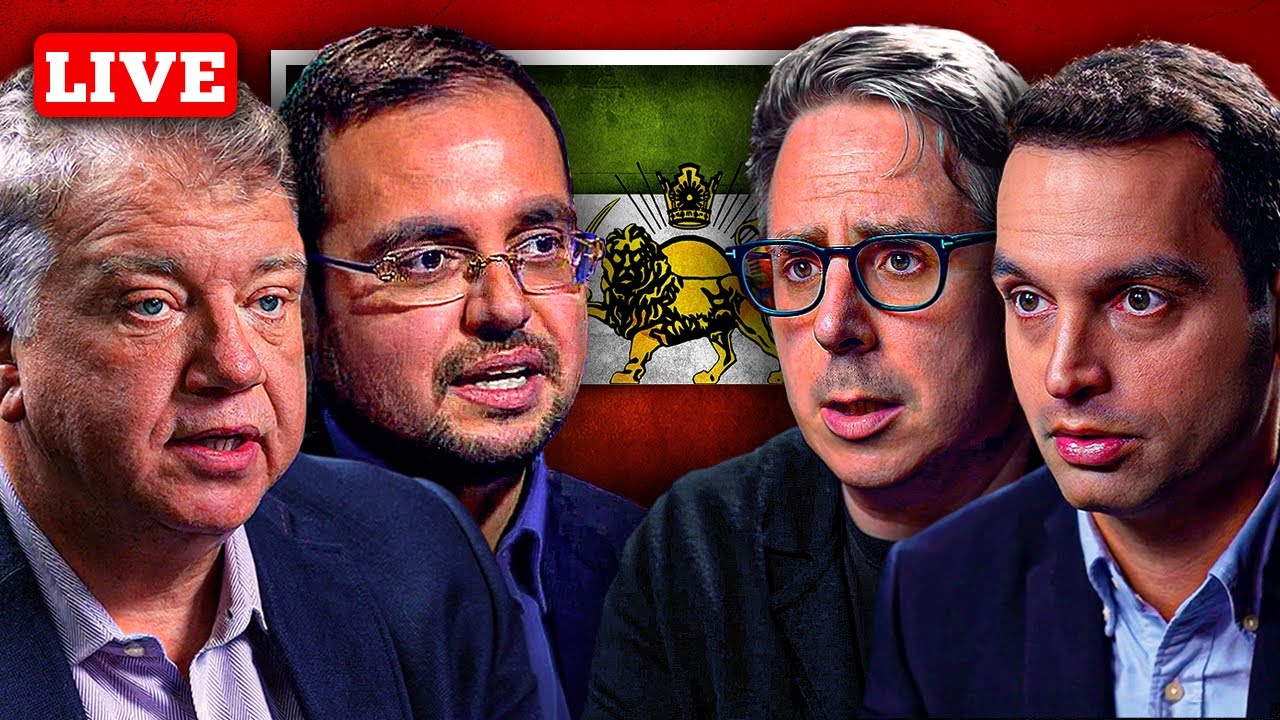
• Introduction • The Scale and Nature of the Israeli-U.S. Air Campaign • Iran's Proxy Networks and the Background to Conflict • The Impact of October 7th and Proxy Warfare Dynamics • Iranian Public Sentiment and Potential Regime Change • The Role and Ambitions of Gulf Arab States • Iran's Economic and Social Collapse • The Power and Religious Zeal of the Islamic Revolutionary Guard Corps (IRGC) • U.S. Calculations and Political Risks Under the Trump Administration • The Complexity of Post-Ayatollah Leadership and Factionalism • Geopolitical Implications: Iran, Russia, China, and Global Power BalanceIn this podcast episode, investigative journalist Richard Miniter and former MI6 double agent Aimen Dean provide an in-depth live analysis of the recent escalation in the conflict involving Iran, Israel, and the United States. They dissect the military, political, religious, and geopolitical facets of the unfolding crisis, exploring Iran's internal dynamics, regional responses, and global implications. The discussion also examines American domestic attitudes toward war and the challenges facing regime change efforts in Tehran.
The Scale and Nature of the Israeli-U.S. Air Campaign
Richard Miniter opens by describing the unprecedented scale of air sorties conducted by Israel and the U.S. over a 48-hour period, estimating close to 2,000 combined missions. The campaign targets numerous Iranian military installations and proxies but notably avoids hitting essential Iranian infrastructure like water power except where missile-launching capabilities are concerned. A critical observation is that Iran's military units appear to be operating under decentralized, standing orders issued by the late Ayatollah, acting autonomously in a "use it or lose it" missile launch approach. This decentralized command challenges diplomatic negotiations, as no central authority controls all forces, increasing the risk of prolonged and unpredictable conflict.
Iran's Proxy Networks and the Background to Conflict
Aimen Dean frames the conflict as the inevitable result of decades of Iranian ambitions to destabilize the Middle East through their extensive network of proxies, including Hamas, Hezbollah, Iraqi militias, and the Houthis in Yemen. Iran's nuclear program development drew inspiration from North Korea's nuclear deterrent strategy, aiming to secure immunity from invasion by possessing nuclear weapons. Dean emphasizes the ideological zeal driving Iran's export of its revolution, rooted in Shia Muslim eschatology and promises of a messianic return, which motivates subversion through minority Shia communities in neighboring states. The regime's regional activities have caused widespread instability, prompting neighboring Arab countries to support military action against Tehran's influence.
The Impact of October 7th and Proxy Warfare Dynamics
The October 7th attacks, launched by Hamas from Gaza, are characterized by Dean as a catalyst that intensified hostilities. The extensive and aggressive nature of the surprise assault demonstrated the recklessness of Iran's proxies and raised questions about future threats, especially from Hezbollah and in southern Syria. The attack underlined the depth of Iran's proxy warfare strategy and propelled regional actors, particularly Arab nations, to back concerted military efforts against Iran-backed militias. Celebrations following the killing of the Ayatollah in Iran and across neighboring countries reflect regional antagonism toward the regime.
Iranian Public Sentiment and Potential Regime Change
Richard Miniter cautions against overly optimistic expectations regarding regime change in Iran. While some factions, notably in Israel, favor figures like Reza Pahlavi returning to power and reinstating a constitutional monarchy focused on rebuilding the nation, U.S. policy under the Trump administration appears more limited to containment. The CIA's issuance of a no-kill list suggests Washington prefers pruning the regime or promoting a moderate faction rather than wholesale upheaval. Miniter highlights deep ethnic and religious diversity in Iran, combined with competing external influences, complicating any straightforward transition. Although younger Iranians express some support for reformist figures like Pahlavi, these aspirations face significant obstacles including distrust among traditional allies like Gulf Arab states and limited Western enthusiasm.
The Role and Ambitions of Gulf Arab States
Aimen Dean delves into the perspectives of Sunni Arab Gulf countries, especially Saudi Arabia and the United Arab Emirates, who have historically pursued containment of Iran. Since 2015, as Iran expanded its proxy networks and influence, Gulf states increasingly viewed confrontation as necessary to safeguard critical infrastructure, water supplies, and energy exports. Dean outlines the erosion of Gulf trust in U.S. support during the Biden administration due to perceived prioritization of nuclear negotiations with Iran over Gulf security, which pushed Riyadh toward rapprochement with Tehran brokered by China in 2023. However, renewed U.S. military actions and enhanced cooperation with Israel have reinvigorated Gulf involvement in the anti-Iran coalition, committed to decisively countering Tehran's regional ambitions.
Iran's Economic and Social Collapse
Dean further explains the profound economic mismanagement and hardship fueling domestic unrest in Iran. Twenty years of sanctions combined with tens of billions spent on foreign proxy wars have devastated Iran's economy, leading to hyperinflation, water shortages, and deteriorating public services. The Iranian rial's steep devaluation to civil war territory levels has mobilized merchants and middle-class citizens against the regime. The widespread perception of incompetence and corruption has ignited strikes and protests, intensifying internal pressure on the ruling elite.
The Power and Religious Zeal of the Islamic Revolutionary Guard Corps (IRGC)
The discussion turns to the IRGC's central role in propping up the regime. Aimen Dean describes it as a multifaceted institution controlling up to 45% of Iran's economy and fielding a military force potentially exceeding 265,000 personnel, including numerous proxy militias. The IRGC's ideological investment in the regime stems from its perceived divine mission to uphold the eschatological vision of the hidden Imam, motivating extreme fanaticism and willingness to suppress any internal opposition—including the murder of thousands of Iranians. This ideological fanaticism makes the IRGC difficult to dismantle or moderate, and their dominance complicates prospects for any U.S.-favored political transition.
U.S. Calculations and Political Risks Under the Trump Administration
Richard Miniter assesses the risks President Trump is taking in escalating the conflict. Trump is pursuing a multifaceted strategic goal: neutralizing a hostile, nuclear-aspiring regime that sponsors global terrorism while seeking a foreign policy victory ahead of critical midterm elections. The U.S. approach aims to degrade Iran's military capacity without deploying ground forces and attempts to provoke a rapid conclusion to hostilities. However, the volatile and decentralized nature of Iran's proxy forces could spark retaliatory terror attacks within the U.S., raising domestic political stakes and potentially undercutting Trump's plans for a swift resolution. Historical memories such as the 444-day 1979 hostage crisis loom large in U.S. attitudes, intensifying demands for decisive action against Iran.
The Complexity of Post-Ayatollah Leadership and Factionalism
Aimen Dean outlines the current power structure filling the vacuum left by the deceased Ayatollah, emphasizing the fractious nature of leadership comprising the judiciary head, interim Supreme Leader candidates, and the president. The IRGC-backed candidate appears favored, which suggests continuity rather than reform. Regime insiders anticipate that anyone seeking moderation or cooperation with the U.S. is likely to be eliminated. This underscores that without dismantling the IRGC's institutional power, substantive political reform or alignment with U.S. interests remains unlikely.
Geopolitical Implications: Iran, Russia, China, and Global Power Balance
The guests conclude by discussing the broader geopolitical impact. Aimen Dean emphasizes that Iran's threat is primarily regional and rooted in its vast terror networks and illicit financial operations rather than being merely an extension of Russian or Chinese ambitions. Yet, Richard Miniter frames Iran as a critical chess piece in a global contest to curtail Chinese and Russian influence. Disrupting Iran's regime would sever drone production used by Russia in Ukraine, reduce China's access to discounted Persian Gulf energy, and diminish these powers' foothold in the Middle East. The shifting alliances and confrontation form part of a larger strategy by the U.S. and its allies to reassert dominance over global power rivalries involving Russia, China, and their proxies, while preventing Iran from continuing to undermine regional and global stability.