381‒Alzheimer’s disease in women: how hormonal transitions impact the brain, new therapies, & more
Introduction
Table of contents
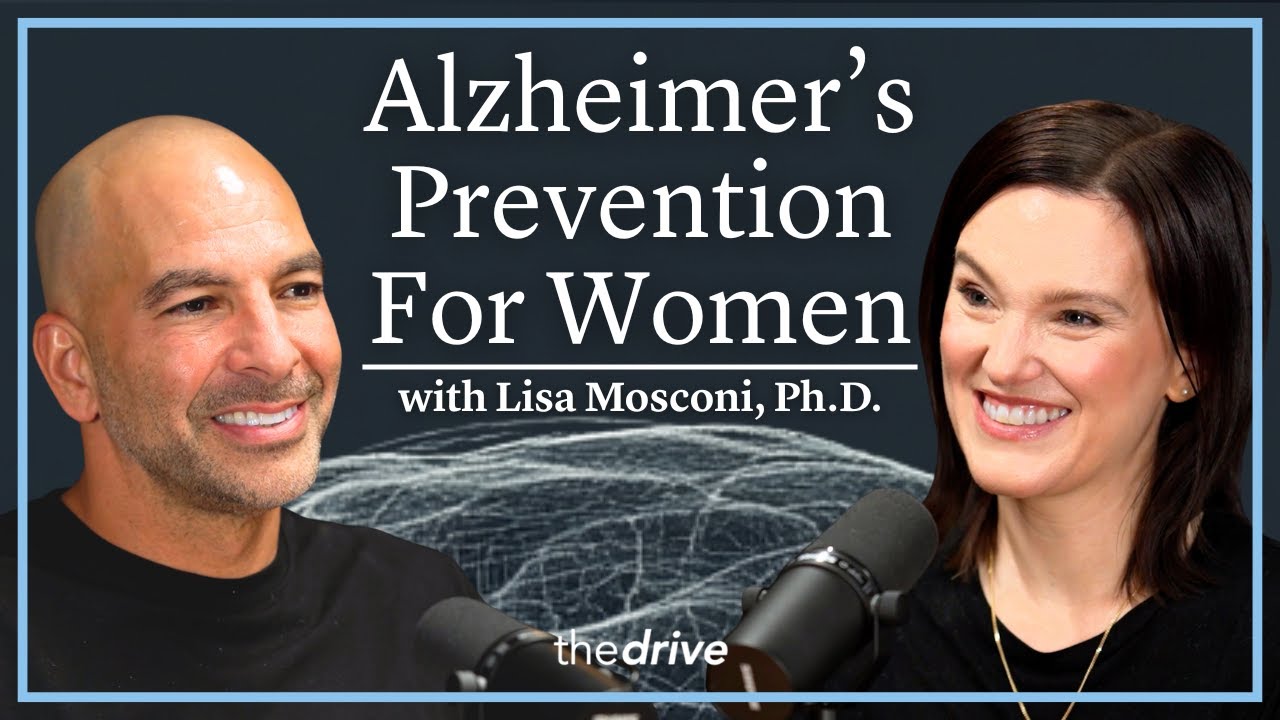
• Introduction • Lisa Mosconi's Background and Personal Connection • Overview of Dementia Types and Sex Differences in Prevalence • Brain Imaging Techniques Used in Alzheimer's and Hormonal Research • Novel PET Imaging of Estrogen Receptors in the Brain • Hormonal Changes During Menopause and Brain Impact • Hormone Replacement Therapy (HRT): Timing, Formulations, and Effects • Nuances of Estrogen Receptor Function and Therapeutic Potential • Selective Estrogen Receptor Modulators (SERMs) and PhytoSERMs • The Role and Misconceptions of Estrogen in Cancer Risk • Challenges in Alzheimer's Risk Modeling and Sex-Specific Data Gaps • The CARE Research Initiative • Hormonal Considerations in Women Undergoing Surgical Menopause • Lifestyle Factors and Alzheimer's Prevention • GLP-1 Agonists and Potential Neuroprotection • Use of Biomarkers and Brain Scans in Clinical Practice • Final Advice for Women Concerned About Brain HealthIn this podcast episode, host Peter Aia welcomes guest Lisa Mosconi, a neuroscientist and expert at the intersection of women's health and brain aging. They discuss the complex relationship between hormonal transitions such as menopause and brain health, particularly focusing on Alzheimer's disease (AD) risk in women. The conversation explores various forms of dementia, brain imaging techniques, estrogen receptor density in the brain, the impact of hormone replacement therapy (HRT), and emerging therapeutic avenues including selective estrogen receptor modulators (SERMs) and GLP-1 agonists. They also touch on the challenges of diagnosis, epidemiology, and ongoing research efforts aimed at mitigating Alzheimer's risk in women.
Lisa Mosconi's Background and Personal Connection
Lisa Mosconi shares her personal motivation for pursuing research in women's brain health, detailing her family's experience with Alzheimer's disease. Growing up in Florence, Italy, she witnessed her grandmother — a strong and resilient woman — and three of her grandmother's siblings develop Alzheimer's. This familial pattern sparked her interest in neuroscience, leading to her specialization in brain imaging and cognition. She articulates how Alzheimer's disease typically progresses subtly over a decade, with early subjective cognitive decline often missed by clinical tests, highlighting the brain's resilience and patients' awareness challenges during the preclinical phase.
Overview of Dementia Types and Sex Differences in Prevalence
Lisa clarifies the distinction between dementia as an umbrella term and Alzheimer's as its most common subtype, comprising about 70% of dementia cases. She describes other forms like frontotemporal dementia, Lewy body dementia, and vascular dementia, emphasizing their differing pathologies and clinical symptoms. The conversation then focuses on the marked sex disparity in Alzheimer's, which occurs roughly at a 2:1 ratio favoring women. This disparity is unique compared to other dementias and age-related diseases, sparking debate about the reasons behind women's higher incidence beyond longevity alone. Mosconi reveals that some studies point to women developing Alzheimer's pathology earlier and progressing faster, with women also showing more brain pathology at similar cognitive impairment levels, possibly due to higher verbal memory reserves masking early detection.
Brain Imaging Techniques Used in Alzheimer's and Hormonal Research
Mosconi details the advanced neuroimaging tools employed to study brain structure, function, and biochemistry in midlife women at risk for Alzheimer's. Structural MRI (T1 and T2 sequences) assess brain volume, lesions, and white matter integrity. Diffusion Tensor Imaging (DTI) evaluates structural connectivity, while Arterial Spin Labeling (ASL) measures cerebral blood flow. Magnetic Resonance Spectroscopy (31P-MRS) offers insights into brain energy metabolism by quantifying ATP production and cellular stress. Positron Emission Tomography (PET) with tracers like FDG highlights metabolic activity, and Pittsburgh Compound B (PiB) detects amyloid plaques, enabling early pathological detection. These modalities allow comprehensive, non-invasive evaluation of the brain's status before clinical symptoms arise.
Novel PET Imaging of Estrogen Receptors in the Brain
One of the episode's highlights is Mosconi's pioneering work developing PET imaging tracers to measure estrogen receptor density, specifically targeting estrogen receptor alpha, in the brain. This represents the first human brain estrogen receptor imaging effort, leveraging a fluorine-18 labeled estradiol analog. Using kinetic modeling and a carefully selected cerebellar reference region, the team demonstrated in vivo that estrogen receptor density in regions such as the pituitary gland increases during perimenopause and remains elevated after menopause, contradicting previous animal model data predicting receptor declines post-menopause. This suggests a prolonged "appetite" for estrogen in the brain during aging, raising important questions about therapeutic windows for hormone replacement.
Hormonal Changes During Menopause and Brain Impact
The podcast reviews fundamental differences in hormonal trajectories between men and women, emphasizing the abrupt estrogen loss women experience during menopause versus men's gradual androgen decline. Mosconi underscores the importance of midlife—the perimenopausal transition—as a critical period when brain estrogen receptor density fluctuates and Alzheimer's-related pathology may begin to diverge between sexes. The brain attempts to compensate for lower circulating estradiol by upregulating receptor density, a metabolically costly process. There is uncertainty about when and whether this compensatory mechanism eventually fails, potentially contributing to increased Alzheimer's risk.
Hormone Replacement Therapy (HRT): Timing, Formulations, and Effects
Lisa and Peter dissect existing clinical and observational data on HRT's role in Alzheimer's risk reduction. The only large randomized clinical trial, the Women's Health Initiative Memory Study, showed increased dementia risk in women initiating combined conjugated equine estrogens plus medroxyprogesterone acetate (MPA) or oral estrogen post-menopause—likely due to the formulation used and the timing of initiation. Observational studies suggest that starting estrogen-only HRT within 10 years of menopause in women who have had hysterectomy may reduce Alzheimer's risk by approximately 30%, with more modest benefits in women with a uterus using combined therapy. Initiating HRT more than 10 years after menopause appears less beneficial or potentially harmful. Mosconi emphasizes that modern HRT often uses bioidentical transdermal estradiol with micronized progesterone, which differ significantly from WHI formulations. She advocates for precision medicine approaches to HRT initiation and dosing, ideally guided by brain imaging and biomarkers, noting ongoing studies involving hormone-naïve women beginning therapy.
Nuances of Estrogen Receptor Function and Therapeutic Potential
The conversation delves into the biology of estrogen receptors and their role in neuronal health, particularly mitochondrial function and oxidative stress regulation. Mosconi explains how receptor malfunction or conformational changes might impair estrogen's protective effects, especially in aged or diseased brains. This underpins the "timing hypothesis" where estrogen therapy is neuroprotective when initiated during a healthy window but may be ineffective or detrimental once neurodegeneration has advanced. They discuss how estrogen receptors stimulate gene transcription for vital proteins, but receptor density alone does not confirm functional signaling efficacy.
Selective Estrogen Receptor Modulators (SERMs) and PhytoSERMs
Lisa highlights emerging research on neuro-specific SERMs, compounds that selectively bind estrogen receptor beta, prevalent in cognitive brain regions, potentially offering cognitive benefits without stimulating reproductive tissues. Notably, a botanical-derived SERM named PhytoSERM is undergoing phase 2 trials evaluating its impact on brain energy metabolism and cognition in early postmenopausal women, with prior animal studies suggesting mitochondrial and neurogenic benefits. These agents offer promising alternatives for women concerned about breast and reproductive organ cancer risks traditionally associated with estrogen therapy.
The Role and Misconceptions of Estrogen in Cancer Risk
Peter and Lisa address widespread misconceptions about estrogen causing breast cancer, clarifying that large data sets, including WHI re-analyses, show no increase in breast cancer mortality with estrogen use. The earlier association largely related to synthetic progestins like MPA rather than estrogen itself. They liken this to prostate cancer and testosterone therapy in men, where testosterone does not cause cancer but is withheld or reintroduced carefully as needed. This perspective challenges prevailing fears and highlights the need for better education for both clinicians and patients.
Challenges in Alzheimer's Risk Modeling and Sex-Specific Data Gaps
Mosconi points out that current Alzheimer's risk models largely aggregate data from men and women, ignoring female-specific neuroendocrine factors. For example, the apolipoprotein E4 (APOE4) allele increases Alzheimer's risk approximately twofold in men but sixfold in women, underscoring sex disparities that are obscured by pooled analyses. She underscores the need for female-specific data and hormone-related variables to be integrated into predictive models, which may illuminate how reproductive history, menopause timing, and hormonal fluctuations contribute to cognitive outcomes.
The CARE Research Initiative
Mosconi introduces CARE (Cutting Alzheimer's Risk through Endocrinology), a $50 million, three-year global research program funded by Wellcome Leap focusing exclusively on women's brain health and Alzheimer's risk. CARE aims to study neuroendocrine aging, the role of hormone transitions, and establish reproductive history as a "vital sign" for predicting cognitive resilience or decline. It will leverage large-scale datasets from six continents, examining variables from puberty through menopause to develop refined prevention strategies. Prospective studies will observe women initiating hormone therapy, tracking biomarkers and cognitive outcomes to clarify timing and efficacy.
Hormonal Considerations in Women Undergoing Surgical Menopause
Surgical menopause through oophorectomy early in life increases Alzheimer's risk due to abrupt estrogen loss. Contrary to some controversial opinions, Lisa and Peter agree that hormone therapy is extremely important for these women to mitigate adverse effects, including dementia risk. Professional guidelines uniformly support hormone replacement after premature surgical menopause, emphasizing initiation soon after surgery and continuation until natural menopausal age.
Lifestyle Factors and Alzheimer's Prevention
Acknowledging the multifactorial nature of Alzheimer's risk, the discussion turns to modifiable lifestyle factors including diet, sleep, cardiovascular health, and especially exercise. Mosconi stresses the importance of consistent, moderate-intensity physical activity to promote cognitive resilience and neuroplasticity over the long term. Exercise boosts neurotrophic factors and mitochondrial health essential to brain function, although the brain's stability means benefits accumulate slowly and require sustained effort. Behavioral interventions remain central to prevention alongside emerging biomedical therapies.
GLP-1 Agonists and Potential Neuroprotection
The prospect of GLP-1 receptor agonists, primarily diabetes drugs, as neuroprotective agents is explored. While improving insulin sensitivity and reducing inflammation undoubtedly benefit brain health, Mosconi raises the critical unanswered question: do GLP-1 agonists provide direct Alzheimer's protection independent of metabolic effects? She notes ongoing development of brain-specific PET ligands for GLP-1 receptors and small pilot studies showing reductions in neuroinflammation biomarkers, but concedes that definitive evidence and well-powered trials are still lacking. The potential is promising but requires further investigation.
Use of Biomarkers and Brain Scans in Clinical Practice
Mosconi advocates for the use of advanced blood- and brain-based biomarkers (e.g., plasma phosphorylated tau, amyloid PET) to track Alzheimer's risk and monitor the impact of treatments like hormone therapy, especially in research settings. These markers offer less invasive, more affordable methods than traditional diagnostic tools, helping to identify risk earlier and tailor interventions. Although currently limited in widespread clinical adoption, such assays are ready to be integrated more broadly as validation grows.
Final Advice for Women Concerned About Brain Health
In closing, Mosconi highlights the importance of having thorough conversations about menopause and brain health with healthcare providers. Women should approach midlife with a comprehensive view, considering reproductive history alongside lifestyle and medical management to optimize cognitive outcomes. While awaiting definitive clinical trial results, she encourages attention to consistent healthy behaviors combined with thoughtful discussion regarding hormone therapy and individualized care. She emphasizes patience, as brain resilience builds gradually, and hopes rapid research initiatives like CARE will soon provide clearer guidance for prevention and treatment.
Full episode
Episode summary


