Introduction
Table of contents
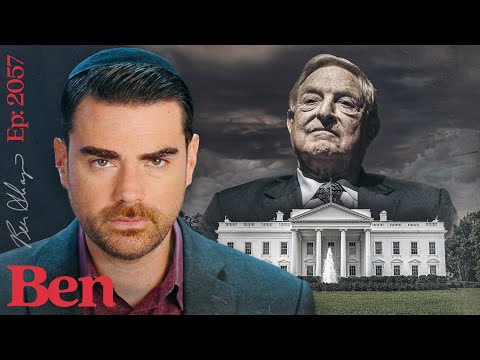
• Introduction • McDonald's Ramadan Campaign in Germany • The Future of DEI in the United States • Black Lives Matter Series by Wilfred Riley • School Choice and Republican Strategy • Political Landscape and Election Outlook • Republican and Democratic Messaging • Medicaid Fraud and Government Waste • International Issues: Cuba and Iran NegotiationsIn this podcast episode, Ben Shapiro discusses a variety of cultural, political, and international topics with a critical lens. The conversation begins with McDonald's unusual Ramadan ad campaign in Germany and explores the implications for diversity, equity, and inclusion (DEI) in the West. The discussion also covers the possibility of DEI's resurgence in U.S. corporate culture, followed by an interview with Wilfred Riley about his new Daily Wire series on race and systemic racism. Later, the episode shifts toward American politics, examining school choice, election dynamics, Democratic and Republican strategies, the fallout from the recent State of the Union address, ongoing controversies, and international affairs involving Cuba and Iran.
McDonald's Ramadan Campaign in Germany
Ben Shapiro opens by examining McDonald's advertising strategy in Germany during Ramadan, highlighting its peculiar choice to remove images of food from billboards during fasting hours as a supposed respect for Muslim traditions. Germany's Muslim population is roughly 6.5%, and Ramadan entails fasting from dawn to sunset. McDonald's is not a halal certified restaurant, which raises questions about the logic of the campaign. Shapiro critiques this move as a symptom of Western cultural capitulation where businesses signal virtue by prioritizing the cultural customs of minority groups, often at the expense of their own foundational values and interests.
The campaign, designed by a German agency, aims to avoid tempting Muslims fasting during daytime hours by suspending visible food ads until sunset. Shapiro argues that this is unnecessary and self-defeating since devout Muslims likely avoid non-halal fast food like McDonald's during Ramadan hours anyway. He compares this corporate gesture to an imaginary scenario where a kosher-opposed restaurant would alter its ads during Jewish holidays, indicating such acts are more about signaling to virtue-conscious Western consumers than genuine cultural respect. He sees this as symptomatic of a broader Western malaise, where dominant cultures are expected to apologize and adapt excessively in the face of minority traditions.
The Future of DEI in the United States
Shapiro transitions into discussing DEI's presence in American corporations and institutions. Despite the backlash during the Trump administration, DEI is far from dead and may resurge robustly if Democrats regain political power. The article by Time magazine cited in the episode outlines how many companies have merely rebranded or renamed DEI efforts, such as changing diversity officers' titles to "belonging" or maintaining DEI offices under different umbrellas. Colleges and universities remain deeply committed to diversity programs, emphasizing the resilience of these initiatives in education.
Shapiro introduces Wilfred Riley, a guest and host of the Daily Wire Plus series "Black Lives Matter," to explore the challenges of undoing DEI ideologies. Riley details his professional anti-woke consulting work with Unified Solutions America, focusing on helping corporations remove what they see as harmful DEI policies. He highlights entrenched internal resistance in companies from established DEI staff and argues that institutions house a dedicated base committed to these philosophies, often discouraging meritocracy and exacerbating racial tensions. Riley notes that some corporate leaders believe DEI correlates to profitability due to research like the McKinsey report, though he suggests the correlation is more circumstantial than causal.
Black Lives Matter Series by Wilfred Riley
Wilfred Riley discusses his latest three-part series on Daily Wire Plus titled "Black Lives Matter," which challenges prevailing narratives surrounding systemic racism in America. He argues that the story of pervasive systemic racism is frequently overstated and is often supported by misrepresented statistics and fabricated incidents such as false hate crime claims. The series seeks to separate historical fact from myth, emphasizing that many black Americans are doing well and that narratives of victimhood can be counterproductive.
Riley focuses on confronting victim culture, debunking exaggerated claims of police violence, and criticizing the racial grift that profits from persistent narratives of oppression. He underscores that open discourse on race needs to include these more nuanced perspectives to offer a fuller understanding, rather than simply accepting the dominant systemic racism narrative. This approach aims to empower rather than perpetuate victimhood.
School Choice and Republican Strategy
The conversation briefly addresses the slow federal momentum behind school choice policies such as charter schools and vouchers. Shapiro explains that education in the U.S. is primarily a state and local matter, with Republicans emphasizing school choice at those levels, notably in states like Florida. The federal government's smaller role and the decentralized nature of education makes a national platform challenging to implement. He advocates for eliminating the Department of Education altogether and devolving power fully to states.
The topic shifts to the value of engaging with left-leaning media and podcasts, where Shapiro stresses that these conversations can offer opportunities to hold opposing figures accountable and reach audiences otherwise insulated from conservative viewpoints. He openly criticizes President Trump when warranted, battling the notion that conservatives must unconditionally defend him.
Political Landscape and Election Outlook
Shapiro warns of the substantial risk that Democrats may retake Congress and reintroduce more expansive DEI and progressive policies, including transgender ideology, if Republicans do not maintain momentum. Polling data highlights a Democratic lead in generic congressional voting and shifting primary participation trends in critical states like Texas.
He discusses key primaries, notably the Texas Senate race where three Republicans are vying for the nomination. Shapiro endorses John Cornyn as the strongest candidate to keep the seat Republican and cautions that nominating controversial figures could jeopardize key battleground seats. The scandal involving Texas Representative Tony Gonzales and the tragic death of a former staffer is raised as a potential liability for GOP hold in vulnerable districts.
The Democrats' fractious response during President Trump's recent State of the Union address is analyzed, with Shapiro portraying their interruptions and outbursts as politically damaging. Comments from figures like Ilhan Omar and Al Green are highlighted for their divisiveness and refusal to engage substantively on protecting American citizens before illegal immigration.
Republican and Democratic Messaging
President Trump's fierce rebuke of Democratic members' conduct at the State of the Union is noted, including his blunt characterization of certain figures. Conversely, progressive politicians like Vice President Kla Harris dismissing the speech as untruthful and boring is critiqued. Shapiro underscores the importance of Republicans calmly but firmly exposing the Democrats' radicalism.
Internal Democratic conflicts are spotlighted, such as exchanges between Senator Bernie Sanders and Senator Markwayne Mullin over the affordability and failures of the Affordable Care Act. Shapiro calls out the Democrats' unwillingness to reform health care despite evident issues.
Medicaid Fraud and Government Waste
Vice President JD Vance's new role cracking down on Medicaid fraud is briefly discussed. The pause of federal Medicaid funds to Minnesota reflects concerns about systemic fraud and abuse, which run rampant in large welfare programs. Shapiro critiques the disconnect between punishing criminal fraud and the larger problem of welfare abuse driven by perverse incentives within the system. He advocates for welfare to be managed more locally to facilitate accountability.
International Issues: Cuba and Iran Negotiations
In foreign policy, Shapiro addresses a Cuban incident involving a U.S. speedboat allegedly fired upon, resulting in casualties. The exact nature of the boat's mission remains unclear but likely involves illicit activity close to Cuban waters. Secretary of State Rubio's uncertainty and intent to investigate are noted amid heightened regional tensions.
More extensively, Shapiro outlines ongoing U.S.-Iran nuclear negotiations in Geneva. The U.S. demands include dismantling Iran's main nuclear facilities and handing over enriched uranium, with a call for a permanent non-proliferation agreement without sunset clauses. Iranian officials dismiss these demands, refusing to curb their missile program or forgo uranium enrichment, signaling a hardline stance.
The episode also touches on Israel's potential first-strike options against Iran and the broader implications of regional security. Shapiro supports Israel's right to self-defense and underscores the multifaceted American interests in countering Iranian terrorism and nuclear ambitions.
Full episode
Episode summary