Introduction
Table of contents
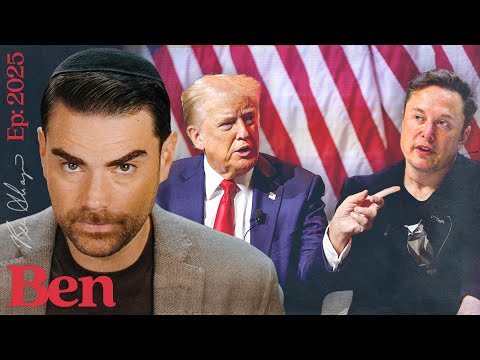
• Introduction • Trump's First-Year Wins and Challenges • The Trump Administration at Davos • The Decline of the New World Order • Greenland and Transatlantic Tensions • Global Realignment and Multipolarity • Immigration Enforcement and Political Backlash • Foreign Influence in Domestic Protests • The 1916 Project and the Origins of Planned Parenthood • Preview of Daily Wire Plus EntertainmentIn this podcast episode, Ben Shapiro offers an extensive review of the Trump administration's first year in office, highlighting domestic and foreign policy achievements and challenges. He delves into President Trump's upcoming appearance at Davos and the evolving global geopolitical landscape shaped by trade wars, shifting alliances, and the decline of the post-Cold War "new world order." Shapiro also examines internal political conflicts over immigration enforcement, the cultural battle surrounding Planned Parenthood's history, and previews an ambitious new entertainment project on Daily Wire Plus.
Trump's First-Year Wins and Challenges
Ben Shapiro opens with a detailed celebration of President Trump's first year of his second term, emphasizing notable economic gains such as record-high stock markets, strong GDP growth, and significant reductions in inflation. On foreign policy, Shapiro credits Trump with decisive actions including military intervention against Iran's nuclear facility, diplomatic efforts to end regional conflicts like those in Gaza and between India and Pakistan, and a robust approach to immigration enforcement. He highlights the elimination of federal Diversity, Equity, and Inclusion (DEI) programs and a reduction in illegal immigration through intensified ICE operations, leading to a reverse migration trend unseen in decades. While acknowledging these accomplishments, Shapiro notes that public approval ratings have declined, citing an unsettled feeling domestically and unpredictability in international relations as key factors impacting Trump's standing.
The Trump Administration at Davos
As the World Economic Forum in Davos commences, President Trump's in-person participation draws significant attention amid a record turnout of global leaders—although several key figures such as Xi Jinping and Jair Bolsonaro are absent. The U.S. delegation, including prominent cabinet members and advisors, signals the administration's focus on reshaping global economic and geopolitical priorities. Shapiro covers speeches by Commerce Secretary Howard Lutnick and Treasury Secretary Scott Bessant, illustrating contrasting internal administration messaging: Lutnick critiques globalization for sidelining American workers, while Bessant urges Europeans to avoid escalation and heed Trump's broader strategy. This division points to differing visions within the administration regarding America's role on the global stage and the use of tariffs as a strategic tool.
The Decline of the New World Order
Shapiro reflects on the collapse of the post-Cold War "new world order" championed by George H.W. Bush and his successors, a vision premised on global cooperation under shared values of freedom, justice, and international law. He emphasizes that this ideal has proven impractical, as nation-states inherently prioritize self-interest and power politics frequently override multinational agreements. The episode contrasts this Wilsonian worldview embraced by multiple presidents with President Trump's more pragmatic and realist approach—rejecting supranational control and emphasizing sovereignty, economic leverage, and a recalibration of alliances.
Greenland and Transatlantic Tensions
A significant portion is devoted to the controversial issue of Greenland, where President Trump's interest in acquiring the territory has sparked diplomatic strains with NATO allies and European countries. Shapiro questions the strategic necessity of full U.S. sovereignty over Greenland, suggesting current defense treaties already provide sufficient security options. He argues that the focus on Greenland may alienate crucial partners at a time when European unity and support for Ukraine are vital. This controversy dovetails into the broader theme of America's fracturing alliances and the risk that harsh trade measures—such as tariffs targeting long-standing allies—could create geopolitical vacuums benefiting adversaries like Russia and China.
Global Realignment and Multipolarity
Through the lens of Davos, Shapiro explores how many countries are repositioning themselves toward a multipolar order with diminishing U.S. dominance. EU leaders, including Ursula von der Leyen and Emmanuel Macron, advocate for stronger regional cooperation and economic deals, such as a substantial trade agreement with India, signaling a pivot from reliance on the United States. Canadian and other middle powers appear disenchanted with American unilateralism, with leaders like Mark Carney embracing engagement with China. Shapiro critiques the rhetoric of "rule of law" invoked by European officials, highlighting historical contradictions and suggesting these narratives mask broader intentions to reduce American influence.
Immigration Enforcement and Political Backlash
The podcast examines the intensification of immigration enforcement under the Trump administration, including high-profile arrests in Minnesota and federal investigations into alleged obstruction by local officials. Shapiro underscores the political theater surrounding these actions, especially resistance from Democratic politicians and activists who accuse ICE of human rights abuses. He shares examples of individuals arrested during recent ICE operations, emphasizing criminality among some undocumented immigrants and contrasting this with President Trump's recognition of Hispanic contributions. The episode also critiques calls from some Democrats to abolish ICE, warning such proposals could harm public safety and undermine lawful immigration enforcement.
Foreign Influence in Domestic Protests
Shapiro raises concerns about foreign-funded organizations fueling protests across the United States, spotlighting the People's Forum, an entity allegedly backed by the Chinese Communist Party. He highlights recent investigations and congressional scrutiny aimed at exposing covert foreign influence on domestic activism related to immigration and other issues. This segment draws attention to the broader context of geopolitical competition extending into soft power arenas such as cultural and political movements within the U.S.
The 1916 Project and the Origins of Planned Parenthood
Ben Shapiro interviews Seth Gruber, host of the "1916 Project," a documentary and book examining the racial and eugenicist foundations of Planned Parenthood. Gruber discusses the movement's efforts to expose the organization's problematic history, including ties to white supremacy and controversial early figures such as a Ku Klux Klan affiliate on its founding board. The project aims to educate the public on these historical realities as part of the broader pro-life cause, especially in light of the recent overturning of Roe v. Wade. The interview also previews the Life or Death conference, a major pro-life event focused on mobilizing activism to legally protect unborn children.
Preview of Daily Wire Plus Entertainment
Shapiro promotes the forthcoming premiere of "The Pen Dragon Cycle: Rise of the Merlin," a seven-episode fantasy epic exclusive to Daily Wire Plus. After three years of production involving multiple continents and extensive post-production, the series aims to deliver a high-quality, ambitious storytelling experience featuring a reinterpretation of Merlin's legend. Special membership offers and promotional incentives such as collectible cards and a chance to win a trip to Budapest are highlighted to encourage audience engagement with Daily Wire's entertainment offerings.
Full episode
Episode summary