Introduction
Table of contents
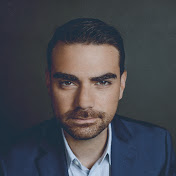
• Introduction • The Maduro Arrest and Venezuela's Geopolitical Future • U.S. Demands and the Road to Transition • Reactions from International Actors and Domestic Critics • The End of the Iraq Syndrome: A New American Doctrine • Minnesota's Welfare Fraud Scandal and Tim Walz's Political Fallout • Break-In at JD Vance's Home and Cultural Commentary • New York City's Shift Toward Democratic Socialism • The Horseshoe Right and Curtis Yarvin's Authoritarian Vision • Promotion and Closing RemarksIn this podcast episode, Ben Shapiro explores the ramifications of the United States' dramatic operation to capture and extradite Venezuelan dictator Nicolás Maduro, examining its geopolitical significance and implications for U.S. foreign policy. The discussion also covers domestic political upheavals, including Minnesota Governor Tim Walz's withdrawal from a third-term bid amid welfare fraud scandals and a disturbing break-in at Senator JD Vance's Cincinnati home. Additionally, the episode critiques emerging political trends in New York City and dives deep into the conceptual shift in American interventionism that may signal the end of the so-called Iraq syndrome.
The Maduro Arrest and Venezuela's Geopolitical Future
Ben Shapiro begins by detailing the unprecedented arrest and extradition of Nicolás Maduro by U.S. forces. Contrary to expectations just a week prior, Maduro appeared in a U.S. federal court, facing charges including cocaine trafficking and possession of machine guns. Despite his denials and claims of being a legitimate president and prisoner of war, Shapiro emphasizes Maduro's guilt and responsibility for massive human suffering in Venezuela. The legal process promises to be prolonged and complex due to the rare precedents of prosecuting an active or recent head of state.
Shapiro then shifts focus to the state of affairs in Venezuela following Maduro's removal. Interim President Delcy Rodríguez, a figure as brutal and Machiavellian as Maduro, holds power with backing from key military leaders like Interior Minister Diosdado Cabello and Defense Minister Vladimir Padrino. Armed paramilitaries remain active, and government suppression of dissent, including the detention of journalists, continues. Shapiro questions whether Rodríguez is genuinely maintaining Maduro's regime or quietly aligning with American interests in hopes of survival.
Highlighting the challenges of regime change, Shapiro questions how much leverage the U.S. can exert to ensure a real transition occurs. He warns that without substantive and enforceable change, any reopening of Venezuela's critical oil industry risks reverting to authoritarian control after President Trump's term. Chevron is positioned to benefit if investment becomes viable, representing a strategic move to shift Venezuelan oil away from China and Iran's influence. However, military loyalty remains an unpredictable wild card, with key officials facing serious legal jeopardy but currently showing surface-level cooperation.
U.S. Demands and the Road to Transition
The Trump administration outlines explicit demands for Venezuela's interim government: cracking down on drug trafficking, expelling hostile foreign operatives from Iran and Cuba, halting oil sales to U.S. adversaries, and eventually facilitating free elections. Yet, Shapiro acknowledges the nebulous timelines and the absence of immediate elections. Opposition leader María Corina Machado, despite international support, lacks command over military forces, rendering her unable to seize power without U.S. military intervention, which remains unlikely.
Shapiro references CIA intelligence suggesting that Rodríguez and hardliner figures could maintain order or sabotage transition efforts. Yet, following Maduro's capture, cracks within the regime may widen, potentially enabling a secondary coup by lower-level military officers aligned with U.S. objectives. The capture of Maduro also destabilizes Cuban support, raising the possibility of similar American actions against Havana, as Senator Lindsey Graham predicts.
Reactions from International Actors and Domestic Critics
International condemnation from U.N. members including Colombia, Russia, and China frames the Maduro capture as an illegal violation of sovereignty, echoing typical anti-American rhetoric. Shapiro dismisses these critiques, admonishing the U.N. as a "garbage organization" that lends false legitimacy to tyrants and undermines democracy. Left-wing protests supporting Maduro arise domestically in places like New York City, spearheaded by groups with ties to China, which accuse the U.S. of imperialistic motives.
On the American left, voices like Representative Ted Lieu criticize the operation as illegitimate and worry it might spur adversarial actions from global powers. Meanwhile, some Democrats express cautious support, acknowledging Maduro's removal but demanding clarity on post-operation strategy. The debate touches on international law concerns, but Shapiro rebuffs these as excuses rooted in the Iraq syndrome mindset.
The End of the Iraq Syndrome: A New American Doctrine
Central to the episode is Shapiro's assertion that President Trump's Venezuelan operation represents the death of the Iraq syndrome, a term denoting American public aversion to prolonged military entanglement following failures in Iraq and Afghanistan. Tracing history, Shapiro reviews how the Vietnam syndrome fostered self-restraint in U.S. foreign policy, later reversed by Reagan's measured doctrine emphasizing clear objectives and public support. That approach, formalized in the Weinberger Doctrine, allowed successful interventions like Panama and the Gulf War but collapsed post-Iraq and Afghanistan wars.
The Iraq syndrome, Shapiro explains, stifled assertive foreign policy under Obama and Biden, facilitating global disorder—from ISIS's rise to Russian aggression in Ukraine. President Trump, through precise military actions such as the 2025 strikes on Iran's nuclear facilities and the Maduro capture, has restored credible deterrence without open-ended occupation. Shapiro elaborates on the "Trump doctrine," which prioritizes American interests proportional to investment and openly maintains the threat of force as policy leverage.
Minnesota's Welfare Fraud Scandal and Tim Walz's Political Fallout
Turning to domestic politics, Shapiro discusses the resignation of Minnesota Governor Tim Walz from the 2026 gubernatorial race amid revelations of massive welfare and childcare fraud involving primarily Somali-run programs. Despite Walz's attempts to downplay the allegations as conspiracy theories and his claims of victimhood, the evidence paints a picture of hundreds of millions—possibly billions—of dollars misappropriated under his administration.
Shapiro highlights how this scandal has damaged the political standing of Walz and casts doubt on former vice-presidential considerations. The scandal exposes systemic flaws in welfare oversight and ongoing tensions around immigrant communities. Walz's refusals to address press inquiries and accusations against the Trump administration demonstrate political desperation.
Break-In at JD Vance's Home and Cultural Commentary
The episode briefly covers a disturbing incident in Cincinnati where Senator JD Vance's residence was vandalized by a young man reportedly identifying as transgender and displaying signs of mental instability. Shapiro uses the event as a lens to discuss broader cultural tensions regarding identity politics, mental health, and the societal costs of unchallenged gender ideology. He emphasizes the dangers of normalizing identity delusions and excusing destructive behavior under the guise of acceptance.
New York City's Shift Toward Democratic Socialism
Shapiro then examines New York City's emerging political climate under Mayor Eric Adams's successor, socialist mayor-elect Eric Adams's driver Zoran Mamani (the text uses "Mam Donnie" and "Zor Mandani" interchangeably as a parody), who openly embraces democratic socialism. Shapiro quotes speeches celebrating the rejection of rugged individualism in favor of collectivism and promises of expanded government services like free World Cup tickets and aggressive tenant protections.
He critiques the ideological underpinnings, particularly policies like rent control and shared property ownership, arguing that they undermine property rights, reduce incentives for maintenance, and could cripple the city's economy. Shapiro highlights controversial figures joining the administration who express radical views on race and property as a warning of dystopian governance.
The Horseshoe Right and Curtis Yarvin's Authoritarian Vision
Finally, Shapiro addresses the fringes of the right-wing movement, focusing on Curtis Yarvin's philosophy advocating for unconditional state control and the dissolution of constitutional constraints. Yarvin's concept of a "hard party" promotes collective political obedience akin to one-party states with centralized power, eliminating individual autonomy in voting and political participation.
Shapiro categorizes Yarvin's views as neofascist and dangerous, cautioning conservatives against embracing such authoritarian ideas. He stresses that such extremism ultimately undermines the principles of American governance and democracy, even if it claims to be a reaction against left-wing socialism.
Promotion and Closing Remarks
Throughout the episode, Shapiro weaves in promotional segments for the Daily Wire Plus app and ZipRecruiter as sponsors supporting the show's production and the broader mission of providing independent conservative commentary.
Full episode
Episode summary