Introduction
Table of contents
• Introduction • Historical Context and Justification for Military Action • Military Strategy and Effectiveness of the Operation • Geopolitical Reactions: Allies and Adversaries • Iran's Diminishing Cohesion and Internal Turmoil • American Political Landscape and Media Reaction • Terrorism Threats and Domestic Security Concerns • Senator Ted Cruz's Perspective • On the Future and Regional Stability • Operational Details and Current Status • Iran's Regional Missile Strikes and Desperation • Critiques of International Institutions and European Leadership • Iranian Propaganda and Messaging • Media and Political Figures Support and Opposition • Advertising Segment: ExpressVPN • Expectations for the Operation's Timeline • Summary of Iran's Leadership TransitionIn this podcast episode, Ben Shapiro delivers an in-depth analysis of the ongoing U.S. and Israeli military operation against Iran, assessing the strategic motivations, military progress, and geopolitical implications. He explores the history of Iranian aggression, details the execution and success of the strikes, critiques international responses, and discusses internal Iranian turmoil. The episode also features commentary from Senator Ted Cruz and touches on the responses from American political voices and media, providing a broad perspective on the evolving conflict.
Historical Context and Justification for Military Action
Ben Shapiro begins by recounting the decades-long antagonism between Iran and the United States, detailing acts of violence and terrorism sponsored by the Iranian regime and its proxies since the 1979 revolution. He references hostage crises, embassy attacks, bombings such as the Kobar Towers and USS Cole, and Iranian support for insurgencies and terrorist groups across the Middle East, including the devastating October 7th Hamas attack on Israeli civilians. Shapiro emphasizes the pretext for the current military action: eliminating the persistent threat posed by Iran's nuclear ambitions, missile program, and terror sponsorship, asserting that this operation was a timely response to Iran's rapid military expansion and internal instability marked by mass protests.
Military Strategy and Effectiveness of the Operation
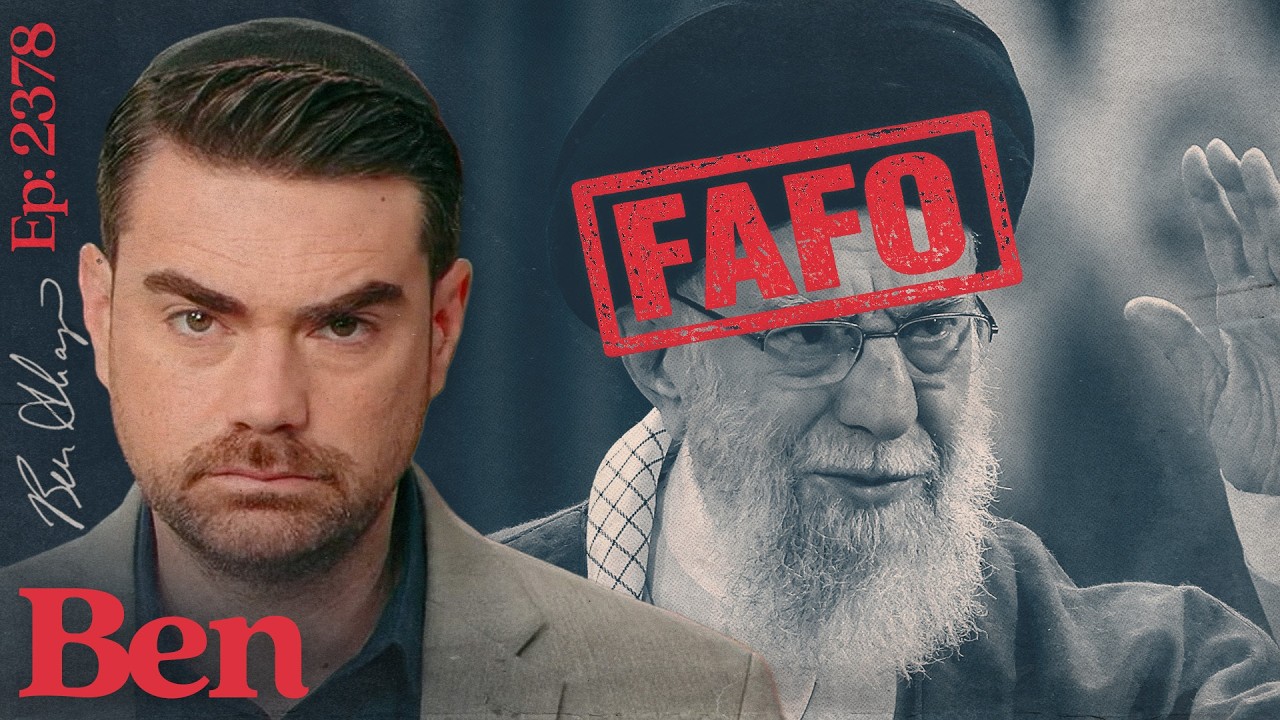
The episode outlines the two-step military strategy employed by the United States and Israel. The first step involves decapitating the Iranian leadership, which began with the targeted killing of Supreme Leader Ayatollah Ali Kamei and top IRGC commanders, crippling the regime's command structure. Concurrently, air and naval strikes have destroyed significant portions of Iran's ballistic missile and nuclear infrastructure. Shapiro highlights the unprecedented success of these strikes in achieving air dominance and significantly reducing Iran's capacity to retaliate, despite the regime's attempts to launch missiles across the region. He notes the low American casualties relative to the scale of the operation as an indicator of its precision and effectiveness.
Geopolitical Reactions: Allies and Adversaries
Shapiro critiques the international community's reaction, focusing on the tepid or contradictory responses from European allies. He caricatures leaders like the UK's Kier Starmer and France's Emmanuel Macron for their cautious rhetoric and unwillingness to fully support robust action, contrasting this with the firm backing from Middle Eastern Arab states such as Saudi Arabia, UAE, Bahrain, and Qatar, who actively condemn Iranian aggression and align with U.S. and Israeli interests. He disparages the United Nations for its predictable condemnation of the strikes without acknowledging Iran's provocation, calling for defunding and dismantling the organization.
Iran's Diminishing Cohesion and Internal Turmoil
The podcast details the collapse of Iranian military unity, referencing statements from Iranian officials acknowledging loss of command control among forces. The formation of a three-member transitional council following Kamei's death underscores the regime's instability. Shapiro points out that with the decapitation of leadership, the IRGC has fragmented into loosely coordinated regional actors, impairing Iran's ability to suppress domestic protests or effectively retaliate. He stresses that Iran's strategy appears to consist mainly of desperate missile attacks on neighboring countries, aiming to exhaust coalition resolve through widespread but ineffective strikes.
American Political Landscape and Media Reaction
Shapiro addresses the polarized American political response to the operation. He criticizes left-wing politicians and media outlets for minimizing the threat posed by Iran or condemning the strikes while simultaneously deploring the Iranian regime's brutality. He also condemns figures on the right, especially Tucker Carlson and fringe voices like Marjorie Taylor Greene and Nick Fuentes, who undermine the president's policy or spread defeatist narratives. The podcast critiques media obituaries and narratives that soft-pedal the severity of Iran's leadership, highlighting a disconnect between reality and coverage. Shapiro argues that some factions aligned with Iran's messaging, hoping to leverage domestic dissent to weaken U.S. resolve.
Terrorism Threats and Domestic Security Concerns
Shapiro discusses the risk of terrorism linked to Iran's ideology extending to the U.S. homeland, referencing a recent violent attack in Austin, Texas, by a naturalized U.S. citizen expressing sympathy toward Iran. He underscores the administration's responsibility to secure the nation against such threats and criticizes Democratic efforts to hinder funding for Homeland Security agencies during a period of heightened terror risk.
Senator Ted Cruz's Perspective
In an interview segment, Senator Ted Cruz praises the operation's decisiveness and necessity, labeling it a spectacular success despite the inevitable casualties. Cruz underscores Iran's long history as the primary state sponsor of terrorism and argues that President Trump's actions represent strong leadership contrasting with previous administrations' appeasement policies. He rejects claims of an impending "forever war," framing this intervention as a focused mission to neutralize a direct and enduring threat. Cruz also acknowledges uncertainties about Iran's future but insists the focus should remain on removing the immediate danger posed by the current regime without entangling the U.S. in prolonged occupation.
On the Future and Regional Stability
Shapiro reviews insights from historian Neil Ferguson and Pentagon officials who emphasize that the objective is not regime change through occupation but rather neutralizing Iran's offensive capabilities and empowering the Iranian people to determine their own future. There is acknowledgment that instability may persist, but the ability of a weakened regime to project power or pursue nuclear weapons would be halted. Shapiro highlights that successful coalition efforts and regional Arab support could shift Middle Eastern dynamics toward greater security and prosperity, noting the historical significance of this alignment against Iran.
Operational Details and Current Status
General Dan Raisen Kaine's briefing is summarized, describing the multi-domain simultaneous assault involving air, sea, cyber, and space capabilities designed to degrade Iran's response capabilities and strike critical military infrastructure. Shapiro notes that over a thousand targets were hit within the first 24 hours and that American and Israeli forces maintain air dominance. The discussion includes the complications of friendly fire incidents, such as the accidental downing of U.S. F-15 jets, emphasizing the inherent dangers of war but affirming overall operational success.
Iran's Regional Missile Strikes and Desperation
Shapiro outlines Iran's missile attacks on military and civilian targets across the Middle East, including Israel, Gulf states, Jordan, Cyprus, and others, characterizing these strikes as signs of desperation intended to pressure coalition members to cease their military campaign. These widespread attacks also signal Iran's strategic reliance on proxy warfare and its hope for international intervention to halt its losses.
Critiques of International Institutions and European Leadership
The episode lambasts international bodies like the UN for their ineffectual and biased positions, lamenting the lack of firm condemnation of Iranian provocations and the unwillingness of European leaders to fully support U.S. and Israeli military efforts. Shapiro sarcastically disparages European leaders for their perceived lack of resolve and contrasts their indecisiveness with the robust coalition forming in the Middle East.
Iranian Propaganda and Messaging
The podcast highlights Iranian attempts to maintain morale and disrupt U.S. cohesion by addressing American political factions they consider sympathetic or problematic, particularly attacking "horseshoe right" isolationist voices and left-wing critics who oppose the operation. Shapiro notes these domestic divisions are being exploited by Iran's regime to undermine U.S. resolve.
Media and Political Figures Support and Opposition
Shapiro criticizes various public figures and pundits who openly oppose the military actions, either by downplaying the threat, misrepresenting events, or casting doubt on the president's motives. He distinguishes between genuine concern for peace and flawed isolationism or political opportunism that, in his view, aids Iran's objectives.
Advertising Segment: ExpressVPN
Midway, Shapiro promotes ExpressVPN as a tool for protecting personal data and privacy online, highlighting its security features and recent additions like Mailguard to prevent spam and tracking.
Expectations for the Operation's Timeline
Reiterating official statements and expert opinions, Shapiro emphasizes that this military campaign is designed to be short, precise, and limited in scope, focusing on crippling Iran's offensive capabilities without committing to prolonged occupation or endless warfare. He warns skeptics to allow the administration time to execute its plan.
Summary of Iran's Leadership Transition
Following Kamei's death, Iran has announced a temporary three-member council to manage state affairs, signaling a fragile transitional phase. Shapiro interprets this as a symptom of systemic collapse and further weakening of centralized control amid ongoing strikes and popular unrest.