Introduction
Table of contents
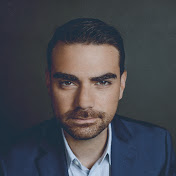
• Introduction • Deposing Nicolás Maduro • Legal and International Reactions • Challenges Ahead for Venezuela • Iran's Internal Unrest and Regional Instability • Tim Walz and Fraud Scandal in Minnesota • Year of Clarity and AdversityIn this podcast episode, Ben Shapiro delves into major geopolitical and domestic developments as 2026 begins, analyzing the shocking U.S. military operation that removed Venezuelan dictator Nicolás Maduro, the ongoing unrest and potential collapse of the Iranian regime, as well as local political fallout in Minnesota involving Governor Tim Walz amid significant fraud allegations. Throughout, Shapiro frames these events within a broader context of global and domestic adversity, emphasizing the year ahead as one of clarity and accountability.
Deposing Nicolás Maduro
The episode highlights the dramatic U.S. military operation known as Operation Absolute Resolve, which resulted in the capture and extradition of Nicolás Maduro and his wife to the United States. Shapiro details how months of secret intelligence efforts, including assistance from an insider in Maduro's inner circle, culminated in a precise nighttime raid involving special forces and overwhelming American airpower. The mission neutralized Venezuelan air defenses, which were Russian-provided, and faced resistance from Cuban operatives allied with Maduro's regime. Despite some injuries, no American personnel were killed. Maduro was arrested on charges including narco-terrorism and cocaine trafficking and transported to New York for federal prosecution.
Shapiro underscores the significance of this operation by contrasting it with past U.S. interventions, noting it resembled the 1989 Panama invasion under George H.W. Bush but differed in the non-use of widespread American ground forces to retake the country. Instead, a palace coup-like scenario unfolded, with Maduro's vice president, Delcy Rodríguez, quickly sworn in, appearing poised to cooperate under intense U.S. pressure. The Trump administration's approach treats Venezuela as a strategic asset, emphasizing a restoration of American interests, particularly regarding energy resources and limiting foreign adversaries' influence such as Iran, Russia, and China.
President Trump's foreign policy is framed as "peace through strength," rejecting isolationism and championing muscular engagement to protect U.S. interests globally without lengthy occupations. Shapiro commends the military operation as a demonstration of U.S. strength and resolve, with Secretary of Defense Pete Hegseth and Secretary of State Marco Rubio vocalizing the administration's seriousness in enforcing consequences for hostile actors in America's hemisphere. The episode discusses the broader implications for the region, including potential future actions against Colombia and Cuba.
Legal and International Reactions
Addressing questions about the legality of the operation, Shapiro explains that international law is effectively unenforceable and operates under "law of the jungle" dynamics where power dictates outcomes. Domestically, the administration bypassed prior congressional notification to preserve operational security, a move justified under current interpretations of the War Powers Act as the mission was limited in scope and duration. Legal experts cited affirm the legitimacy of the U.S. arrest warrant and extradition effort against Maduro, who lacks diplomatic immunity due to his criminal indictments.
The international reaction was predictably polarized. Allies of Maduro, such as Russia, China, Mexico, and Qatar, condemned the U.S. action for violating sovereignty and international norms, while most other countries and Venezuelan expatriates celebrated the end of Maduro's regime. European officials called for peaceful democratic transition but were criticized by Shapiro for their longstanding inaction. The episode also mocks performances by left-wing politicians in the U.S., like Chuck Schumer and Bernie Sanders, as hypocritical and detached from reality given their past support for military actions under Democratic administrations.
Challenges Ahead for Venezuela
With Maduro removed, attention turned to the newly installed leadership under Vice President Delcy Rodríguez, a committed socialist with strong ties to the prior regime. Shapiro, alongside expert guest Daniel D. Martino—a Venezuelan-born economist—explores the likelihood of meaningful democratic reform given Rodríguez's consolidation of power and intent to extend influence. They emphasize the need for a swift transition to prevent regression or civil conflict. The U.S. intends to apply sustained pressure to ensure Venezuela shifts toward market-friendly policies, especially reopening oil production to American companies, while avoiding large-scale U.S. troop deployments.
Martino characterizes Rodríguez's faction as deeply entrenched and warns of their potential to stall reforms until the next U.S. administration, underscoring the importance of continued American vigilance and potential for a second military operation if necessary. The operation's success represents a significant victory for Venezuelan citizens suffering under years of economic collapse, hyperinflation, and repression, but the systemic challenges facing the nation remain complex.
Iran's Internal Unrest and Regional Instability
Shapiro turns to developments in Iran, where widespread protests over basic necessities such as water and electricity have escalated violently with government crackdowns causing dozens of deaths. The administration has issued stern warnings that further brutal suppression could provoke military responses targeting revolutionary guard facilities. While not advocating for a full-scale invasion, Shapiro views these warnings as part of the administration's strategy of pressure and deterrence. Intelligence reports suggest that Supreme Leader Ali Khamenei is preparing contingency plans to flee if regime stability collapses.
The episode connects these unrests to broader regional struggles, highlighting Iran's role as a state sponsor of terrorism and destabilizing force, particularly in Latin America through alliances with Maduro and Venezuela. Shapiro stresses that movements in Venezuela and Iran signal an era of upheaval that will define American foreign policy in 2026.
Tim Walz and Fraud Scandal in Minnesota
Back on the domestic front, Shapiro addresses the political fallout in Minnesota where Governor Tim Walz announced he will not seek reelection amidst growing scrutiny over widespread fraud in state-run childcare and feeding programs. The scandal initially exposed by internet personality Nick Shirley revealed numerous daycare centers receiving government funds despite lacking children or operating in violation of regulations. Investigations uncovered systemic fraud involving Somali community actors, with some schemes costing taxpayers billions and leading to federal probes.
Walz's administration faced criticism for inadequate oversight and dismissive responses from state agencies, eroding public trust. The scandal has opened the door for other Democratic contenders, like Amy Klobuchar, to vie for gubernatorial nomination. Shapiro presents this as a cautionary example of bureaucratic dysfunction and the perils of unchecked government spending, illustrating domestic adversity alongside global geopolitical challenges.
Year of Clarity and Adversity
Opening and closing the episode, Shapiro frames 2026 as a pivotal year marked by revelations and crises exposing true loyalties and characters worldwide and domestically. He warns of intensifying geopolitical upheavals including Chinese authoritarian ambitions, ongoing Russia-Ukraine conflict, and Iran's nuclear pursuits which will force Americans to discern truth from propaganda amid polarized political narratives. With economic uncertainties tied to AI developments and potential political opportunism on both left and right, Shapiro urges commitment to principles, truth, and the preservation of America's constitutional system of checks and balances.
The episode emphasizes that only through embracing difficult realities and rejecting utopian falsehoods or conspiratorial cynicism can Americans navigate the coming challenges with integrity and protect liberty. This ethos underpins Shapiro's optimism for maintaining American strength and leadership amid a turbulent global landscape.
Full episode
Episode summary