Introduction
Table of contents
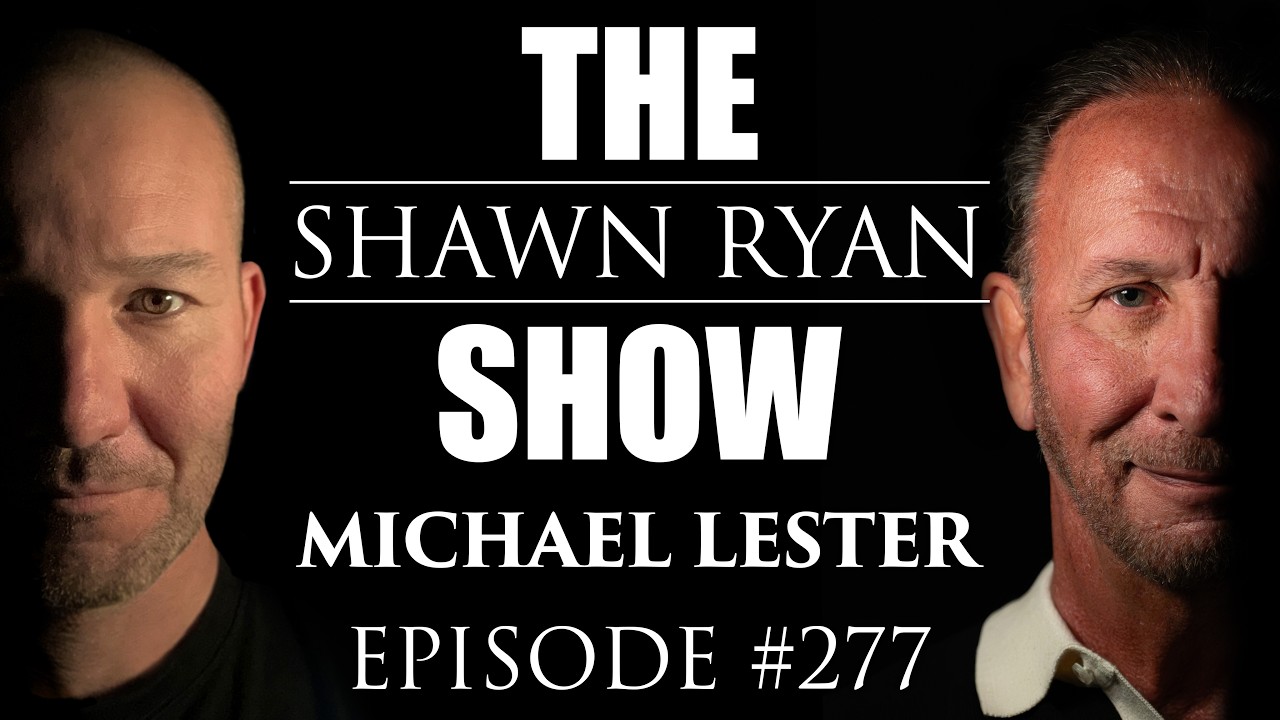
• Introduction • Historical Parallels and Modern Conflict • Weaponization of Information and Domestic Division • Empire, Foreign Policy, and Regime Change • The Role of Israel and APEC Influence • Political Corruption and Dysfunction in the U.S. • The Erosion of American Infrastructure and Priorities • Challenges of Information Overload and AI • Reflections on U.S. Identity and Future Trajectory • On War, National Security, and the Military-Industrial Complex • Demographics, Global Shifts, and Long-term Outlook • Personal Journey and Motivation Behind the Book • Democracy, Voting, and Political Reform • The Importance of Civil Discourse and Bridging Divides • The Challenge of Change and Hope for the Future • Perspectives on COVID-19 and Global Health • Military Experience and AnecdotesIn this podcast episode, Michael T. Lester, a decorated Marine Corps combat pilot and author of We Are the Bad Guys, joins the host for a detailed conversation exploring America's role on the world stage, empire dynamics, regime change, information warfare, political corruption, and national security. The discussion spans from historical parallels with past world conflicts to contemporary issues such as propaganda, foreign influence, domestic division, and emerging global power shifts. Lester shares his evolving views shaped by decades of military experience and in-depth research, unpacking uncomfortable truths about U.S. foreign policy, democracy, and the challenges facing modern society.
Historical Parallels and Modern Conflict
Lester opens with the idea that the current global situation resembles a tinderbox, similar to conditions before World War I, more so than before World War II. Unlike the visible trigger events of the past, today's conflicts are diffuse, involving narratives, markets, technology, and supply chains weaponized simultaneously. He emphasizes the unprecedented psychological warfare and division both internationally and within the United States. Unlike the clear line drawn in 1939, today's conflicts are systemic and subtle, often playing out through disinformation and proxy engagements rather than overt wars.
Weaponization of Information and Domestic Division
The conversation highlights information as a critical battleground in modern warfare. Lester discusses how isolated information bubbles and selective narratives fuel domestic polarization, making collective understanding difficult. He stresses that Americans are more divided than ever, influenced by partisan news, social media algorithms, and confirmation bias. This division hinders dialogue, compromises democratic processes, and weakens the national fabric. The rapid dissemination and manipulation of information, amplified by technology and AI, create challenges in discerning truth.
Empire, Foreign Policy, and Regime Change
A significant portion of the discussion revolves around America's status as an empire—a country that controls other nations economically, militarily, and socially. Lester contends that the U.S. wields more global influence than any other country but does so at a high cost, both internationally and domestically. With over 740 military bases worldwide, extensive foreign aid, and inconsistent foreign policy interventions, many countries view the U.S. as the "bad guys." Examples cited include forced statehood for Hawaii, manipulation of Panama's independence, and proxy wars in Latin America. The narrative of American exceptionalism contrasts starkly with the reality of divided opinions abroad.
Lester also critiques the legacy and consequences of U.S.-led regime changes and proxy wars, arguing that these interventions rarely leave the affected countries better off. He asserts that the common pattern involves installing compliant leaders who prioritize American interests—often at the expense of their populations. The repeated cycle of instability, sanctions, and conflict perpetuates resentment and global distrust toward the U.S.
The Role of Israel and APEC Influence
Lester discusses the influence of the American Israel Public Affairs Committee (APEC) and its extensive political power in Washington, describing it as an occupation of American political will. He outlines the complex dynamic where significant financial and political influence is exerted by groups aligned with Israeli policy, affecting U.S. foreign and domestic policy decisions. The discussion includes controversial points about congressional behaviors, vetoes at the United Nations favoring Israel, and how talking publicly about these influences is often shut down under accusations of anti-Semitism.
He further asserts that this political pressure shapes policies in ways that do not necessarily align with American interests or democratic principles, highlighting the opaque nature of foreign lobbying combined with U.S. domestic politics. The episode also touches on how other foreign influences like Saudi Arabia and China operate differently due to their governance structures, contrasting with the freedoms that make U.S. democracy vulnerable to such lobbying.
Political Corruption and Dysfunction in the U.S.
Inside the domestic domain, Lester paints a bleak picture of political corruption, declining trust, and systemic rot. He criticizes lifelong career politicians, partisan warfare framed as combat, and the prioritization of fundraising over public service. His own observations include how money dominates elections, with statistics showing that candidates who spend the most win the vast majority of races. This financial entanglement, spurred by the Supreme Court's Citizens United decision, incentivizes policy catering to donors rather than constituents.
Lester underscores how political short-termism impairs meaningful governance: congressional failure to pass budgets, legislative logjams, and neglect of critical infrastructure and social services. He also discusses the disconnect between public expectations and political realities, highlighting that politicians are often trapped in cycles of compromise and corruption, losing sight of serving the public good.
The Erosion of American Infrastructure and Priorities
An underlying theme is the neglect of American infrastructure amidst global power plays and military expenditure. Lester laments crumbling bridges, outdated power grids vulnerable to cyberattacks, homelessness among veterans, and the opioid crisis. He criticizes funneling billions overseas, e.g., to Israel and Ukraine, while essential domestic needs go unmet. The conversation unpacks the paradox of immense military spending alongside underinvestment in critical civilian systems, which weakens national resilience and security.
Challenges of Information Overload and AI
The podcast also delves into the complexities of information in the digital age. Lester explains how the internet, while democratizing access, also fragments reality into biased bubbles reinforced by algorithms. He warns that AI's role in shaping narratives can further entrench misinformation or bias, depending on data inputs and programming. This creates new challenges in discerning truth, fostering critical thinking, and maintaining democratic discourse.
He advocates for active questioning and diverse sources to counteract confirmation bias. Practical advice includes cross-verifying AI-generated content across multiple platforms. Yet, he remains cautious about the future, given the growing sophistication of information warfare and the erosion of shared realities.
Reflections on U.S. Identity and Future Trajectory
Throughout the episode, Lester reflects on American identity, democracy, and the country's direction. He encourages self-reflection about the nation's empire status, internal divisions, and global standing. The conversation points to the need for systemic changes, including political reforms like term limits, campaign finance restrictions, and transparency in lobbying.
Lester stresses the importance of education—understood as cultivating informed, critical citizens able to challenge narratives and demand accountability. He is realistic yet hopeful that awareness and engagement can create momentum for change. However, he acknowledges the considerable obstacles people face in overcoming entrenched habits, partisan loyalties, and political inertia.
On War, National Security, and the Military-Industrial Complex
Drawing on his military background, Lester discusses strategic considerations around war, national security, and defense spending. He defines modern conflict as multifaceted, often nonkinetic, involving cyber warfare, economic pressures, and information dominance. War casualties and kinetic battles are less likely, replaced by systemic undermining of infrastructure and societal cohesion.
He criticizes inefficient military spending exemplified by legacy weapon systems like the newly announced "Trump-class" battleship and the practice of giving away ammunition and equipment only to purchase replacements. This is contrasted with emerging threats from China's expanded shipbuilding and space capabilities. Lester sees this as symptomatic of deeper failures in defense planning and the influence of the military-industrial complex prioritizing profits over readiness.
Demographics, Global Shifts, and Long-term Outlook
The episode briefly touches on demographic changes and their implications. Lester discusses declining global birth rates, projecting population peaks around 2050 followed by declines—a historical unprecedented dynamic raising questions about economic growth, labor forces, and geopolitical stability. He links this to migration patterns, urban decline exemplified by Detroit, and societal stresses.
On the world stage, he remarks on the shifting balance of power with China's rise, the formation of BRICS, and the uncertain durability of U.S. alliances and influence. He disputes the presence of genuine allies, characterizing most international relationships as transactional and opportunistic.
Personal Journey and Motivation Behind the Book
Lester shares his personal evolution from a proud Marine Corps officer defending America to a critical observer questioning the narratives he was told. His skepticism arose slowly over two decades through contradictions between official stories and observed realities in conflicts like Desert Storm, Iraq, Afghanistan, and relations with allies. His book aims to expose inconvenient truths about American policies often omitted from mainstream discourse to foster informed citizenship.
He emphasizes that his work is not an anti-American rant but a "love letter" aiming to highlight necessary reforms for the nation's future. He encourages dialogue, questioning, and breaking out of ideological silos to rebuild trust and guide the country toward a sustainable path.
Democracy, Voting, and Political Reform
A pivotal theme is the eroding state of American democracy. Lester critiques gerrymandering, campaign finance influence, media bias, and voter alienation, which collectively diminish electoral sovereignty. He advocates limits on campaign spending, foreign agent registration, transparency in lobbying, and robust civic education.
Despite challenges, he believes voting still matters but requires an informed electorate and systemic safeguards to restore representative governance. The segment highlights the tension between citizens' desire for change and the entrenched political status quo marked by self-interest and money.
The Importance of Civil Discourse and Bridging Divides
Lester and the host concur that constructive dialogue across ideological lines is rare yet essential. They lament the decline of respectful debate and the rise of echo chambers, tribalism, and instant dismissal of opposing views as "fake news" or conspiracy theories. They advocate for devil's advocate perspectives, openness to reconsidering beliefs, and encouraging critical thinking as ways to heal societal fractures.
This call extends to media consumers, politicians, and everyday Americans to foster a culture where questions are welcomed, complexity is accepted, and solutions are collaboratively sought.
The Challenge of Change and Hope for the Future
As the conversation closes, Lester acknowledges that change is difficult, often resisted, and historically empires tend to fall rather than adapt. Nonetheless, he challenges listeners to envision what America could become in 250 years, urging a thoughtful choice between passive decline and proactive transformation.
He stresses that promoting awareness, questioning existing systems, and engaging respectfully across divides are critical first steps toward a healthier, more equitable nation. Education remains the central pillar for empowering such change and ensuring that the country's foundational ideals can be renewed and preserved.
Perspectives on COVID-19 and Global Health
Briefly, Lester addresses COVID-19, reflecting on possible lab origins and the mishandling of information around the pandemic. While hesitant to conclude definitively, he expresses skepticism about natural emergence theories and suggests accidental release as plausible. He criticizes the opaque nature of investigations, the politicization of responses, and the role of pharmaceutical companies profiting from vaccine development.
The pandemic is cited as an example of the challenges in verifying truth amid conflicting narratives and political agendas, reinforcing earlier points about information control and public trust.
Military Experience and Anecdotes
Throughout the episode, Lester shares anecdotes from his military career to illustrate broader points. These include logistics failures during the Gulf War, lack of ammunition, and the impact of political and budgetary decisions on operational readiness. He recounts experiences with foreign allies, the emotional weight of combat, and his personal disillusionment as he recognized misalignments between official justifications and realities on the ground.
These stories add a grounded perspective to his critiques, highlighting the intersection of policy and frontline consequences.
Full episode
Episode summary