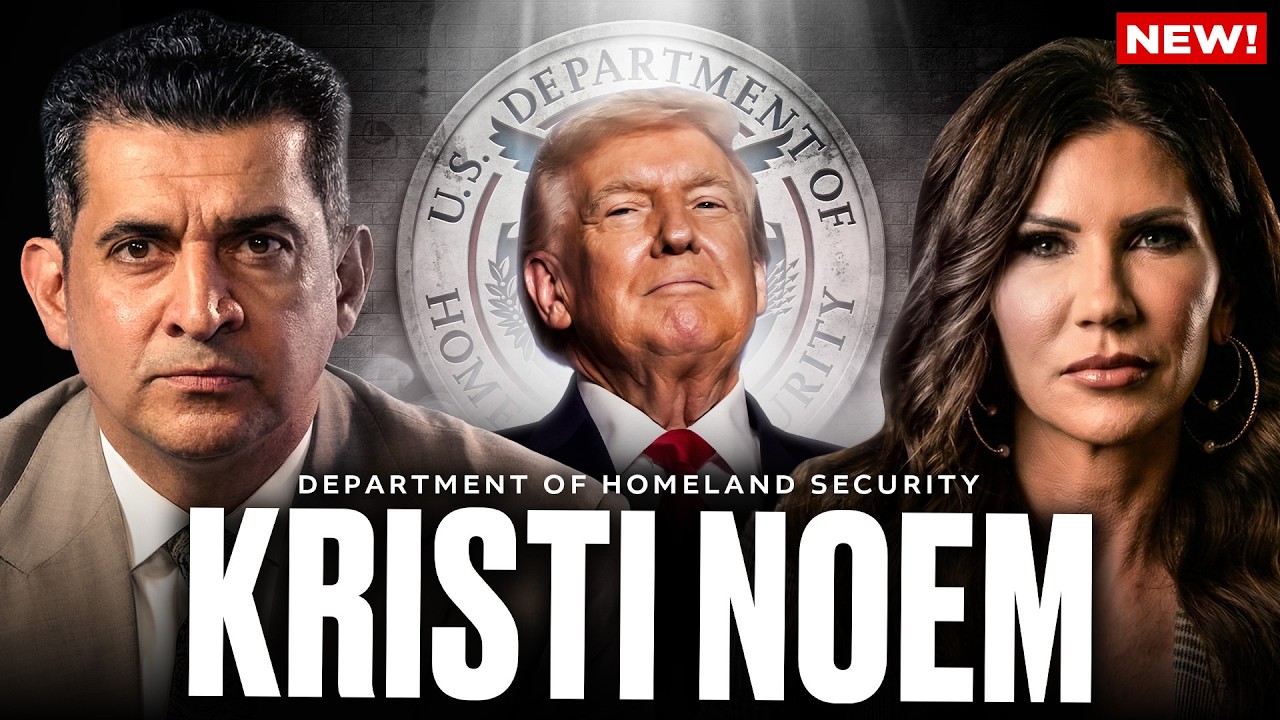
“They Spied On Me” - Sec. Kristi Noem: Secret DHS File Room, El Mencho Fallout & Deep State Purge
Introduction
Table of contents
• Introduction • Deep State and Secret Surveillance • China as a National Threat • Cybersecurity and Election Integrity • Department Challenges and Accountability • Illegal Immigration and Border Enforcement • Cartel Violence and Mexico's Challenges • Rewards for Justice and International Threats • Real ID and Identification Security • World Cup Security Preparations • Missing Children and Human Trafficking • Preventing the Next 9/11 • Personal Insights: Speeding Tickets and FitnessIn this podcast episode, Secretary Kristi Noem dives into a wide range of pressing national security and homeland concerns, sharing candid insights from her tenure leading the Department of Homeland Security. From covert surveillance and the existence of a "deep state" within the government to critical issues like China's long-term threat, illegal immigration, cartel violence in Mexico, cybersecurity challenges, election security, and preparations for major national events such as the upcoming World Cup, Noem offers a revealing perspective on the complex realities facing the United States today.
Deep State and Secret Surveillance
Kristi Noem opens up about the depth of infiltration she discovered within the Department of Homeland Security. Upon joining the department, aided by Elon Musk and his team, she identified software illegally installed on her devices to spy on her and record meetings, a shocking betrayal within her own agency. She revealed finding a secret secure room on DHS grounds that housed files no one knew existed, containing controversial information on numerous topics. She describes an ongoing effort to uncover individuals within the government who do not prioritize American interests and emphasizes the challenge of purging these bad actors, many of whom had access to sensitive security information without proper clearance.
China as a National Threat
Noem reiterates her firm stance that China remains the foremost adversary of the United States, explaining that Beijing's ambitions stretch beyond short-term gains to a centuries-long strategy aimed at dominating the world. She cites China's attempts to control America's food supply by acquiring farmland and agricultural assets, stealing intellectual property, and manipulating supply chains. She proudly discusses South Dakota's pioneering bans on Chinese ownership of farmland and TikTok usage on state devices under her previous governorship. DHS is acutely aware of China's cyber infiltration, especially in critical infrastructure like ports and telecommunications. Noem highlights the underfunding of the government's cybersecurity agency, CISA, tasked with defending against foreign hacking threats, including from China, Iran, and Russia.
Cybersecurity and Election Integrity
The constant danger posed by cyberattacks defines much of DHS's daily mission. Noem details how China and other adversaries exploit technology embedded in American infrastructure to gather intelligence, control shipments, and possibly cause disruptions. She stresses the importance of securing the electrical grid, water supplies, food chains, and election systems, all categorized as critical infrastructure. Despite these persistent cyber threats, Congress has failed to adequately fund key cyber defense personnel, leaving many experts furloughed. Noem also underscores the importance of election security as a national defense priority, advocating for voter ID laws to ensure election integrity and public trust.
Department Challenges and Accountability
With the complexities of intelligence and internal threats, Noem stresses that accountability means more than public accusations; it requires thorough investigations and criminal prosecutions when necessary. She acknowledges that while no direct evidence has surfaced of DHS employees accepting foreign bribes, there have been numerous cases of unauthorized access to information and deception. Those responsible for spying or security breaches have been caught, polygraphed, and terminated. The secretary highlights the cultural and operational revitalization underway to bring DHS to modern standards after years of neglect and internal sabotage.
Illegal Immigration and Border Enforcement
Noem recounts her recruitment by President Trump to serve as DHS Secretary, drawn by the mission to secure U.S. borders amidst what she calls an "invasion" of illegal migrants. She explains the multi-faceted strategy of enforcement and messaging aimed at discouraging illegal immigration, including international public service announcements in countries like Guatemala and Honduras. While deporting millions is a daunting task, Noem sees progress in the 2.5 million voluntary returns and thousands of removals of criminal aliens and known terrorists. The administration has prioritized combating cartels and human trafficking while cooperating with local law enforcement in some jurisdictions. She acknowledges challenges with "sanctuary cities" and stresses that surges and larger deployments depend on local invitation for cooperative operations.
Cartel Violence and Mexico's Challenges
The podcast touches on the dramatic violence and instability in Mexico, especially following the recent killing of cartel leader El Mencho. Noem paints a stark picture of Mexico's struggle with criminal organizations and corruption, noting that parts of the Mexican government itself may be compromised by cartel influence. She conveys disappointment in Mexico's political leadership, including President Shine Bomb, whose cautious approach and limited control over cartels reveal a fragile government unsure whom to trust within its ranks. Despite these challenges, the U.S. maintains intelligence-sharing agreements and stands ready to support Mexican efforts against drug cartels, encouraging strong bilateral cooperation to stem trafficking and violence.
Rewards for Justice and International Threats
When discussing broader foreign threats such as Iran and Venezuela, Noem alludes to the administration's use of tools like the Rewards for Justice program to incentivize defections and intelligence gathering. While declining to comment on specific tactics, she notes the president's firm stance and readiness to use all authorities necessary to protect American interests against regimes like Iran's or terrorist groups globally.
Real ID and Identification Security
Noem defends the enforcement of the Real ID Act, emphasizing it as a legal requirement that enhances national security by verifying identities for air travel and other federal purposes. She highlights a 94% compliance rate among travelers as a positive step toward reducing fraudulent identification use, crucial for border security and preventing unlawful access. Addressing privacy concerns, she clarifies that biometric data is voluntarily used in some security programs, not mandated by her or President Trump.
World Cup Security Preparations
Looking ahead to the international spotlight of the Soccer World Cup hosted by the U.S., Canada, and Mexico, Noem stresses the vital role of DHS in safeguarding this massive event expected to draw 6 to 10 million visitors. She laments current funding shortfalls in her department that have stalled essential security contracts, technology acquisitions, and grants to cities for event preparation. The stakes are high for preventing terrorism or other criminal activities during this global gathering, and Noem calls on Congress to provide the necessary resources to ensure safety.
Missing Children and Human Trafficking
On the harrowing issue of missing children, Noem reveals that over 460,000 children disappear annually in the U.S., often victims of trafficking networks exploiting open borders and lax policies from prior administrations. She describes how some government programs under the last administration inadvertently facilitated child sponsorship by corrupt actors who trafficked these young migrants. Since tightening border enforcement and reintroducing DNA testing, there has been a dramatic reduction in child trafficking cases. Reunification efforts have helped thousands of children return to families, but significant work remains to combat this humanitarian crisis.
Preventing the Next 9/11
Regarding terrorism and the prevention of a future 9/11-scale attack, Noem speaks about the ongoing vigilance required from DHS and intelligence partners. She admits personal concerns about lingering vulnerabilities, counters fake certifications and fraudulent training programs for sensitive jobs, and acknowledges the presence of enemies both foreign and domestic. While confident in the nation's capabilities, she emphasizes constant adaptation and being several steps ahead of potential attackers to keep Americans safe.
Personal Insights: Speeding Tickets and Fitness
The conversation concludes on a lighter note with Noem sharing a personal anecdote about having had multiple speeding tickets earlier in life, attributing it in part to her upbringing on a ranch and a fast-paced lifestyle. Although she has now reformed partly out of public scrutiny, she admits still having a fondness for speed. She also discusses her fitness routine that includes running, Peloton biking, CrossFit, and enjoying outdoor activities, all essential to maintaining the stamina required for her demanding role.
Full episode
Episode summary