The Future of Iran: Restore the Crown or Start Over?? | PBD Channel | Ep. 725
Introduction
Table of contents
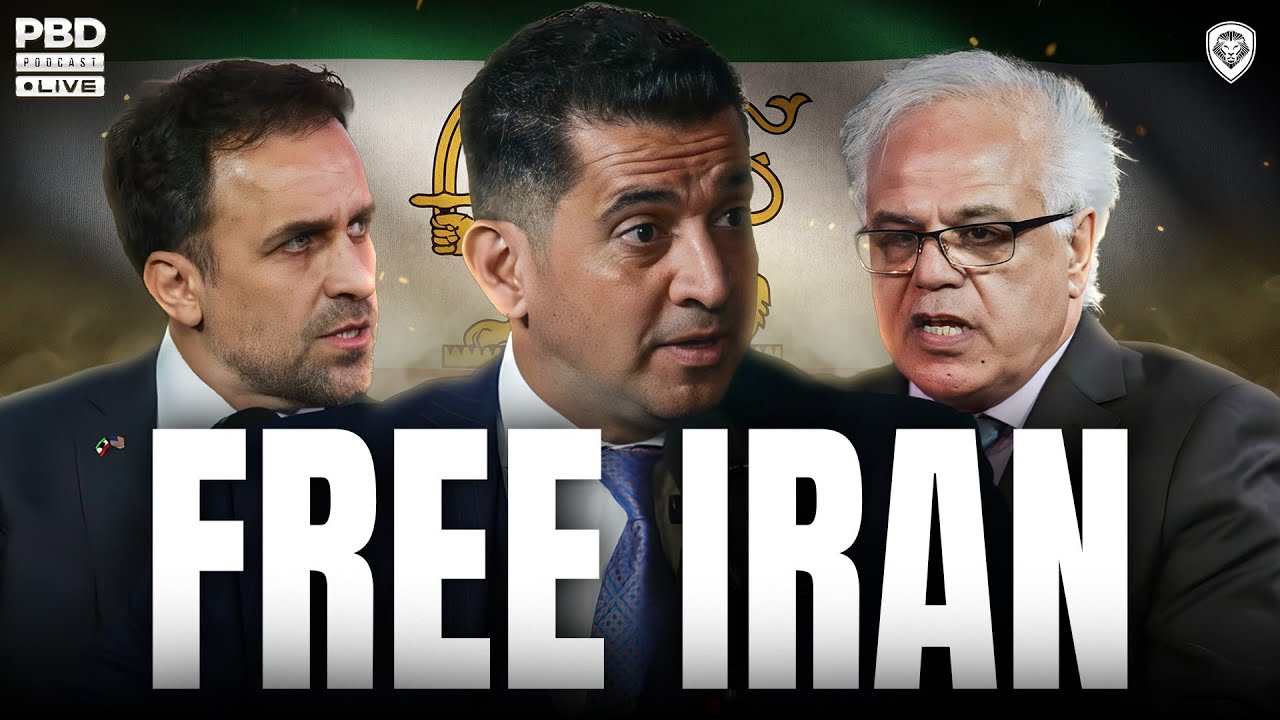
• Introduction • Current Situation and Unrest in Iran • The Nature of the 1979 Revolution: Coup or Genuine Upheaval? • Islam's Role in Iranian Politics and Society • The Longevity of the Islamic Republic Regime • The Dual Revolutions: Political and Religious • The Question of U.S. Intervention • The Role and Controversy of Reza Pahlavi • Historical Analogies and Lessons for Iran's Future • The Call for International Support and Strategic Action • The Future Path: Restore the Crown or Start Over? • Intellectual and Emotional Dimensions of the RevolutionIn this podcast episode, host Patrick Bet-David engages in a wide-ranging dialogue on the current state of Iran amidst massive domestic unrest and international tensions. The conversation delves into the roots of the Islamic Republic's longevity, the revolution's historical context, contrasting ideological paths for Iran's future, and the potential U.S. role in shaping that future. Guests Amir Fakhravar, an Iranian dissident and former political prisoner, and Dr. Allahyar Kangarlu, a nuclear physicist and Columbia University professor, provide informed and often divergent analysis on the nature of the Iranian regime, the prospects of revolution, and the controversial figure of Reza Pahlavi as a potential successor or transitional leader.
Current Situation and Unrest in Iran
The podcast opens amid escalating protests and widespread anger in Iran following the death of Mahsa Amini and the brutal crackdown by the Islamic Revolutionary Guard Corps (IRGC). The regime's use of lethal force has reportedly resulted in tens of thousands of deaths, with human rights organizations citing figures between 43,000 and 70,000. Despite attempts to black out the internet, videos and reports continue to be disseminated. The government's religious institutions, including mosques and seminaries, have been targeted by protesters who burned over 700 mosques and 100,000 Qurans, signaling deep rejection of the Islamic Republic's ideological foundation. Both guests emphasize the unprecedented scale and intensity of this uprising, calling it more than just another protest movement—a revolution in the making.
The Nature of the 1979 Revolution: Coup or Genuine Upheaval?
Amir Fakhravar presents a contentious view that the 1979 Islamic Revolution was effectively a Russian (Soviet) coup that installed a Soviet-aligned regime, rather than a populist overthrow. He cites archival evidence of Iranian clerics trained at Patrice Lumumba University in Moscow—argued to be agents of Soviet influence—with the Islamic Republic's founding leadership deeply linked to KGB operations. Fakhravar traces the Soviet Union's strategic objective to replace the pro-U.S. Shah with a regime controllable from Moscow, a narrative that challenges the traditional understanding of 1979 as a popular revolution. Dr. Kangarlu acknowledges foreign influences but frames the revolution as part of a longer historical and religious evolution toward political Islam's assertion after centuries of fluctuating power dynamics in Iran.
Islam's Role in Iranian Politics and Society
A significant portion of the discussion explores the relationship between Islam as a religion and Islamic governance, particularly within Iran. Fakhravar argues that Islam is inseparable from dictatorship, describing it as a "virus" incompatible with democracy due to its foundational texts and historical practices advocating political dominion rather than spiritual guidance. He stresses that reform within Islam is impossible because Islamic law (the Quran) is rigid and immutable, asserting that the only path forward for Iran is to break free from Islam's political grip entirely.
Conversely, Dr. Kangarlu adopts a more evolutionary view, comparing Islam's current political entanglement to the Catholic Church's historical dominance in medieval Europe before the Reformation and Enlightenment. He suggests that Iran is undergoing two simultaneous revolutions: a political democratization and a religious reformation of Islam, similar to the Protestant shift in Europe centuries prior. In his perspective, the Iranian revolution of 1979 marks the birth pangs of this religious maturation, which will eventually lead to a decoupling of religion and state, establishing a secular democracy respectful of personal faith. Kangarlu stresses that this process is naturally slower and more complex given Islam's shorter historical timeline versus Christianity.
The Longevity of the Islamic Republic Regime
The 47-year endurance of the Islamic Republic despite multiple uprisings is attributed to several intertwined factors. Fakhravar points to religious dictatorship's inherent difficulty to dislodge, stressing the regime's violent suppression tactics and ideological control. He also references extensive foreign backing, especially from Russia and China, and the regime's deep infiltration into Iranian society. Dr. Kangarlu counters with a holistic geopolitical and historical analysis, emphasizing that the regime's survival also owes to the disruption caused by external events such as the U.S. invasions of Afghanistan and Iraq, which removed the Islamic Republic's regional enemies and inadvertently fortified its position. Furthermore, he highlights the role of modern authoritarian tools like advanced surveillance technology supplied by China and Russia aiding the regime's brutal crackdown.
The Dual Revolutions: Political and Religious
Dr. Kangarlu explains that Iran uniquely faces two revolutions at once—the secular political revolution aimed at establishing democracy and the religious revolution seeking to reform Islam itself. Unlike European experiences where institutional reform and political revolution often occurred decades apart, Iran attempts both simultaneously, which adds enormous complexity and risks. This duality accounts for ongoing factional struggles within opposition groups and highlights the challenge of creating a unified post-regime vision.
The Question of U.S. Intervention
The discussion turns to the role of the United States and whether it should or will intervene militarily in Iran. Amir Fakhravar strongly supports U.S. attacks aimed at dismantling regime infrastructure, the IRGC, and the Supreme Leader's power. He argues that targeted strikes akin to the elimination of Qasem Soleimani are necessary to end the bloodshed and enable revolutionary change. Fakhravar dismisses "boots on the ground" scenarios but advocates for decisive military pressure to expedite regime collapse.
Dr. Kangarlu views U.S. intervention as inevitable given President Trump's "red lines" and declining tolerance for Iran's human rights abuses and destabilizing regional role. He highlights Trump's unique strategic tool—severe economic sanctions leveraging America's massive consumer market to isolate Iran—and predicts a combined diplomatic, economic, and military strategy aimed at regime change. Both guests recount Trump's recent comments about deploying naval forces near Iran and halting mass executions, implying growing readiness to escalate.
Some discussion acknowledges that China and Russia provide essential support to Iran, but neither appears willing or able to fully prop up the regime unilaterally against combined U.S. pressure. The episode also references President Trump's worldview of combating a coalition of adversarial regimes (Iran, Cuba, Venezuela) cooperating economically and ideologically with China and Russia.
The Role and Controversy of Reza Pahlavi
Reza Pahlavi, the exiled son of the late Shah, figures prominently in debates about Iran's future leadership. Fakhravar and Kangarlu agree he is a polarizing figure with mixed support. Fakhravar is highly critical of Pahlavi, accusing him of detachment and ineffectiveness for his decades-long exile and years of limited active opposition within Iran. Fakhravar believes Pahlavi's team has compromised opposition efforts through secret contacts with the IRGC and reformists, undermining prospects for a legitimate revolution. Fakhravar also disputes claims of large defections attributable to Pahlavi and insists the opposition is broader and more diverse than any one leader.
Dr. Kangarlu, while acknowledging imperfections, offers a more sympathetic assessment emphasizing Pahlavi's unique democratic credentials, his lack of personal ambition for power, and his appeal to nationalism beyond ideological divides. He highlights Pahlavi's intellectual engagement with experts and vision for a secular, democratic Iran as a significant asset. According to Kangarlu, the major advantage Pahlavi offers is unifying nationalism that transcends religious or leftist divisions in Iranian society.
They discuss the absence of a clear and organized alternative to Pahlavi within the opposition, recognizing the challenge of leadership in exile movements and the competing factions of monarchists, republicans, and reformists. Fakhravar stresses the need for a constitutional assembly representing various political ideologies to draft Iran's future governance blueprint rather than reliance on a single figure. Kangarlu agrees constitutionalism and democratic institutions should shape Iran's future.
Historical Analogies and Lessons for Iran's Future
Throughout the discussion, both guests reference historic revolutions and governance models. Montesu's classification of governments—republic, monarchy, despotism—is cited to analyze the Islamic Republic's despotic nature and question whether monarchy or republic can better guide Iran's future. Fakhravar argues for explicit rejection of religion-based governance and a constitutional republic. Kangarlu draws parallels to the European Enlightenment and America's founding, emphasizing the separation of church and state and the importance of constitutionally limited government.
The podcast touches on how countries like Japan reconstructed themselves through imposed constitutional frameworks (General Douglas MacArthur's post-WWII reforms), contrasting these with the failures of externally imposed constitutions seen in Iraq and Afghanistan. They suggest that America's role should focus on supporting an inclusive, locally-driven constitutional drafting process for Iran involving diverse opposition groups.
The Call for International Support and Strategic Action
Both guests advocate for international recognition of Iran's complex opposition landscape and urge coordinated actions from the U.S. and allies to assist the Iranian people independently of regime interests. There is an emphasis on the importance of respecting Iran's sovereignty while decisively undermining the current regime's ability to suppress dissent.
Fakhravar advocates for direct U.S. military strikes targeting the regime's command centers and missile facilities, assisted by intelligence cooperation with Israel. Kangarlu underscores economic sanctions, diplomatic isolation, and strategic disruption of hostile alliances as vital to enabling the opposition's success.
The role of the Iranian diaspora and opposition movements abroad, including organized groups like the National Iranian Congress, is discussed as an essential link for advocacy and strategy in the international arena.
The Future Path: Restore the Crown or Start Over?
The overarching theme throughout the episode reflects the tension between nostalgia for the Pahlavi monarchy's developmental legacy and the desire for a fresh start free from past authoritarianism. Fakhravar rejects the monarchy's absolute model and insists on a clear break from Islam's political rule, calling it inherently incompatible with democracy and advocating for a secular constitutional republic.
Kangarlu supports an inclusive approach that could incorporate constitutional monarchy as a transitional framework, drawing on Pahlavi's demonstrated leadership abilities and the symbolic unity he brings to Iranian nationalism. He stresses the importance of constitutional limits, democratic checks, and separation of powers, whether under republic or monarchy.
Both guests agree on the necessity of drafting a modern constitution that protects rights, separates religion and state, and establishes rule of law as foundational for Iran's reconstruction — moving beyond personal rule or absolutism.
Intellectual and Emotional Dimensions of the Revolution
The episode reflects on the human and philosophical underpinning of revolutions, noting the eternal existential questions driving human societies toward systems of belief and governance. It discusses the tension between intellectual ideals and practical revolutionary leadership, acknowledging that revolutions are often driven by nationalism or religious fervor rather than rationalism alone.
The guests show mutual respect despite ideological differences, displaying a passion for Iran's future and concern for the wounded and sacrificed Iranian people. The emotional costs of revolution and opposition are highlighted alongside the political realities. They emphasize the importance of strategic communication, responsible leadership, and unity within the opposition to realize meaningful change.
Full episode
Episode summary