Introduction
Table of contents
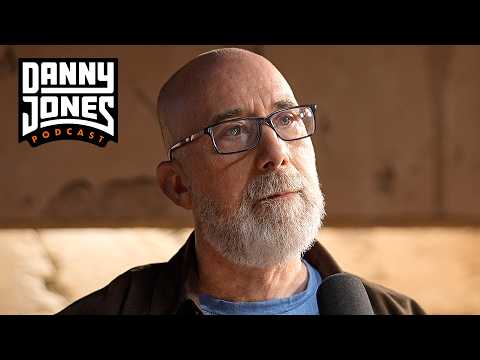
• Introduction • Background and Military Career • The Al-Qaeda Fatwa and Personal Threat • The Modello Prison Raid: A Covert Operation • Comparison to the Venezuela Raid and Modern Special Ops • Selection and Psychology of Delta Force Operators • Directed Energy and Sonic Weapons in Modern Warfare • Geopolitics: Greenland and Global Military Strategy • Human Trafficking and the Epstein Files • The Emasculation of Society and the Crisis of Masculinity • The Role of Independent Media and Information Warfare • The Impact of Artificial Intelligence and the Future of Work • Law Enforcement and Immigration Enforcement Perspectives • Corruption, Political Dysfunction, and War Fatigue • Unexplained Phenomena and Extraterrestrial Life • The Role of Imagination and Manifestation in Personal Development • Contact and CoachingIn this podcast episode, former Delta Force operator and ex-CIA operative Dale Comstock shares a candid, comprehensive overview of his military and post-military experiences, touching on topics ranging from high-risk covert operations to geopolitical events and modern warfare's evolving landscape. The conversation delves into personal threats against him, covert missions like the Modello prison raid, insights on recent special operations, the impact of technology and AI on security and society, controversial political subjects, and reflections on spirituality and consciousness.
Background and Military Career
Dale Comstock is a former U.S. military Delta Force operator and Green Beret with 10 years deployed in special operations. He specialized in light and heavy weapons, paratrooper tactics, and counterterrorism. After retiring right after 9/11, he worked around a decade for other government agencies while concurrently building and selling several companies. Comstock transitioned into Hollywood briefly but found commercial film culture incompatible. Later, he moved to Hong Kong as a bodyguard for a billionaire banker, met his Indonesian wife, and eventually settled in Bali, Indonesia, and Panama City Beach, Florida, where he operates multiple businesses.
The Al-Qaeda Fatwa and Personal Threat
In May 2024, Comstock was unexpectedly put on a global hit list issued by al-Qaeda, marking him a lifetime priority target for assassination by lone wolves affiliated with the terrorist group. This threat was corroborated by U.S. intelligence and private security networks, leading to a formal "duty to warn" by the FBI. While living abroad, Comstock's notification to U.S. government officials exposed significant bureaucratic challenges, including the deportation of his wife on questionable grounds during the COVID-19 pandemic, despite their legal status. The episode highlights the grim reality U.S. citizens and veterans face abroad when government assistance falls short, with Comstock sharing several similar cases of Americans trapped without support.
The Modello Prison Raid: A Covert Operation
Comstock recounted his participation as a breacher in the December 1989 Modello prison raid in Panama, designed to rescue the imprisoned anti-Noriega operative Kurt Muse. Despite being recently injured and on crutches, Comstock took part in the assault, which featured a complex aerial insertion using 15 helicopters—including AH-6, MH-6 "little birds," Cobras, Apaches, and Blackhawks—launching from Howard Air Force Base. The prisoners were held in a fortified structure amid hostile forces and civilian chaos. Comstock detailed overcoming logistical challenges, such as helicopter weight limits and equipment loads, improvised breaching charges under fire, and the chaotic, dangerous nighttime rooftop insertion. The entire operation, including exfiltration, lasted about six minutes and resulted in no U.S. fatalities despite intense resistance and several helicopters taking fire or crash-landing. The operation's success underscored Delta Force's ability to conduct precise, high-stakes missions against formidable odds.
Comparison to the Venezuela Raid and Modern Special Ops
Drawing parallels to the more recent raid in Venezuela, Comstock discussed how similar principles applied to the Delta Force operation aimed at capturing key regime figures. He highlighted the importance of extensive preparation, including detailed mockups, intelligence gathering, and coordination of support units from air and ground elements. Comstock stressed that despite advances in stealth technology, jamming, and sonic weaponry, it ultimately depends on the skill and mindset of the operators on the ground, who must execute flawlessly under pressure. He also touched on the covert involvement of CIA-linked Ground Branch operatives, explaining their likely support roles within these complex missions.
Selection and Psychology of Delta Force Operators
Comstock offered rare insights into the obscure, grueling selection process of Delta operators, which focuses heavily on individual merit under extreme physical and mental stress without peer comparison. Candidates operate anonymously through undefined tasks that test endurance and problem-solving, with a high attrition rate. He emphasized that beyond IQ scores, Delta candidates possess an effective intelligence marked by problem-solving, street smarts, and the ability to manage fear and hesitation. A psychological profile emerges of operators who embody a controlled psychopathy, showing no inhibition about killing when necessary but grounded by clear purpose and resolve. Many operators share a readiness to face mortality without regret, having "resolved their own death," which equips them for relentless, fearless action.
Directed Energy and Sonic Weapons in Modern Warfare
The discussion then shifted to directed energy and sonic weapons, which are increasingly used for crowd control and battlefield disruption. These weapons function by emitting directed frequencies that can cause physical symptoms like nausea, bleeding, and disorientation. Comstock explained that while not new, improvements in miniaturization and tactical deployment—such as mounting sonic cannons on helicopters—represent a serious evolution in non-lethal and potentially lethal tools used in special operations, as evidenced in recent missions.
Geopolitics: Greenland and Global Military Strategy
Touching on recent U.S. interest in Greenland, Comstock provided historical context on the 1951 treaty granting the U.S. military access to Greenlandic facilities, emphasizing its ongoing strategic importance in countering adversaries. He explained that Greenland's mineral wealth and military location make it a critical asset in global defense strategy. Comstock discussed former President Trump's approach as a high-stakes geopolitical poker game designed to pressure allies into higher defense spending and send signals to China and Russia. NATO's limited recent presence in Greenland was described as largely symbolic, underscoring U.S. dominance and European dependence on American protection.
Human Trafficking and the Epstein Files
Moving to darker societal issues, Comstock addressed the ignored epidemic of human trafficking, identifying it as the cartels' largest criminal commodity surpassing drugs. He recounted his wife's own history as a trafficking victim and outlined the complicity of organized crime and certain American factions in perpetuating these horrors. On the Epstein scandal, he expressed skepticism about a genuine investigation, suggesting a systemic cover-up protecting powerful individuals. Comstock noted the use of the Epstein case as a political football rather than a sincere pursuit of justice, lamenting the lack of accountability for entrenched corruption.
The Emasculation of Society and the Crisis of Masculinity
Comstock delivered a sobering critique of contemporary cultural and political trends that, in his view, have emasculated American men and eroded traditional values of responsibility, protection, and provision. He warned that without a rapid cultural turnaround within a few years, societal collapse looms due to waning masculinity and foundational purpose. This loss of identity is exacerbated by toxic political correctness and the destruction of established social norms, potentially extinguishing the American way of life if unchallenged.
The Role of Independent Media and Information Warfare
The conversation shifted to information control battles, including legacy media's complicity in propaganda and the rise of foreign-sponsored social media influencers spreading curated narratives. Comstock underscored the weaponization of disinformation in modern fifth-generation warfare, where controlling the public's perception is as critical as kinetic battlespaces. The emergence of AI has compounded this problem by generating convincing fake audio-visual content, making it increasingly difficult for the public to discern truth from fiction.
The Impact of Artificial Intelligence and the Future of Work
Comstock strongly voiced concern over the rapid advancement of artificial intelligence as a transformative yet destabilizing force. He discussed massive job losses expected due to AI automation, forecasting that up to 80% of jobs might disappear within two years for many individuals worldwide. While acknowledging positive possibilities—such as increased longevity and digital mind uploading—he warned of societal control risks via universal basic income tied to compliance, digital currency surveillance, and loss of individual sovereignty. He questioned what purpose remains for men stripped of traditional roles of protector and provider, invoking the "mousetopia" study as a warning of catastrophic social consequences when incentives for engagement vanish.
Law Enforcement and Immigration Enforcement Perspectives
On contemporary law enforcement challenges, Comstock defended ICE agents amid public scrutiny following a high-profile shooting, explaining the dangers officers face when confronting non-compliant suspects using vehicles aggressively. He also highlighted frustrations with inconsistent immigration policies, inefficiency in deportations limited mostly to criminals, and severe strain on welfare systems caused by mass illegal immigration policies. Comstock insisted on the necessity of strong borders and law enforcement, comparing the U.S. leniency unfavorably to stricter enforcement practices abroad.
Corruption, Political Dysfunction, and War Fatigue
Comstock expressed deep disillusionment with political leadership on multiple fronts, especially regarding prolonged wars such as those in Afghanistan and Iraq. He offered firsthand reflections on the futility, political interference, and missed opportunities to leverage unconventional tactics that could have ended conflicts faster. He cited events like Mogadishu's disastrous firefight and the extensive waste of lives and resources with little strategic gain. The conversation also touched on systemic corruption exemplified by missing Pentagon funds and misdirected taxpayer money on irrelevant foreign aid.
Unexplained Phenomena and Extraterrestrial Life
Exploring the limits of accepted knowledge, Comstock engaged with UFOs, extraterrestrial encounters, and metaphysical questions. He referenced recent declassified intelligence, eyewitness reports, and scientific debates suggesting alien presence on Earth and the existence of multiple dimensions. He discussed the limitations of religious texts, raising skepticism about traditional doctrines and highlighting alternative interpretations pointing to collective consciousness and universal intelligence. Anecdotes about personal and shared consciousness experiences underscored his belief in life beyond physical death and the potential for expanded human understanding.
The Role of Imagination and Manifestation in Personal Development
Concluding with a positive philosophy on personal growth, Comstock attributed much of his success to harnessing imagination and manifestation rather than sheer effort. He encouraged listeners to abandon limiting beliefs like "I can't" and to actively create their realities through mindset and focused intention. He pointed to his own life as an example of transcending conventional expectations by thinking creatively and working smart. Comstock emphasized that life skills and self-mastery are largely absent from formal education, urging a shift toward self-awareness and purpose-driven living.
Contact and Coaching
Dale Comstock can be found via his website and social media channels under the name "Official American Badass." He offers coaching and mentorship programs, and has authored several books, including his latest release focusing on leadership and human condition insights drawn from his experiences in Yemen. He is also involved in stem cell therapy ventures, providing affordable access to advanced regenerative medicine with telemedicine and home delivery options.
Full episode
Episode summary