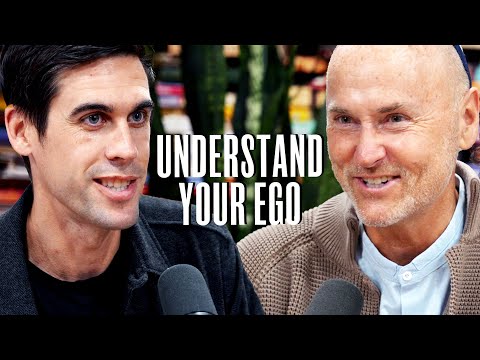
How To Write A Bestselling Book While Juggling 4 Jobs with Andrew Ross Sorkin | Daily Stoic Channel

Introduction
Table of contents
• Introduction • The Writing Process and Challenges • Research Methodology and Historical Reporting • Balancing Multiple Roles and Schedule Management • The Emotional Toll and Psychological Journey of Writing • Writing Habits and the Role of Editing • Human Ambition and the Desire for More • Wealth, Power, and Moral Complexity • The Intersection of Journalism and Long-Term Reporting • Reflections on Career, Creativity, and Satisfaction • Insights into Historical Figures' Financial Pursuits • The Role of Luck, Timing, and External Forces • The Importance of Empathy in Understanding HistoryIn this conversation with Andrew Ross Sorkin, the veteran financial journalist and author delves into the complexities of writing a deeply researched historical book while simultaneously managing multiple demanding roles. Topics explored include the challenges of rigorous research and writing, balancing a hectic schedule, the psychological and emotional journey of authorship, and reflections on wealth, ambition, and human nature. Through anecdotes and personal insights, Sorkin sheds light on the intricate process behind his latest book and the broader implications of ambition in society.
The Writing Process and Challenges
Andrew Ross Sorkin shares the substantial difficulties involved in writing a 600-page historical book on the 1929 Wall Street Crash, a project that spanned roughly eight years on and off amid his other responsibilities. He describes writing as a strenuous endeavor requiring mental "ramp-up" time to get into the right mindset, often dedicating blocked periods of at least two hours. Due to his full schedule, he wrote during unconventional times such as evenings, nights, flights (with Wi-Fi turned off), and vacations, which his family sometimes found hard to understand. Unlike the romanticized image of writers effortlessly creating prose, Sorkin emphasizes the pain and struggle behind the craft, often feeling lost or repetitive while balancing repeated interviews on his book tour.
Research Methodology and Historical Reporting
Unlike his previous contemporary work, Sorkin details how writing historical nonfiction demanded a new level of archival research, often involving sifting through thousands of pages of documents, some handwritten and difficult to decipher. The pandemic further complicated access to libraries and archives, prompting him to innovate by commissioning students to photograph documents. This exhaustive process sometimes led to revelations years after initially encountering materials, highlighting the nonlinear and persistent nature of deep historical research. He also found understanding complex historical figures' motivations to be a slow unfolding, requiring empathy to grasp the contradictions of individuals whose actions and beliefs often conflicted with modern ethical standards.
Balancing Multiple Roles and Schedule Management
Sorkin juggled his roles as a New York Times financial columnist, co-anchor of CNBC's Squawk Box, and author. His daily routine starts around 4:30 a.m., quickly transitioning into a live television show, followed by a full day of reporting, writing, and editing. Despite the constraints, he manages significant writing and research blocks by meticulously time-blocking on his calendar, sometimes blending parenting duties with writing sessions—such as working remotely while attending a child's tennis lesson. He acknowledges the challenge of constant interruptions, though weekend writing periods offer him more unrestricted focus. He candidly admits to struggles with distraction and procrastination, noting that mental incubation and idea generation can be just as productive as actual writing.
The Emotional Toll and Psychological Journey of Writing
The emotional experience of writing a major work is multifaceted. Sorkin reflects on his fears of inadequacy, perfectionism, and self-doubt, especially following the success of his previous book Too Big to Fail. He confesses feeling intimidated by the bar he aimed to clear and the difficulty of meeting both his own and external expectations. The act of writing often felt like both torture and joy, with moments of euphoria arriving in small breakthroughs—such as discovering a crucial piece of evidence that brings the narrative to life. When the book finally launched, the ensuing relief was anticlimactic rather than euphoric, aligning with his evolved perspective that the joy lies in the writing journey rather than its reception or accolades.
Writing Habits and the Role of Editing
Sorkin discusses his particular approach to drafting and editing, emphasizing the importance of getting a strong initial draft on the page since improvements through editing are limited. He contrasts his method with writers who "splatter" ideas randomly and fix them later, noting that imprecise original thoughts can anchor the work at a lower quality. He also highlights how the audiobook recording process served as a final proofreading stage, uncovering repetitive phrases and stylistic issues that he hadn't noticed during writing, although substantive changes at that stage were largely impractical. The serendipitous effect of physical writing tools and multiple drafts, as seen in authors who used typewriters or handwritten manuscripts, is considered an advantage in creating rhythm and permanence in prose.
Human Ambition and the Desire for More
The conversation touches on broader philosophical and societal reflections about ambition, wealth, and the human condition. Drawing on historical figures like Mark Twain, Winston Churchill, and early 20th-century billionaires, Sorkin explores the paradox of wanting "more"—more wealth, success, meaning—and how this drive propels civilizations forward despite its pitfalls. He suggests that while many seek contentment, the relentless desire for progress and accumulation is deeply ingrained, and may not necessarily be negative. The discussion includes observations on how some people achieve a sense of "enough," but for most, that number shifts endlessly. This dynamic is illustrated through anecdotes about financiers, writers, and billionaires, revealing how perception of sufficiency and success varies greatly between individuals.
Wealth, Power, and Moral Complexity
Through the historical context of his book and the figures he studied, Sorkin delves into the contradictions inherent in influential people. He reflects on politicians and financiers who held racist or exploitative views while simultaneously shaping financial systems that endure today. The tricky task of reconciling the moral failings of these individuals with their historical impact is highlighted as a key challenge of historical writing, complicated by changing societal norms. He discusses the phenomenon whereby powerful people can become disconnected from reality due to privilege, wealth, and insular environments, sometimes leading to a "reality distortion field" where decisions are insulated from real-world consequences.
The Intersection of Journalism and Long-Term Reporting
Andrew Ross Sorkin contrasts fast-paced daily journalism with the deep, longitudinal understanding developed by journalists who cover the same beat for decades. While most journalists move between beats every few years, limiting depth, a few—like those who reported on political and financial power for extended periods—gain context that can reveal subtleties behind seemingly irrational events or statements. This depth enriches the reporting and provides valuable clues for historical research, but is rare in the current journalistic environment dominated by the demand for immediacy.
Reflections on Career, Creativity, and Satisfaction
Sorkin talks candidly about his evolving relationship with ambition, creativity, and satisfaction in his career. He no longer views himself as ambitious in terms of fame or status but remains deeply engaged and excited about the craft of writing. The act of creation is prioritized over external validation, and he refrains from obsessively following reviews or sales statistics. He sees the process itself as the source of fulfillment, while acknowledging the difficulty of letting go after years of work. He also warns about the psychological toll of seeking external approval and the importance of managing expectations and self-worth.
Insights into Historical Figures' Financial Pursuits
Throughout the interview, Sorkin recounts stories of prominent historical figures like Mark Twain and U.S. President Ulysses S. Grant engaging in speculative investments and financial misadventures, highlighting the timelessness of human vulnerability to greed and risk-taking. These anecdotes illustrate the recurring themes of hubris, the illusion of transferable success, and the tragic consequences of overreach. He notes how even those with extraordinary accomplishments in one field often fail spectacularly when attempting to master others, underscoring the human tendency to overestimate one's capabilities.
The Role of Luck, Timing, and External Forces
The discussion includes the recognition that success often depends on factors beyond individual talent or effort, such as timing, cultural readiness, and market conditions. Sorkin reflects on how his first book benefited from the immediate interest following the 2008 financial crisis, a form of "lightning in a bottle" that bolstered its reception. This awareness complicates the relationship between personal merit and achievement, reminding creators that external forces play a significant role in determining outcomes.
The Importance of Empathy in Understanding History
A recurring theme in the conversation is the necessity of empathy to grasp the motivations and contradictions of historical figures. Sorkin stresses avoiding simplistic moral judgments and instead seeking to understand context, complexity, and human frailty. This approach enriches the narrative and helps readers make sense of seemingly irrational behaviors within their historical framework, underscoring the nuanced nature of truth in history.
Full episode
Episode summary